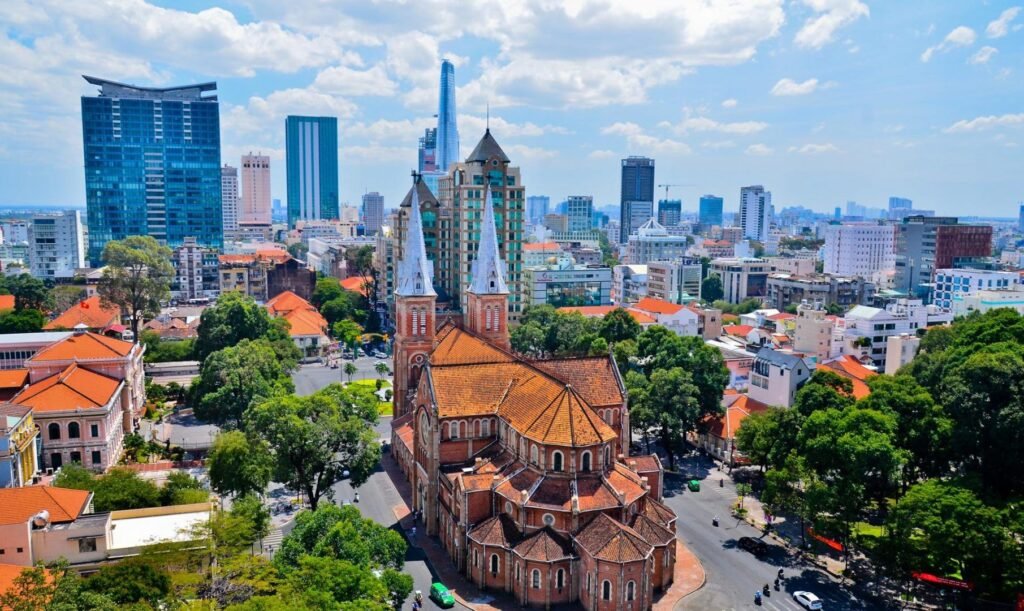
Ho Chi Minh City, the largest city in Vietnam, has a certain energizing quality, whether it is the boom of motorbikes, the nearly continual opening of bars and restaurants, the conversational character of its residents, or the supply of excellent coffee. Given that more than half of its eight million residents are under 35, Saigon—as most locals refer to it—exudes a youthful, innovative vitality. Boutiques offering locally made clothing, inventive food, and eccentric cafés all reflect this vibrant atmosphere. And when you need a break from everything that’s brand-new and spectacular, it’s simple to snare some quiet time in dilapidated colonial structures and reflective art spaces.
There are 24 districts in Ho Chi Minh City, half of which are numbered 1 through 12 and encompass the majority of the city’s metropolitan regions, which really make up a province. The 12 districts that are located outside of this region have names rather than numbers and include remote urban and suburban regions. Quận, a phrase allegedly derived from the French quartier, is the name given to the urban areas. People in Ho Chi Minh City frequently shorten Quận to Q.
Quận 1
The city and historic area of Ho Chi Minh City are both included in Quận 1. Here, on the banks of the Sài Gòn River, is where the Khmer fishing community that formed the basis of the modern city had its start. This was the French Quarter during the French colonial period. The Rue Catinet, a promenade of opulent homes and French cafés, served as the city’s principal thoroughfare. When the Saigon Opera House (also known as the Nhà hát lớn Thành phố Hồ Chí Minh) first opened its doors in 1897, it quickly became the hub of colonial high society. The majority of the street’s landmarks, including Notre Dame Cathedral, Trụ sở Ủy ban Nhân Thành phố Hồ Chí Minh(City Hall), and Hotel Continental, nevertheless radiate a Parisian flair. The majority of Hồ Chí Minh’s most well-known hotels are also located here, including the Caravelle, the Majestic beside the river, and the Rex. Back in the day, reporters enjoyed drinking martinis at the Caravelle’s rooftop terrace bar while seeing the distant flash of rocket fire.
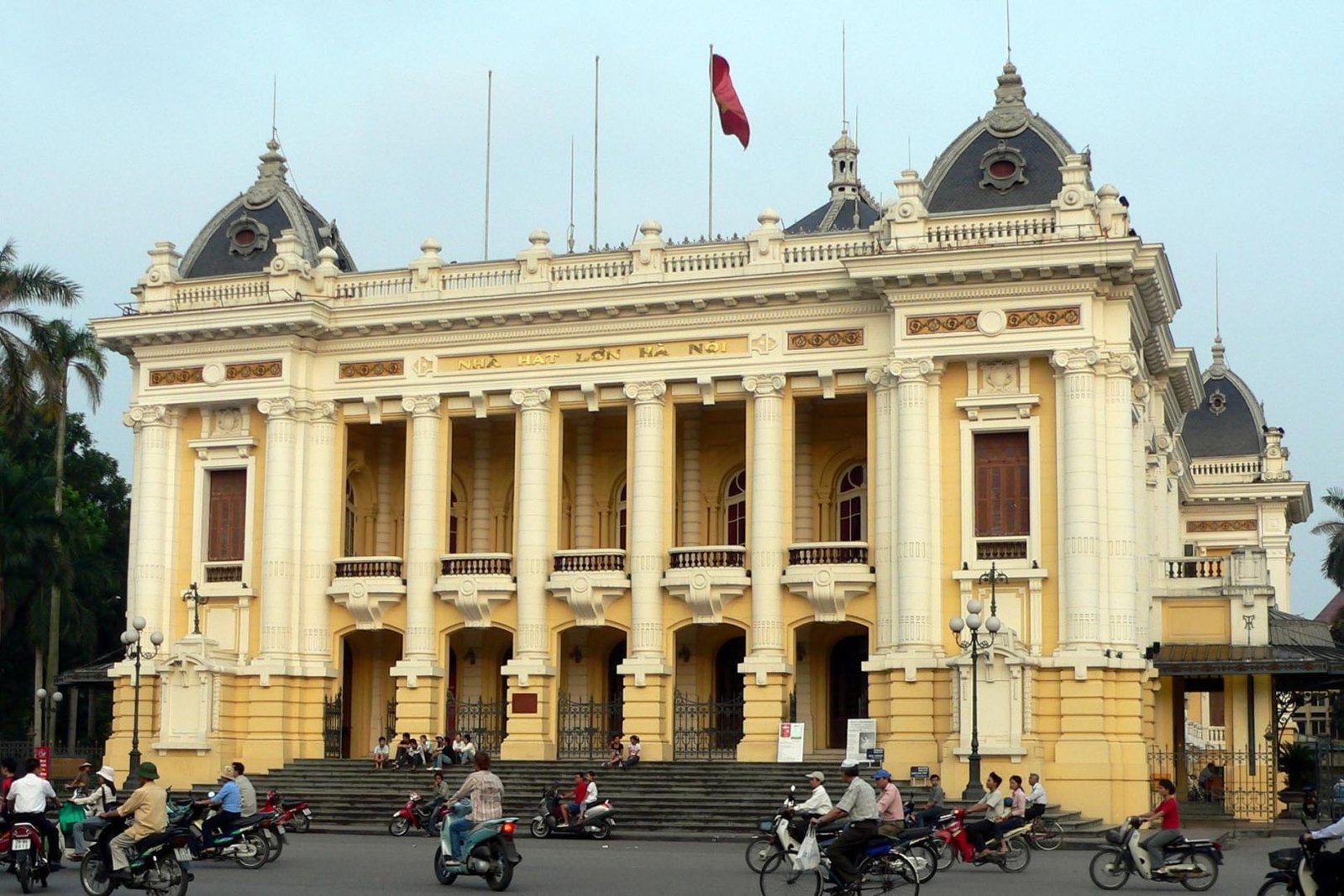
The Rue Catinet was renamed Tự Do (Freedom) by South Vietnamese President Diem. After the end of the Vietnam War, it was renamed Đồng Khởi (The Uprising). On their days off from battle, American soldiers would frequent T Do’s rowdy go-go clubs.
Nguyễn Huệ, a favored nightly cruising location for young motor scooter riders, lies one block south of Đồng Khởi. These riders go up and down the street in a manner akin to a slow-motion party on wheels. The Phạm Ngũ Lão region, on the western edge of Quận 1, attracts backpackers and budget tourists who are more concerned with affordable lodging than with glamor or French elegance. The region is doubly advantageous for the adventurous traveler due to the abundance of inexpensive restaurants and pubs where Western travelers eat pho, drink coffee, and exchange travel advice.
Quận 2
Quận 2 is separated from the rest of Ho Chi Minh City by a river. Although it is located less than 400 meters from crowded, urban Đồng Khởi, the effects of doi moi and the relaxation of the trade embargo have just lately started to be noticed in this area. Quận 2 is a vivid and terrible reminder of the third-world realities of Vietnam, in sharp contrast to its wealthy neighbor. This area of Saigon is the poorest because of the slums and shantytowns there. Over 100,000 individuals live in homes that frequently lack even the most basic amenities.
Ho Chi Minh has seen the prospects for development right over the river. Downtown and Quận 2 are now connected by a traffic tunnel. But as the slums disappear, a new reality quickly becomes apparent: none of the brand-new apartments and tennis courts built for Saigon’s rising middle class appear to have room for Quận 2’s current occupants.
Quận 3
If you’re traveling to Ho Chi Minh City by train, you’ll enter the city at Quận 3’s Mặt trước ga Sài Gòn (Saigon Railway Station). The station was constructed by French colonials in the 1930s, albeit it was designed in a less opulent and more practical manner than usual. The station is illuminated with eerie blue neon at night. The roundabout junction of Cách mạng tháng Tám, Võ Thị Sáu, and many minor streets are located just a few blocks south of the station. Any café along the circle’s edge with a sidewalk seat is the ideal place to observe Saigon traffic’s almost entirely collision-free, bizarre slow-motion marvel.
Quận 4
This little triangular island is bounded by the Saigon River, ,Rạch Bến Nghé and Kinh Tế canals, and is connected to Quận 1 by a number of bridges over Rạch Bến Nghé. The eastern end of the district is occupied by Saigon’s port, which has been a significant commerce and maritime hub in Southeast Asia since even before the French colonial era. Since the trade embargo was lifted in the 1990s, the port has played a significant role in reviving Vietnam’s economy.
Quận 4 is made up of slums, thatch-roofed ruins, and stilt-house shanties that precariously balance over filthy streams and canals beyond the harbor. Tôn Thất Thuyết Street, with its incredibly affordable restaurants and accommodations, has recently caught the attention of adventurous travellers and foodies. Due to Quận 4’s vicinity to Quận 1 and Cholon, it may soon experience the similar growth and forced displacement as Quận 2.
Quận 5 and Quận 6
These neighborhoods are dominated by Cholon, or Chinatown, in Ho Chi Minh City. An fitting name for this hub of regular trade is Cholon (Big Market). For more than three centuries, Cholon has been the location of Chinese traders and merchants. Sài Gòn-Cholon was the short-lived name of the newly formed city, which had previously existed separately from Saigon. Even into the 1950s, it was still a distinct neighborhood; Graham Greene calls it a “Chinese suburb” in The Quiet American, but over the past 50 years, urbanization has muddled the lines between it and other areas. It was formerly a hub for opium dens, brothels, and other common vices, but it still has a more moderate black market for counterfeit Rolex watches, Gucci bags, and DVDs.
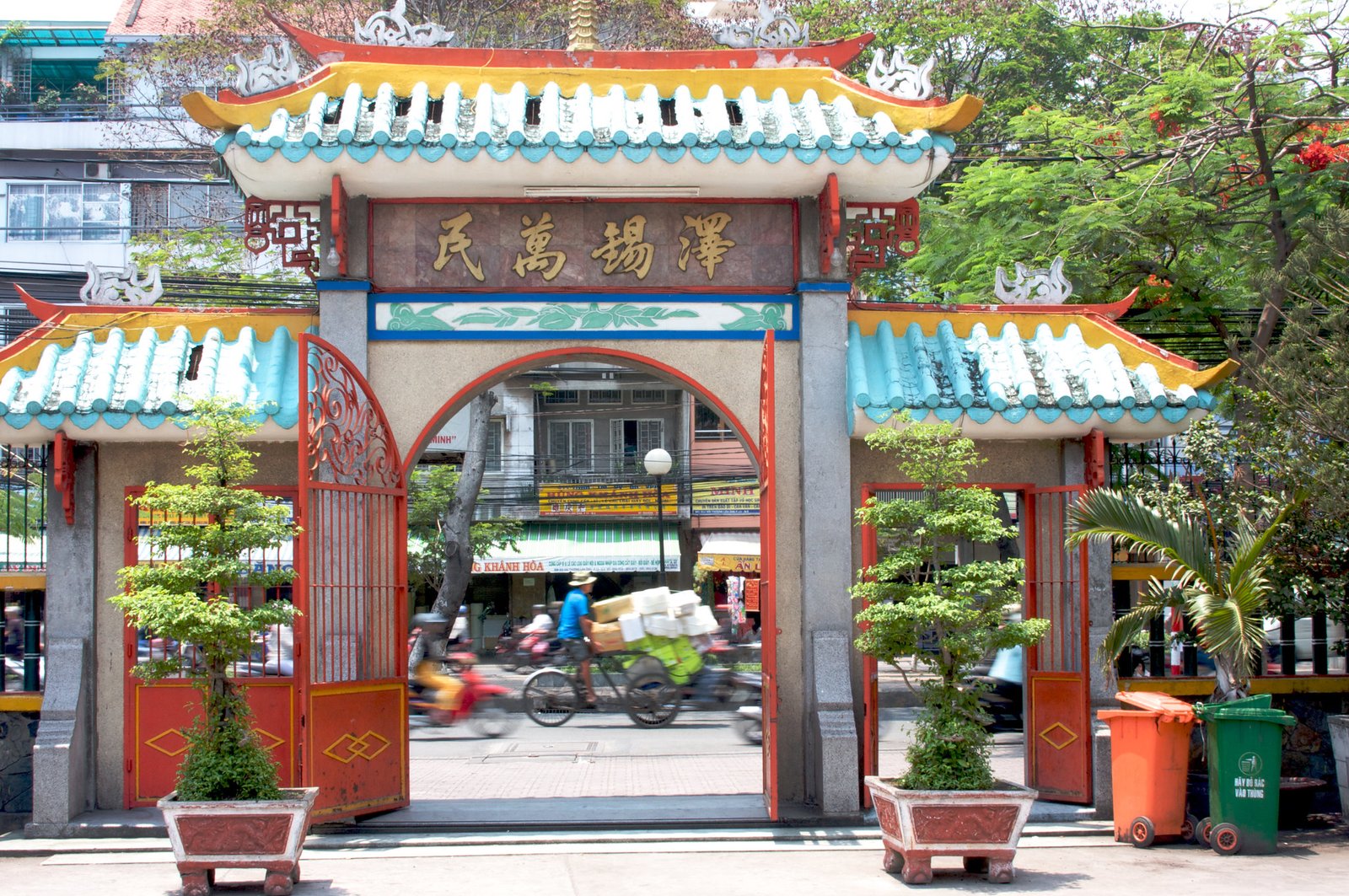
Due to its indoor marketplaces, the streets in the area are always bustling with people shopping and conducting business.
The area of Cholon is home to some of Saigon’s most well-known pagodas. Triệu Quang Phục is lined by Chinese drugstores, which fill the air with the potent aromas of medicinal plants. The bulk of Saigon’s approximately 500,000 ethnic Chinese residents live in the Cholon area.
Quận 7
The majority of Quận 7 is taken up by Phú Mỹ Hưng New City Center. The proposed business and residential sector of the New City Center is located on the southern bank of the Kinh Vĩnh Tế (Kinh Te Canal) (Kinh Te Canal), around south of Cholon. In the late 1990s, construction on the area started. Many corporate offices, as well as the Trung tâm Hội chợ và Triển lãm Sài Gòn (Saigon Exhibition and Convention Center), are located here, thus business visitors may find themselves staying a while . These kinds of planned communities are put into place by the government to avoid the haphazard design of cities like Bangkok or Los Angeles. International businesspeople and expatriates increasingly choose to live in Phú Mỹ Hưng.
Quận 10
The urban district of Quận 10 is Cholon’s northern boundary. Long favored by college students due to its low rents and affordable street food, it is now home to an increasing number of foreign businessmen who pay exorbitant sums for fully furnished flats in complexes with a gym, sauna, and swimming pool. The Ký Hoà night market is enjoyable for both groups.
Quận Phu Nhuan
Quận Phú Nhuận is located just to Quận 1’s north. You may reach the Thảo Cầm Viên Sài Gòn (Saigon Zoo and Botanical Gardens), as well as the Viện bảo tàng Lịch Sử Việt Nam (Vietnam History Museum), on the fringes of this region by taking a short stroll along Le Duan Boulevard from where it connects with Đồng Khởi . The region is predominantly a suburban and residential area as evidenced by the fact that it is named rather than numbered. Additionally, it is the location of various educational institutions, such as the Đại học Kiến trúc Thành phố Hồ Chí Minh (Hồ Chí Minh City Architecture University) and Đại học Kinh tế Thành phố Hồ Chí Minh (Hồ Chí Minh Economic University).