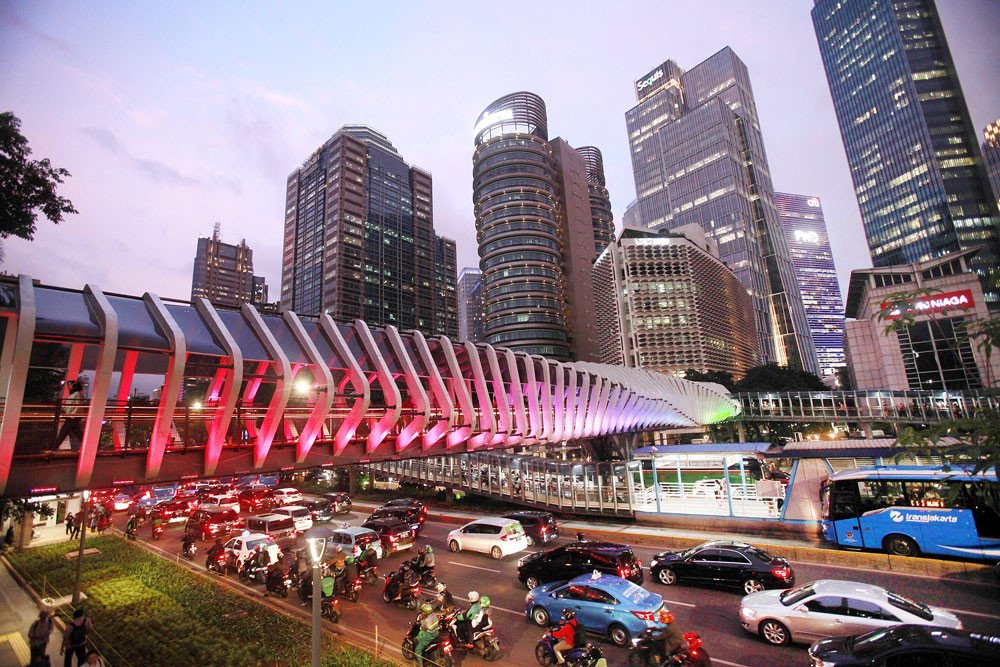
Jakarta first appears to be the type of place that would leave tourists lost and bewildered. Its 661 square kilometers (255 mi 2) appear to go on forever without rhyme or reason, with uncharted corrugated iron hut shantytowns one way and prosperous, village-like communities the other. Perhaps it would be more accurate to think of Jakarta as a collection of smaller towns, with Merdeka Square’s National Monument serving as the geographically most prominent landmark. The majority of the interesting tourist attractions, at least in this area, are reachable by taxi.
Given Jakarta’s absurdly high traffic congestion and the questionable roadworthiness of buses and bemo vans, transportation can be a challenge. Taxis are your best option, but only use drivers whose vehicles are equipped with meters. Jalan is “street” in Bahasa Indonesia, while jalan jalan means “walking”—a useful response if you chance to be doing so and want to avoid solicitations in specific areas. The Bahasa term for garden, taman, may also apply to a variety of open areas including plazas and squares.
The majority of Jakarta’s top monuments, museums, and cultural attractions are located in the city center. The Glodok suburb, Chinatown, and commercial district of Jakarta are all located in the historic harbor of Batavia, an old Dutch town. To find cool beer, sizzling foreign cuisine, and affordable lodging, visit Jalan Jaksa, a popular destination for travelers. The tourist destinations in Jakarta Selatan (South Jakarta) provide for some enjoyable day trips. Some of the biggest clubs in Asia are located in the upscale Keboyaran Baru district, which has a thriving nightlife. Remember that it can take most of the morning or afternoon to go from the port to Jakarta Selatan.
Central Jakarta
The majority of Jakarta’s top monuments, museums, and cultural attractions are located in the city center. The Glodok neighborhood is part of Jakarta’s historical port district, the old Dutch town of Batavia. Jakarta’s financial, administrative, and political hub stretches out around Merdeka Square’s angular construction. Its beginnings may be found in the late 1700s, when the Dutch upper class sought to relocate its headquarters from Batavia to a more strategic location. The populace shifted as a result of the Batavia cantonment being too congested and contaminated. Military tattooing and drills started taking place in Merdeka Square, and shortly after, sports facilities were built for the colonial gentlemen’s leisure.
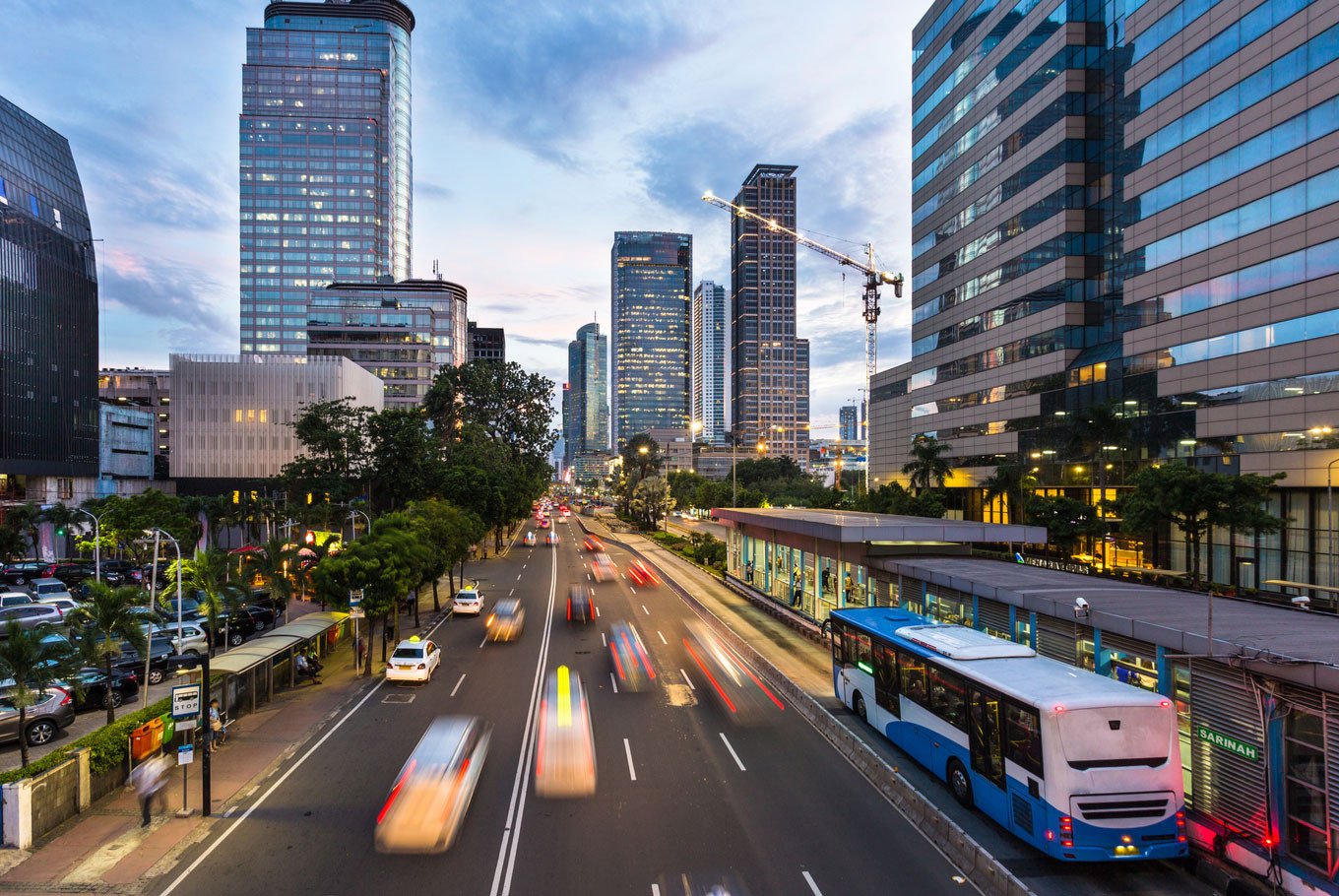
There are still a number of remarkable structures from that era, such the National Museum, which is located on the western edge of the plaza. A staggering number of artifacts from Java’s long history of habitation, conquest, and migration may be found here. Perhaps the National Monument, which has an oblong form and a golden top that can be seen from all around the city, is the square’s greatest achievement—in some people’s views, at least. This is a classic example of the rather triumphalist concrete architecture that was popular during the protracted, gloomy Suharto rule. This neighborhood is primarily populated by tourists and government workers traveling to and from work, making it far from the “real Jakarta.”
Going east will put you in a time warp that is a wonderful diversion from the Merdeka Square neighborhood. The Lapangan Banteng is a collection of Dutch-built buildings from the 1800s that have been used for contemporary uses. The White House, an ornate administrative office, was the predecessor to the Ministry of Finance, which may be identified by its off-white pillars. This area is also home to some of Jakarta’s most beautiful religious structures, with the enormous modernist Istiqlal Mosque and the Jakarta Cathedral from the start of the 20th century standing out. Gedung Pancasila, a neoclassical building on Jalan Pejambon, was used as a crucial gathering spot for President Sukarno’s independence movement in the years following World War II.
Old Batavia
Jakarta is an overdeveloped, provincial metropolis that has forgotten its roots in many respects. One neighborhood, the former Dutch cantonment of Batavia, effectively refutes this notion. At the height of the spice trade, Batavia was a sophisticated, humming center of business and culture renowned as the Jewel of Asia. New commercial and employment prospects drew immigrants from the Malay Peninsula, China, Siam, and Europe.
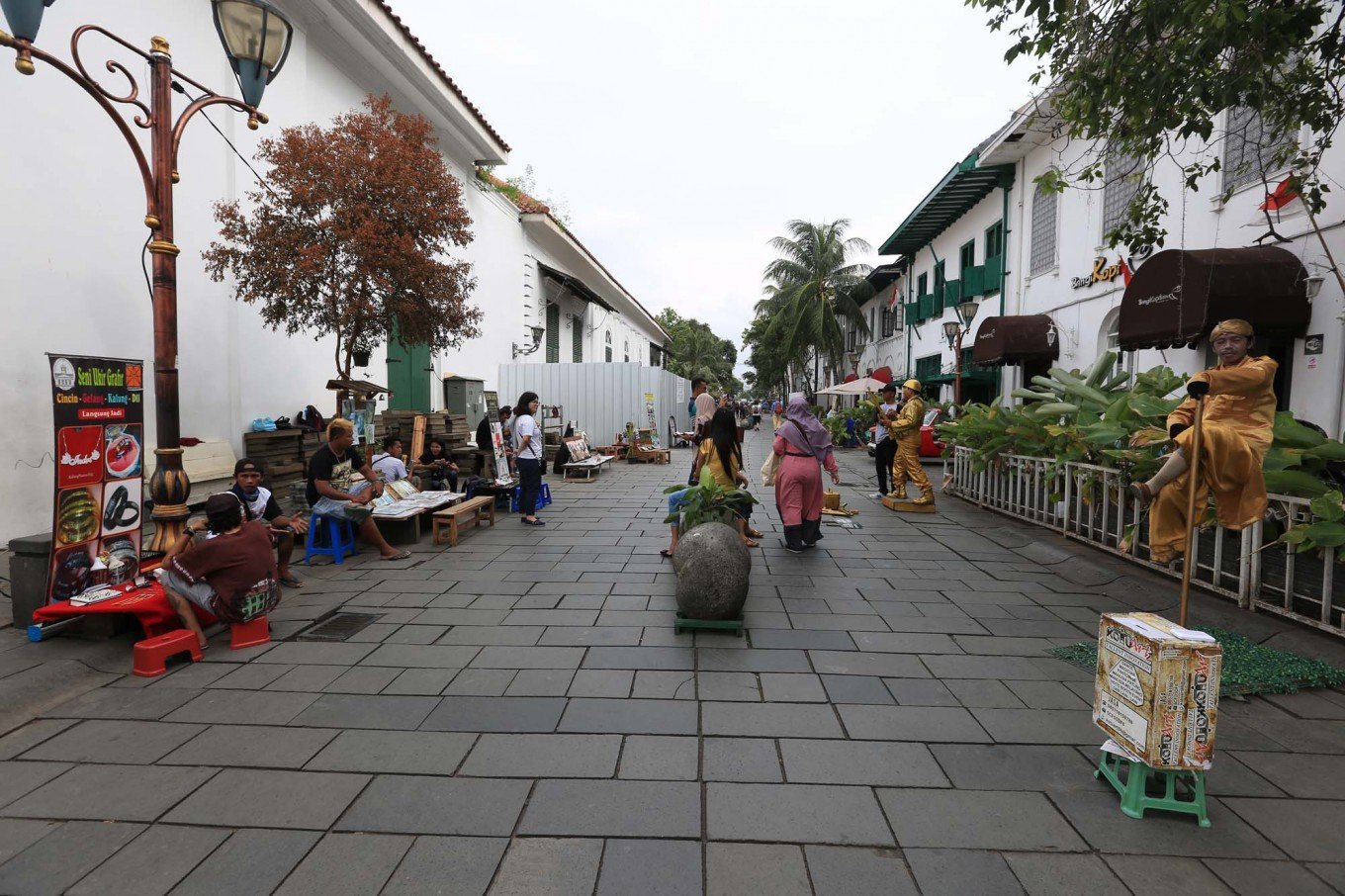
Tropical disease outbreaks in the 19th century somewhat damaged the area, and both Dutch colonists and native Indonesians began to leave. Whatever the case, the area still has several stately houses and halls from the early days of Dutch control, such Toko Merah, that proudly exist on the banks of the Kali Besar canal. On Jalan Pintu Besar Utara, you may have a drink at the 1930s-style Cafe Batavia and stroll over Chicken Market Bridge, the final drawbridge from the old Dutch bastion. However, development is still there, as seen by the numerous waste piles and the traffic that rumbles through the area’s historical magnificence.
The Jakarta History Museum, known for its Portuguese Cannon relic, which has been revered for centuries as a symbol of fertility, and the Puppet Museum, which tells the story of the wayang shadow puppet art form through hundreds of period exhibits, are both located on Taman Fatahillah, which could easily be renamed “Museum Road” (apparently because of the brass fist extending from the breech, which is cast in what might be construed as a sexually suggestive gesture). In the past, Indonesian women who were having problems getting pregnant would make a sort of pilgrimage to the cannon. The structure that houses the History Museum has had a history that is already rather eventful: it served as the Dutch colonial government’s primary jail and courthouse.
You will instantly note the distinctive appearance of the pinisi double-masted sailing boats, which are frequently painted in pleasing pastel hues, as you go north into the historic dockside hamlet of Sunda Kelapa. Visitors to this tourist hotspot complain of being pressured by neighborhood sailors to take an expensive boat trip. The unusually featureless Portuguese Church, which was established for use by slaves in 1695, is Jakarta’s oldest standing site of worship, partially making up for the aura of post-industrial degradation elsewhere in the docks.
Sunda Kelapa has been mentioned as far back as the 12th century C.E., when Chinese traders considered it to be the best commercial port in the entire known world. Pepper was at the time their most profitable export. Every morning, the Fish Market, which goes back to that era, is still present close to Jalan Kapak, but beware of the odor. The Maritime Museum, housed in a former cargo storage, is a highly recommended stop for further background information on the entire neighborhood.
Glodok
The bustling Chinatown district of rough-and-ready Glodok located to the south of Batavia, where working-class Chinese-Indonesians sell spicy snacks, trim hair, and sew silk clothing. Glodok has seen tremendous poverty, racial unrest, and religious friction since its humble origins as a ghetto for Fujian and Guangdongian migrants in the 18th century. Even though the neighborhood’s socioeconomic and ethnic problems were substantially handled by the late 1990s, the national government continues to ban Falun Gong practices there. While it’s worthwhile to visit the Chinese restaurants and shops during the day, it’s discouraged to hang out in the bars at night because fights and muggings are frequent on the streets.
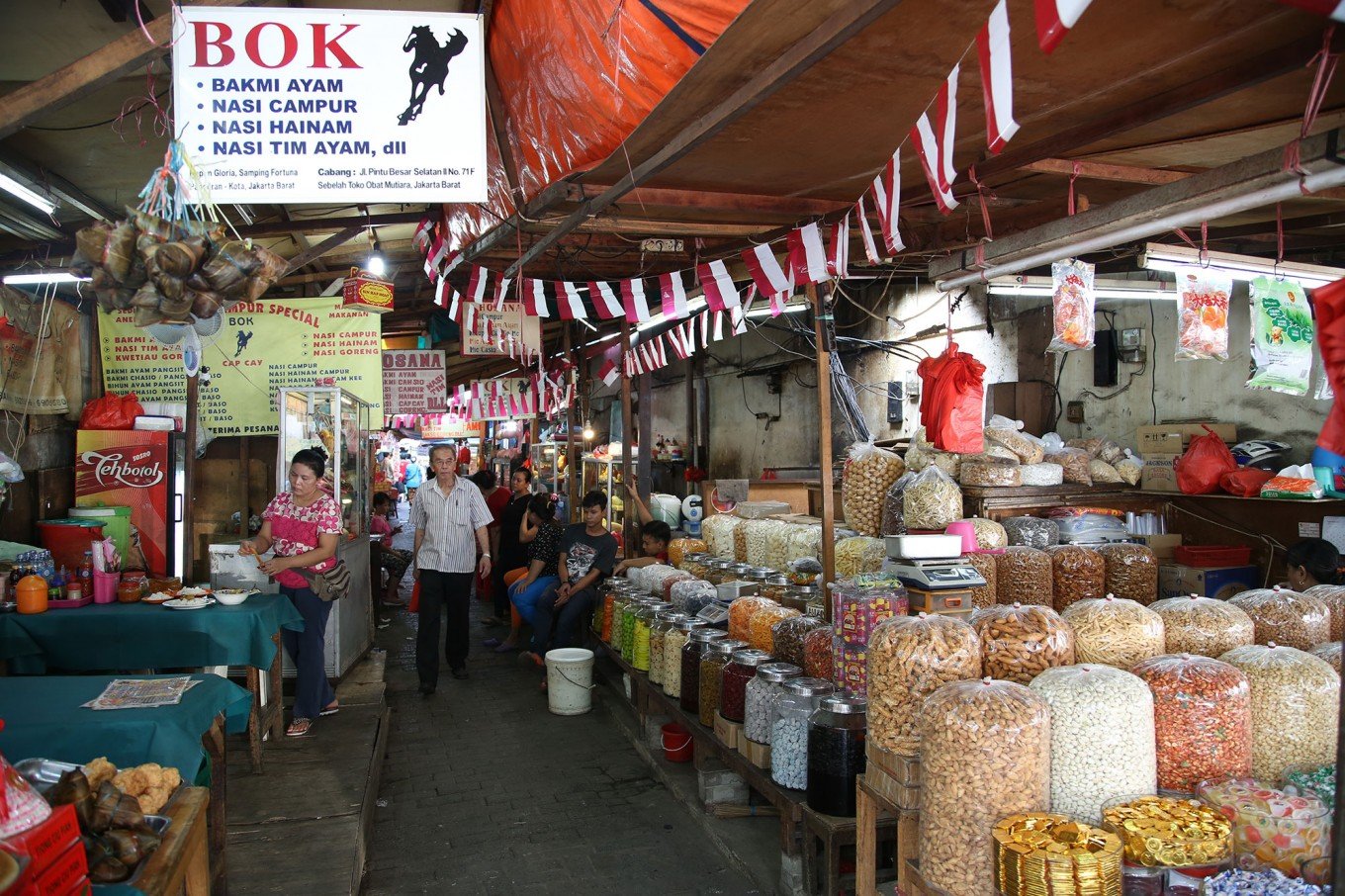
East of the Kota subway station, on Jalan Pancoran, is a genuine perspective on Glodok’s history. The box market stalls and residences with scarlet-tiled roofs and sloped roofs from earlier are still visible here. Check visit the spectacular Dharma Bhakti and Dharma Jaya temples, both magnificently maintained 17th-century structures, for a flavor of Buddhism in a city that is mostly Muslim. The primary retail district of Jakarta, which spans 50 hectares (124 acres), begins farther down Jalan Pancoran. Everything you can imagine is sold at shopping centers like Metro Glodok, Glodok Plaza, and Hwi Lindeteves, which appear to specialize in counterfeit CDs, DVDs, and video games.
Sunter
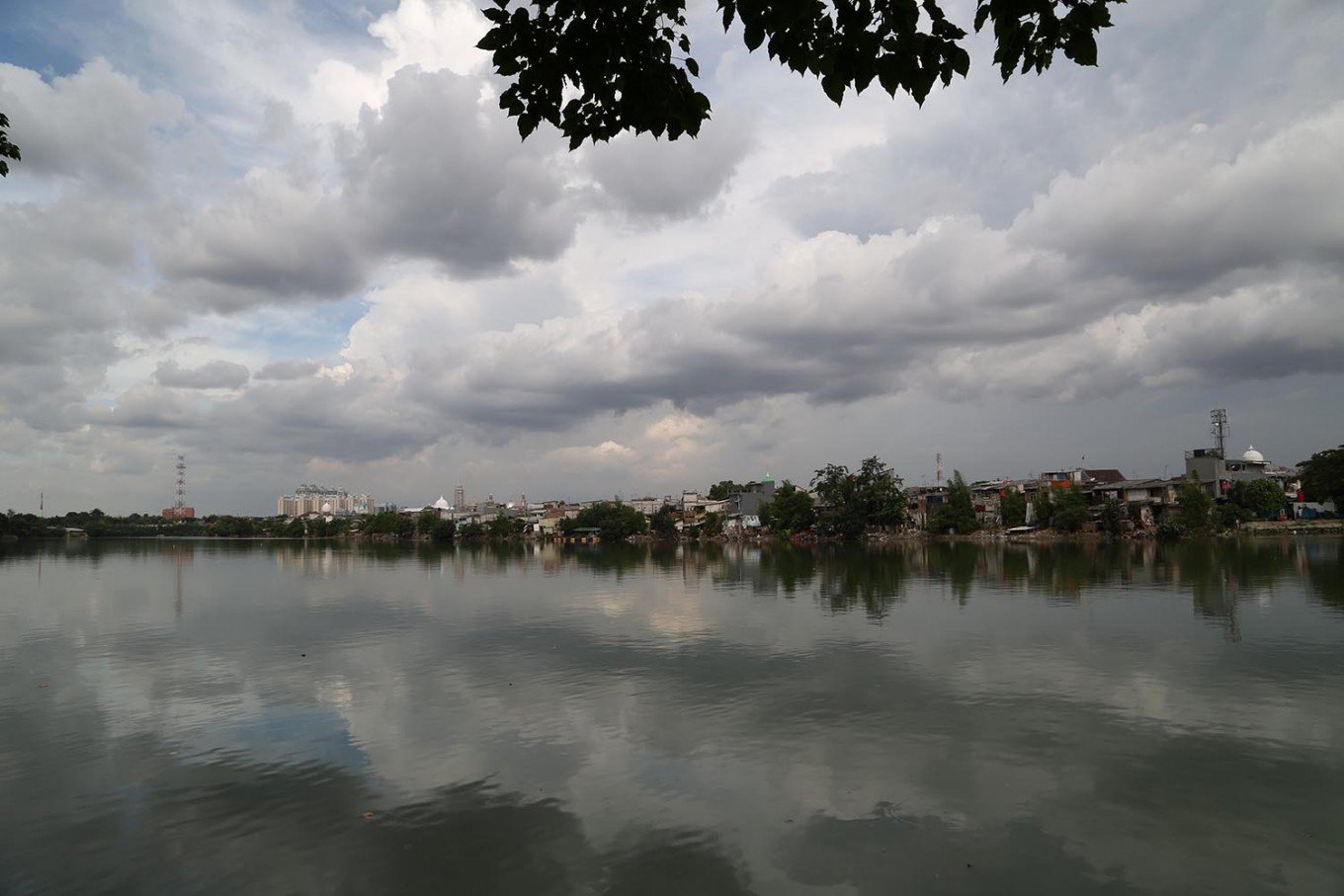
The Sunter district is located a few kilometers east along the northern shore. The village-sized entertainment complex Taman Impian Jaya Ancol is noteworthy in this location. You’re sure to find something to do among the different sports facilities, movie theaters, Puppet Castle amusement park, swimming pool, and SeaWorld if you can stand the large throngs of middle-class families on weekends. Visitors may find Taman Impia Jaya Ancol’s hermetically contained luxury upsetting since nearby destitute children are running through waste dunes. However, this is a paradox that tourists to places like Jakarta must put up with and maybe come to embrace.
Jalan Jaksa
Jalan Jaksa, a single road situated immediately south of the National Monument, is home to Jakarta’s backpacker district. It is less than a kilometer long and bustles all night with live music venues, pubs that show soccer, bakeries in the Western manner, restaurants from over the world, travel agencies, and inexpensive hostels of various quality.
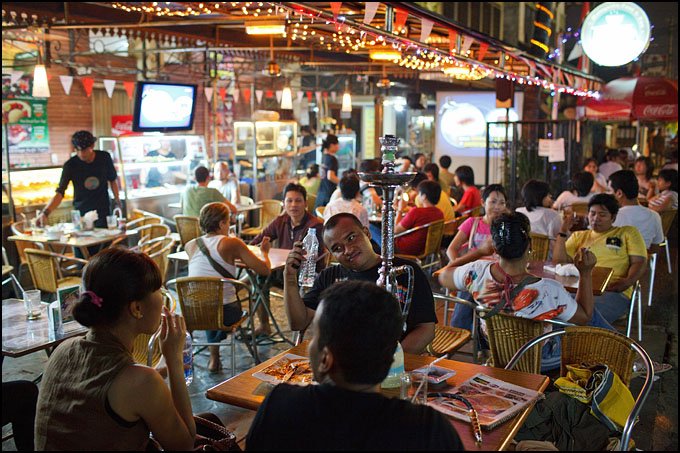
Despite appearing to be laid back, the constant pestering from touts and prostitutes can be infuriating. Pickpockets frequently operate in this area because to the high population of rich (in compared to most Jakartans) foreigners, so be on the lookout for them. Since the 1800s, when Dutch students resided and partied here, Jalan Jaksa has been focused on youth and fun. In the 1960s, affordable lodging began to appear, and since then, a surge in low-cost travel has appeared to be here to stay.
Jakarta Selatan (South Jakarta)
Except for a few districts and attractions, Jakarta’s seemingly endless southern suburbs don’t offer much to travelers. With Korean-specific eateries, karaoke bars, and bookshops, the Senayan area in Jakarta Selatan—one of the five towns that make up Jakarta—has become something of a Korean enclave in recent years.
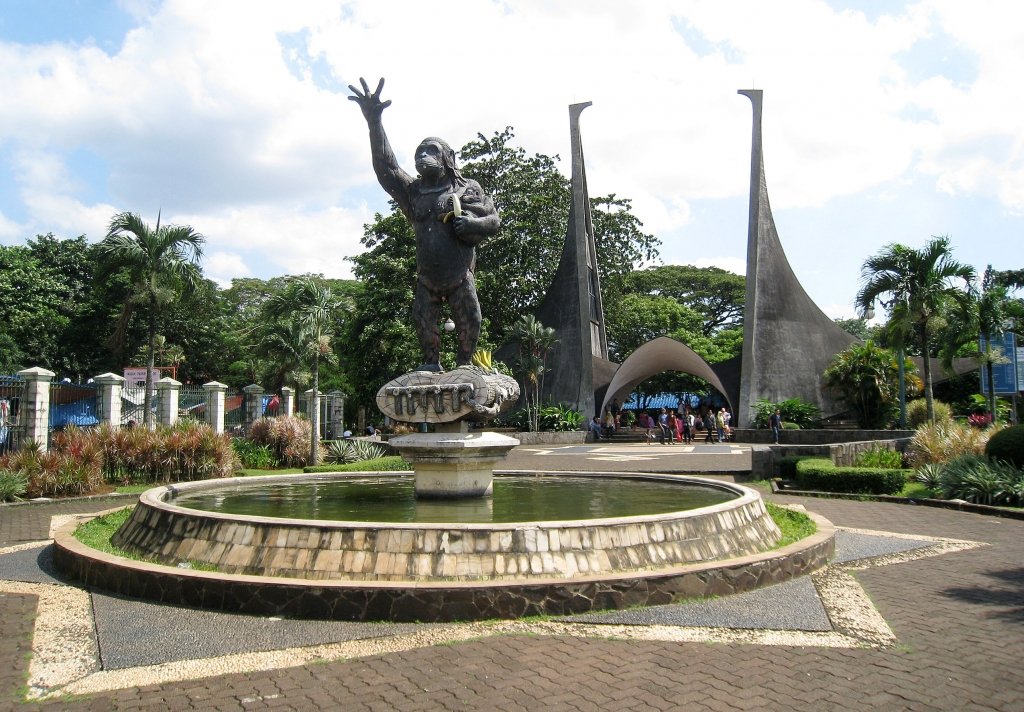
The famous orangutans of Indonesia are housed in the Ragunan Zoo, which is about 10 kilometers (6 miles) south of here. This zoo is home to thousands of other animals, including tigers, Komodo dragons, and several thousand different species of birds.
The Kebayoran Baru neighborhood is notable for having a lot of nightclubs, such the Casa nightclub with a 1970s motif on Jalan Kemang Raya. The young and trendy can be seen driving about in SUVs and fashionable clothing. The gigantic Jakarta Stock Exchange, several opulent condo complexes, and five-star hotels are all located here to contribute to the atmosphere of luxury and elegance. Kebayoran, which translates as “woodpile” (more particularly, of the bayur tree), was once a stockpile for wood used in building houses in the pre-colonial era; a far cry from the contemporary glam.
A sizable heritage park to the east, which is technically part of Jakarta Timur, one of Jakarta’s five cities, may be considered a separate subdistrict. Taman Mini Indonesia Indah is a fantastical, shrunken-down illustration of all the national cultures and states. Visitors travel via cable car above replicas of temples, mosques, cottages, and mansions.