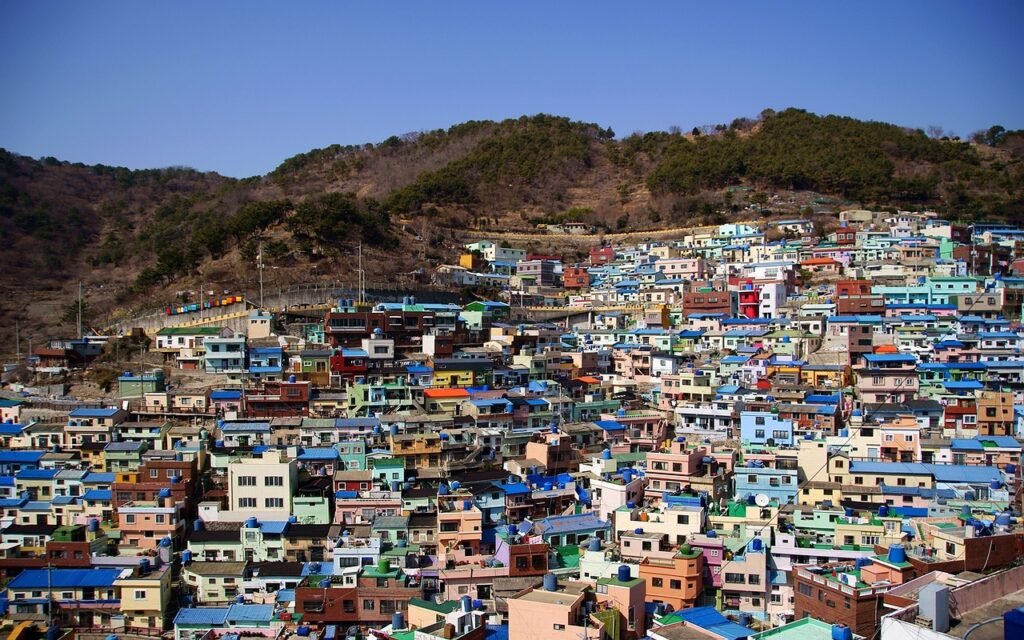
Busan has a unique terrain that is unmatched by any other city in Asia or probably the entire world. Its southern harbor is defined by a mountain crest, and its southeastern borders are home to some of the best beaches in the nation. The city is situated within an amphitheater-like valley. There are two harbor areas: one in the south that is a little rundown and an older one; the other in the east that is bigger and used for container shipping. The city is made up of a single gun (county), which is divided into 15 gu (districts) and covers an area of 766 square kilometers (296 square miles).
The three-line metro is your best bet for getting around the city because it connects to the key tourist areas quickly and is inexpensive. For sights not served by the subway, you will also need to use city buses, which run every few minutes. Taxis are also reputable, although try to stay away from so-called “deluxe cabs,” as they frequently overcharge visitors for fictitious reasons.
The harborside city center of Seomyeon, Dongna’s spas and significant heritage attractions, Geumjeongsan’s fascinating alpine region, the world-class Haeundae beach area, and the fish markets, enormous structures, and Gwangbok-dong entertainment district in southern Busan are the most alluring areas of the city.
Seomyeon
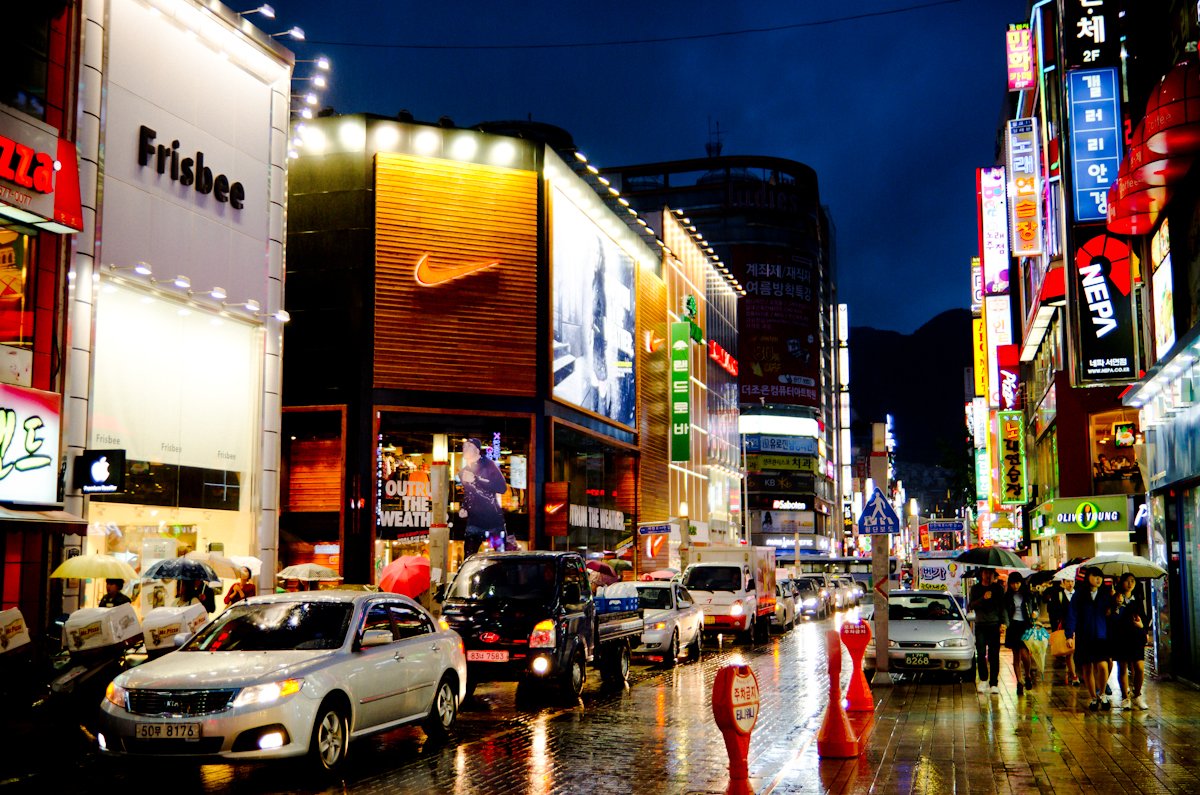
Seomyeon, in many ways the beating center of Busan life, has evolved into a funky, stylish hangout for young people seeking an exciting night out, the coolest shops, and the newest musical sensations. A tangle of unique side streets featuring bars, independent movie theaters, teahouses, restaurants, and nightclubs can be found south of the traffic roundabout. Every night of the week, this region bursts into a hedonistic frenzy that contrasts sharply with the opulent government structures, financial institutions, and business skyscrapers (Korea Foreign Exchange Bank, Telecom, Chohung Bank, etc.) that are located on the other side of the traffic roundabout. With its racetrack pavilion-style architecture, Seomyeon Station is a major transport hub and connects directly to Busan’s two biggest subterranean shopping malls, the Seomyeon Underground Arcade and the Daehyan Underground Mall.
The UN Cemetery, the somber final resting place of 2,300 people who died in the Korean War in the 1950s, lies in an aesthetically erratic area to the southeast of the district, which is composed of a gray and utilitarian waterfront, college campuses, and other buildings. The cemetery is arranged in a grid pattern, with trees encircling the area and hedges separating the graves. The Busan Metropolitan Museum, to the west of here, has a wealth of historical artifacts, including Buddhist statues, earthenware ceramics, crackle-glazed celadon, and folk paintings. It was constructed in 1978 and is notable for its architecture that resembles spokes. A short walk north is the district’s only spiritual draw, Dongmyeong Bulwon, a cavernous yet fairly modern (i.e. mostly fashioned from cement) Buddhist temple renowned for its two massive statues of the Enlightened One and even bigger bell tower. It remains one of the most popular pilgrimage sites on the peninsula.
Busanjinseong, a picturesque hilltop stronghold that dates back to the first Japanese invasion of Korea and whose remaining two ramparts and pavilion are well worth the short climb. Within the attractive Jaseongdae Park, the fortification is located. The Busan Children’s Garden, a lightly forested theme park with roller coasters, slides, swings, picnic spots, an observation tower, and, oddly enough, an attraction called The Hall of Anti-Communism, is located right next to it.
Dongnae
Dongnae has been home to some of Korea’s earliest artifacts, making it widely recognized as the birthplace of Busanite culture. Seomyeon on the low rise, Beomeo-sa up the valley, and Haeundae downstream roughly form its borders. Its dead center is home to Heoshimcheong Spa, a 1,500-year-old hot spring that is well worth a rejuvenating soak. Recently restored into a significant business district.
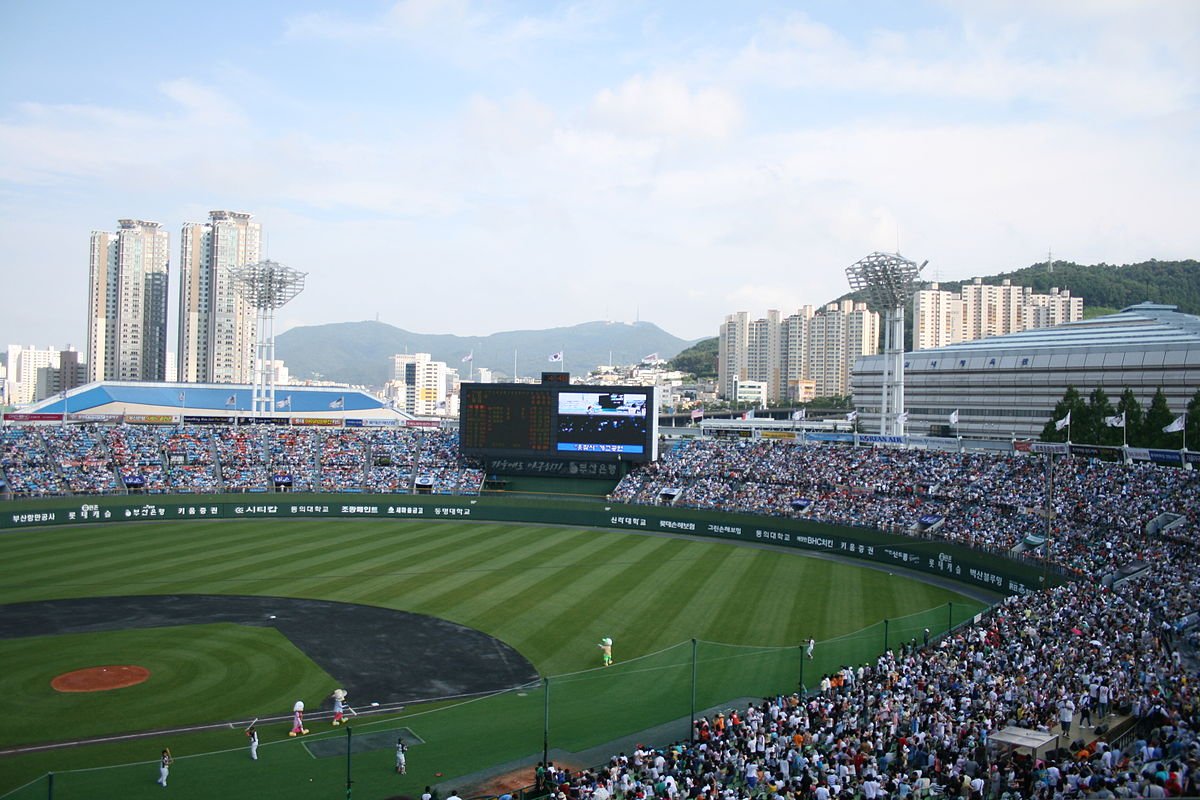
Subway Line 1 runs along Dongnae’s eastern border, taking you to all the upscale establishments worth visiting in the area, including pubs and restaurants. From here, travel south until you reach the sphere-shaped, 53,000-seat Busan Asiad Stadium and Sports Complex, one of the sporting venues that helped place Busan on the map of the world. The complex has played host to some historic World Cup soccer games and is home to the neighborhood K-League soccer team. The Bokcheon-dong Mound Tombs are located one kilometer (half a mile) east of Dongnae Station and are picturesquely carved into a ridge. These are the city’s earliest known structures and were built in the sixth century CE. They provide evidence of a highly developed ancient civilization that existed long before Busan became a thriving modern business center. These locations are worth visiting even though they are difficult to spot because to their location in an Alpine neighborhood. The same is true of the nearby Bokcheon Museum, which features antiquities including as weaponry, utensils, pottery, and more.
The Chungneolsa Shrine complex, which consists of about 16 buildings and is located south of the hill, honors the lives of those who gave their all to protect Korea against the Japanese during the 1592 invasion. The true highlights here are the 92 memorial plaques on display in the great hall.
Geumjeongsan
West of Dongnae, Geumjeongsan, one of the mountains that give Busan’s metropolitan topography its distinctive edge, radically alters the landscape. You must either take the 804-meter feature by cable car or be in good physical condition to climb up it in order to reach the cherry trees and lawns of Geumgang Park, which are located halfway up! With fairground attractions, a lotus pond, numerous shady strolling pathways, and a folk art museum, this is recognized by locals of Busan as a top escape from the stress of city life. With its hundreds of Korean beast specimens and priceless dinosaur fossils, the Marine Natural History Museum is a great tourist destination in and of itself. On one of the roads down from the park is the Zoo and Botanical Garden established in 1969 to conserve several thousand breeds of rare flora.
The largest alpine castle in Korea is where the road ends. In addition to a sturdy 17 km (11 mi) long wall, Geumjeong Fortress features restored gatehouses, pavilions, and rampart sections from the early 18th century. But since two authentic Korean villages are encompassed behind the walls, this is more than just a castle. Try the local delicacy of barbecued goat if you visit them; it’s a wonderful dish you won’t find anyplace else.
The best temple in Busan is Beomeo-sa, which is close to the Geumjeong Fortress’s north gate. It truly is an architectural marvel that has undergone graceful refurbishment and reconstruction for the better part of 1,500 years, with its triple-section, cantilever-roofed great hall and astounding ceiling decorations.
Haeundae
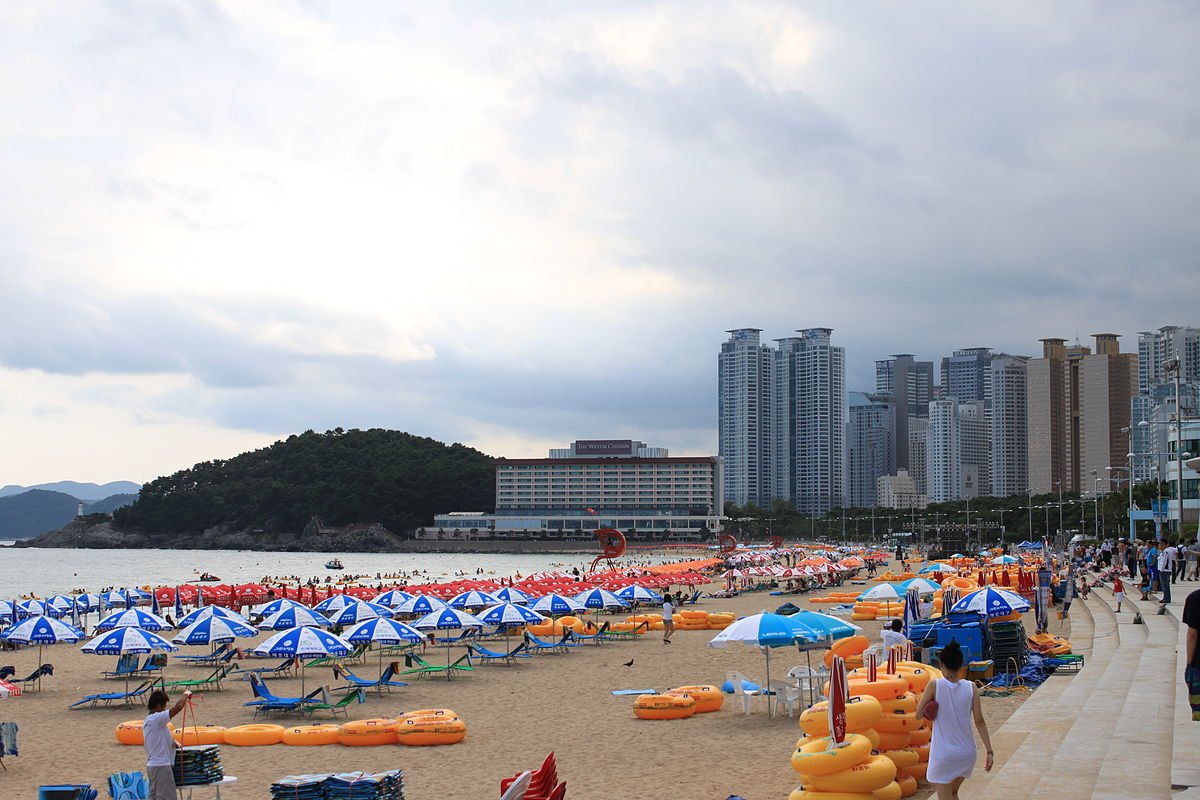
Haeundae is perhaps the best beach in Korea thanks to its warm and clean waves, plush russet sands, and spa on the ocean’s edge. Even if overdevelopment (cheap nightclubs and ugly hotels seeking to capitalize on the hot springs) and overcrowding are continuously endangering the natural beauty, there is still a spot where you can truly unwind and enjoy the sun. You may travel the length of the shore along a pedestrian promenade and take in views of the city and the water. The Busan Aquarium, a semi-subterranean attraction located in the middle of the beach, has thousands of sea life species in tanks, touch pools, and surrounding replica coral reefs.
Yazan Badran via Wikimedia CommonsDongbaekseom Park dominates the district’s western edge and is notable for its abundance of crimson camellia trees. It is actually an islet connected to Hauendae by a footbridge, and it can be partially credited with giving the area its name; Choe Chi-won, a famous ancient thinker, used to reside here (his pseudonym was “Haeun”). On top of the hill in the park, there is a statue of him and a mermaid. The Metropolitan Museum of Art is a recently constructed postmodernist building in the west that houses modern sculptures, paintings, and installations created by local, as well as national and international artists. It is located on the road that goes inland from the beach.
Southern Busan
The city’s historic and modern retail industry is located in southern Busan. It is a fascinating fusion of regionally specific Korean characteristics with globally relevant, dynamic components that represents the city’s aspiration to be counted among the greatest megacities in the world.
The Busan Tower is unquestionably a contemporary structure. It’s difficult to imagine Busan’s skyline without this glass-clad, 120-meter-tall (394-foot) tower, which was built as a communications and observation tower in the early 1970s. One of the dozen green areas in the city, Yongdu-San Park stretches all around the tower and is particularly recognized for its exquisitely designed flowerbeds, herb gardens, and alpine meadows. The name means “dragon’s head park” in Korean, as this is what the shape of the hill it spreads over resembles (to some people at least). The clock face constructed out of flowers is a quirky highlight.
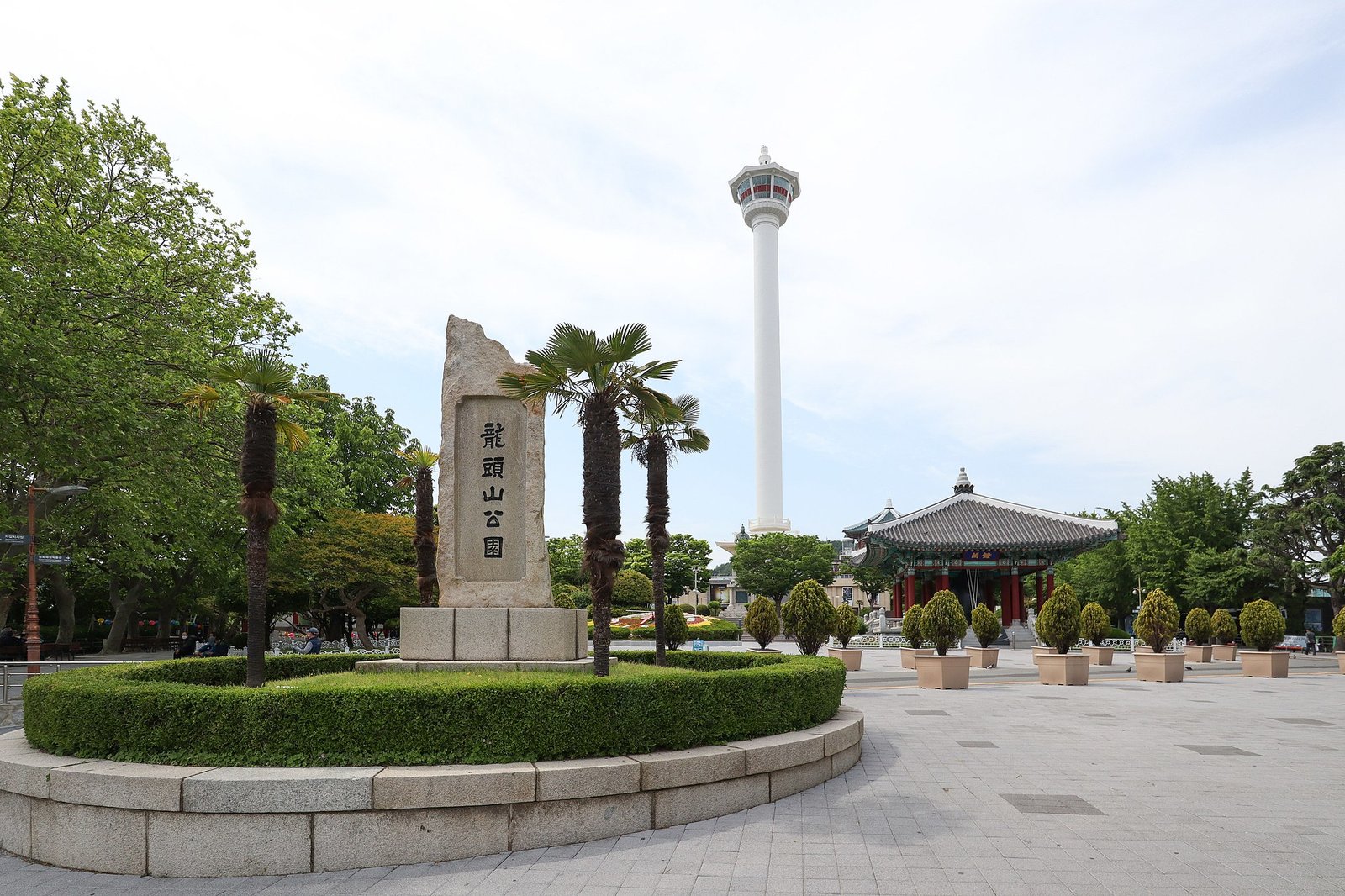
The park’s stairway conveniently leads to Gwangbok-dong, Busan’s premier nightlife district. Not for the faint of heart, this bewildering maze of little lanes is crammed with opulent fashion showrooms and chic boutiques, along with shoppers recharging themselves in the coffee shops and highly recommended restaurants, which are largely found to the east. As dusk sets, the crowds increase as thousands of people rush to enter one of the many renowned bars and nightclubs in this area. You will also have to navigate street food and souvenir carts in addition to bodies. Just south of the subway station lies the shopping and entertainment complex Lotte World, where the consumerist frenzy is still in full swing.
Busan Wholesale Fish and Jagalchi markets are a full-spectrum assault on the senses and are located on the port front south of Gwangbok-dong. Naturally, there is seafood and fish everywhere. Some struggle in buckets of water, while others are carried around in nets or hanging up to dry. The auction, which frequently occurs very early in the morning, is the component of this that is the most energizing. The smooth stone flooring of Jagalchi Market stand out, and among the kiosks of raw dead animals are beautiful eateries serving shrimp, crab, seaweed, sea cucumbers, tuna, shark, ray, and eel—all prepared in an amazing array of different ways.
A significant multicultural area is located opposite Busan Station. American servicemen stationed here during the Cold War were one type of foreigner that Foreigners Street used to cater to; today, Russian businessmen are that type of foreigner. Even though this street has historically been somewhat of a red light zone, there are also more upscale attractions including Russian restaurants, Russian shops, and the Chinese-focused Choryang Shopping Street for Foreigners can be found here.