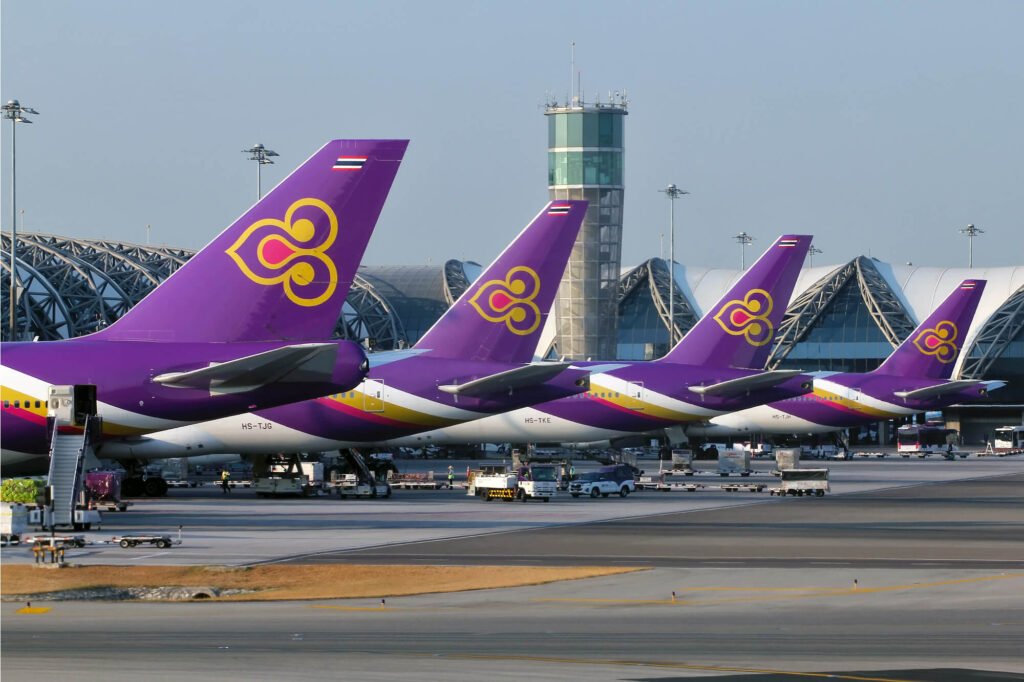
The State Enterprise Policy Office (Sepo) of Thailand said that he government will need to raise 10 billion baht to recapitalise financially ailing Thai Airways International (THAI) to keep its shareholding in the company from dipping below 40 percent.
The Finance Ministry, which holds a 47% stake in the airline and is its largest stakeholder, has figured out how to raise at least this amount to keep ownership of the airline.
The ministry has chosen to sell part of the interests in other state firms to raise the required funds, according to Pantip Sripimol, the director-general of Sepo. The ministry has not yet decided which shares in which state firms it would sell. Policymakers will have the last say.
The amount designated for recapitalization will not come from the government’s allotment for the ministry’s central budget. The decision was made following the Central Bankruptcy Court’s approval of THAI’s updated business reorganization plan, which launched the airline’s complete financial restructuring procedure. Following a better-than-expected recovery from the most financially challenging period in its history, the indebted flag carrier filed the amended plan.
Since the Covid-19 border restrictions were lifted, the airline’s balance sheet has significantly improved, increasing both passenger and cargo volume recently. The updated business strategy has received support from the majority of shareholders, including the ministry, and is essential for revitalizing the airline and rescuing it from financial rehabilitation.
The airline’s next step is to carry out the amended plan in order to achieve the goals of recapitalizing and turning debts into capital. The plan stipulates that the ministry own at least 40% of the carrier’s shares, and the ministry is prepared to adhere to its rules.
The debt-to-equity conversion and recapitalization plan, which is expected to cost 25 billion baht and take two years to execute, was previously reported.
Since international travel has largely resumed with the abatement of the epidemic, Ms. Pantip claimed that THAI has recorded a successful performance.
The business has also implemented dramatic cost-cutting initiatives, including personnel reductions, which have reduced costs. It is anticipated that the airline will be able to relist on the stock market, most likely by the end of 2024, provided it has implemented the revised plan, returned to the black, and is able to pay its obligations.
The sale of the Finance Ministry’s stock in unlisted companies, according to Ms. Pantip, is supported by the Sepo. The majority of the shares were acquired through buying foreclosed property.