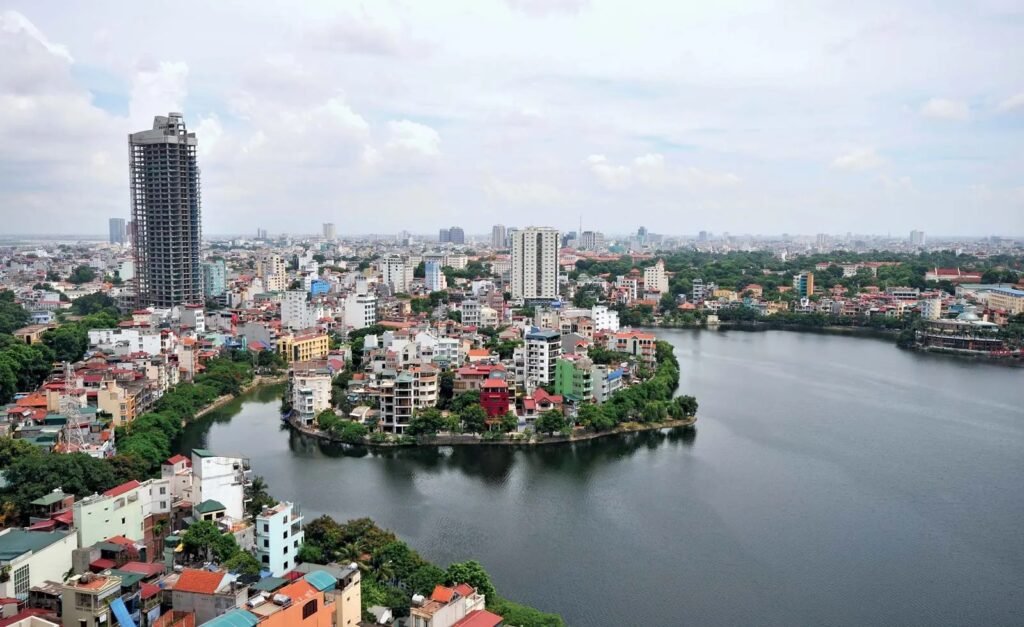
Hanoi is overpopulated, loud, and chaotic, with a frantic amount of activity. More over eight million individuals live in the city, and each one of them owns and uses many scooters, frequently all at once. You can always find someone selling something, generally something disgusting.
Hanoi is at least 5,000 years old as a town, yet it feels far older. With the end of the Vietnam War in 1976, it most recently served as the capital of a new empire. It still exhibits an intriguing fusion of French and Chinese influences in both the architecture and the corruption of the local government.
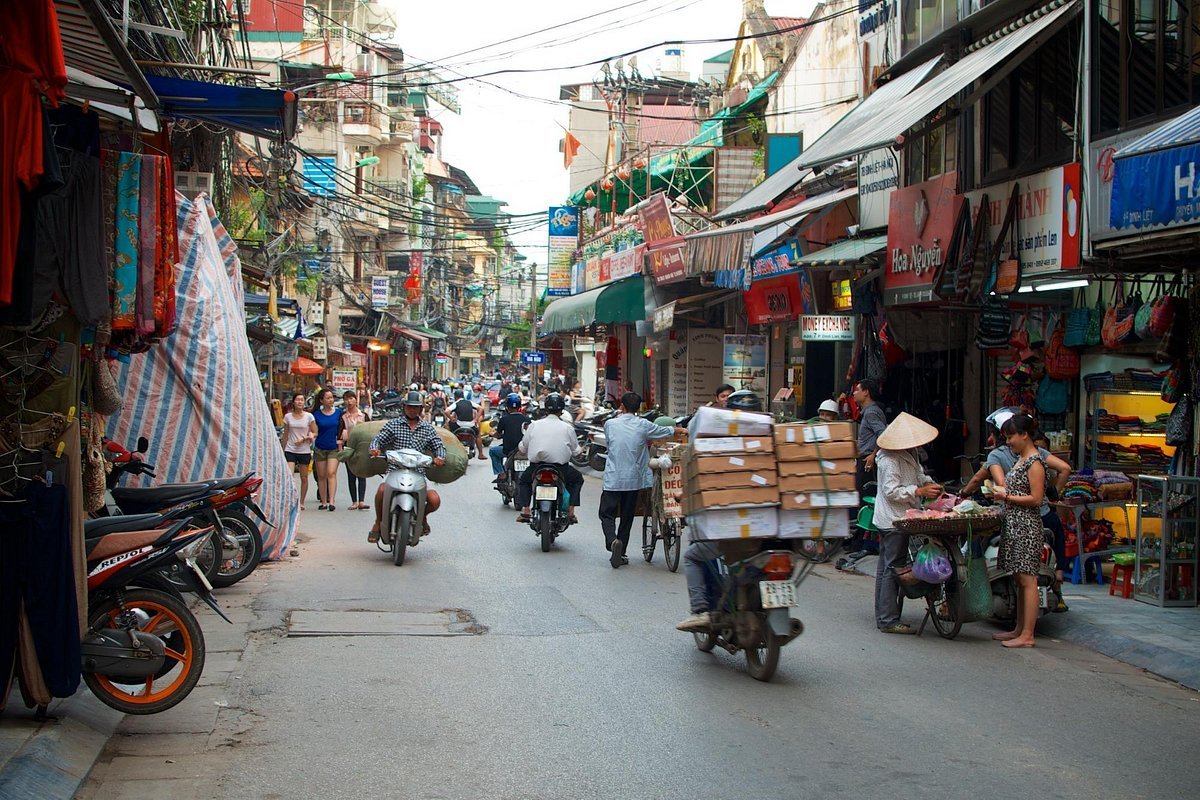
Khu Phố Cổ (Old Quarter) is Hanoi’s oldest, liveliest, and most thrilling district. The Old Quarter’s winding, confusing streets throb with activity. The air is filled with the hum of conversation and the thrum of engines as throngs of people and motor scooters rushing everywhere. Selling bananas, veggies, or conical hats, street sellers saunter up and down while carrying goods in baskets placed on long rods over their shoulders. Young guys keep coming up with postcard packets, “vintage” dog tags, bootleg guidebooks, and English literature on Vietnam. No one seems to pay attention as propaganda is blared over speakers installed on light poles.
The largest indoor market in Hanoi, Chợ Đồng Xuân, is crowded with chattering customers and vendors. The building’s late 1800s design is marked by its arched façade; the remainder needed to be rebuilt after a terrible fire in 1994. The Ô Quan Chưởng (Old East Gate), the final of the 16 city gates that protected the city under the rule of the Lý Thái Tổ dynasty, is located a few blocks south of the Chợ Đồng Xuân.
The oldest building in the sector and a holy location for Hanoi and the Vietnamese people, Chùa Bạch Mã (White Horse Pagoda) is where Lý Thái Tổ created the city of Hanoi that we know today. The Memorial House Museum provides nightly performances of traditional music and dance and gives visitors a look into a typical Chinese merchant family from the 1800s.
Despite this, Khu Phố Cổ should be seen as the major attraction. Consider drinking some bia hơi (fresh brewed beer) or phở (noodle soup). Be prepared to become frustratingly, wonderfully lost as you wander the endlessly curving streets, whose names change roughly every two blocks.
Hoàn Kiếm
Hoàn Kiếm is located south and west of the French Quarter. Here, wide boulevards weave between grand, elegant French homes. During the colonial era, it was the premier French residential area; now, it is home to several foreign ministries and embassies.
The name Hồ Hoàn Kiếm, which translates to “Lake of the Restored Sword,” alludes to a narrative from the 15th century, when Hanoi was ruled by the Chinese Ming dynasty. The Vietnamese monarch received a sword from a big turtle that surfaced on the lake, and he used it to drive the Chinese out of Vietnam. The turtle surfaced and swam back into the emerald murky waters of the lake as the emperor entered there. The story is remembered by Tháp Rùa (the Turtle Tower), a little stone pagoda on an island in the center of the lake.
The crimson, softly curved, and incredibly picturesque Cầu Thê Húc bridge spans the lake between the bigger island and the mainland (Sunlight Bridge). The bridge leads to Đền Ngọc Sơn (Jade Mountain Temple), where you can observe a preserved example of a huge turtle that once allegedly resided in the lake. Đền Ngọc Sơn is a collection of structures and terraces that look out over a lake.
At the northern end of the lake is Nhà hát Múa rối Thăng Long (Municipal Water Puppet Theater), where floating puppets perform Vietnamese folktales and folklore. Any tourist to Vietnam must see the art, which was created in the water-flooded rice terraces decades ago. A marble plaza and statue honoring Lý Thái Tổ, the first emperor of Hanoi, are situated across from the lake’s eastern side.
Nhà thờ Chính tòa Thánh Giuse (St. Joseph’s Cathedral), a Roman Catholic church constructed by the French in the late 1800s, is located a little to the west of the lake. The area around the Cathedral has recently emerged as Hanoi’s high-fashion district, with a plethora of stores selling high-end apparel and accessories at competitive Vietnamese pricing.
French Quarter
The French Quarter is located to the west and south of Hoàn Kiếm. Here, wide boulevards weave between grand, elegant French homes. During the colonial era, it was the premier French residential area; now, it is home to several foreign ministries and embassies.
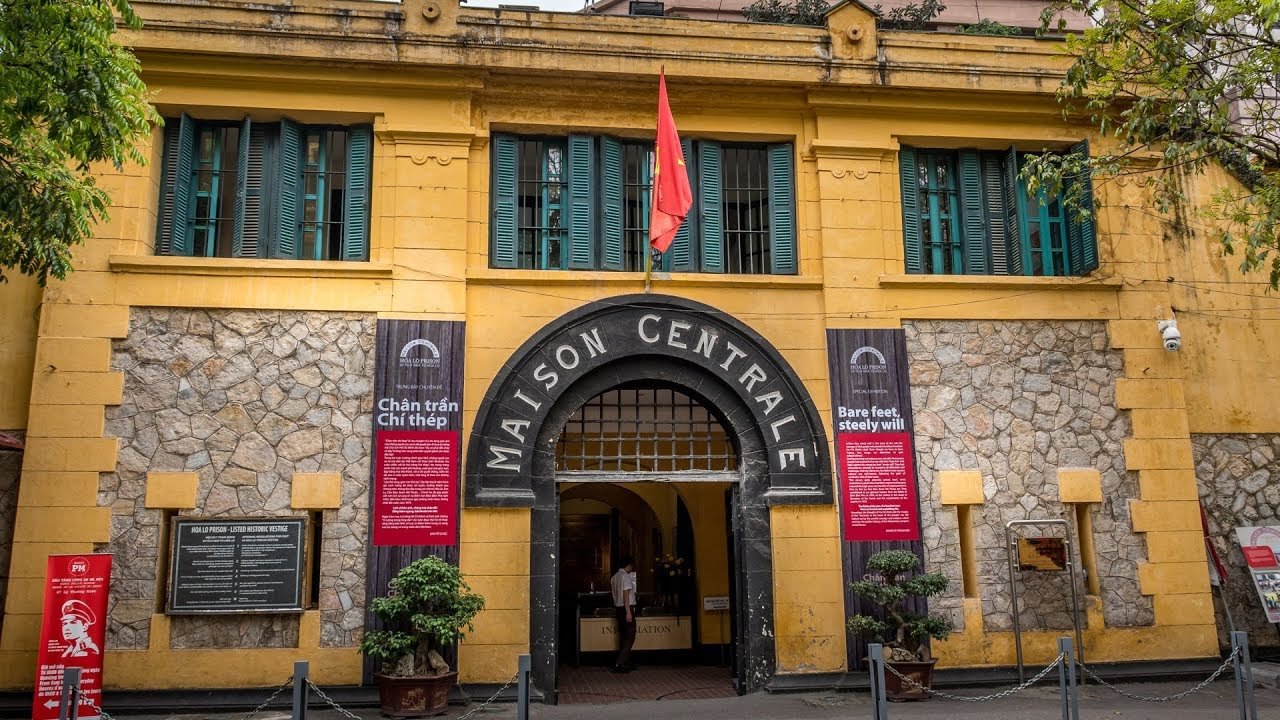
During the Vietnam War, American POWs called Hỏa Lò Prison the “Hanoi Hilton.” Thousands of Vietnamese nationalists and revolutionaries were formerly detained here by the French during their colonial rule. The majority of the building was destroyed during construction of the Hanoi Towers complex. What’s left, including rows of cramped cells, a guillotine, chains, and leg irons, bears stark witness to how horrific battle can be.
The most active pagoda in Hanoi, the Chùa QuánSứ (Ambassador’s Pagoda), serves as the official Buddhist hub of the city. It functioned as a dormitory for Buddhist emissaries from nearby nations in the fifteenth century. Unfortunately, the current structure was built in the middle of the 20th century; the old structure is now gone. Focusing on the contributions women have made to Vietnamese culture, history, and independence is the mission of the Bảo tàng Phụ nữ Việt Nam (Museum of Vietnamese Women).
Ba Đình
West of Hoàn Kiếm and the Khu Phố Cổ is where Ba Đình is located. All of the significant Hồ Chí Minh sites are located here. In this location, Ba Đình Square, the Vietnamese celebrate their Independence Day (September 2).
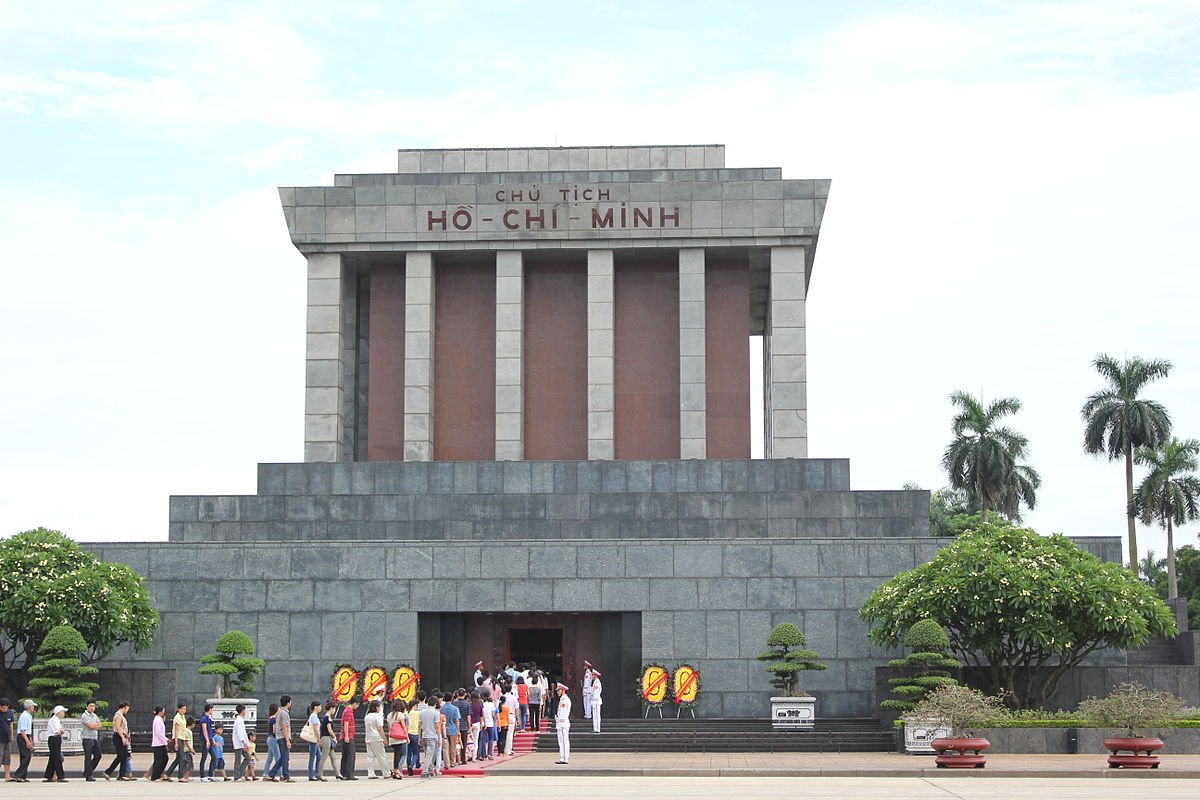
Lăng Chủ tịch Hồ Chí Minh (Hồ Chí Minh Mausoleum) dominates Ba Đình Square. It is the ultimate resting place of the Communist leader. Hồ wanted to be cremated and have his ashes scattered all across Vietnam, but his requests were disregarded. Visitors must always keep a respectful demeanor when in the presence of his preserved body; photographing, having your hands in your pockets, laughing, and other impolite actions are all prohibited.
Next door is Bảo tàng Hồ Chí Minh (Hồ Chí Minh Museum), which covers Hồ’s life in exhaustive detail. Guests may request a tour with an English-speaking guide. Although exhibits here are not quite so reverential as the mausoleum next door, you’re always better off observing proper decorum.
Nhà sàn Bác Hồ, which was constructed on the grounds of the previous Phủ Chủ Tịch (Presidential Palace), served as Ho’s main house for the final 10 years of his life. Based on the conventional Vietnamese stilt house, it is a straightforward yet lovely two-story dwelling. As long as the government continues to use Phủ Chủ Tịch for official purposes, it is closed to the general public.
Many people believe that Văn Miếu (The Temple of Literature) is the most stunning temple complex in Hanoi. The oldest university in Hanoi, which is devoted to studying Confucius and exchanging knowledge and wisdom, is housed in the a thousand-year-old temple. Even during the busiest tourist seasons, it maintains a serene air, much like the old thinker.
Vietnamese monarchs and queens previously resided at the enormous Thăng Long (Hanoi Citadel), portions of which date back to the 11th century. The structure is so big that the majority of the Old Quarter could fit inside its walls. Although you may visit the Bảo tàng Lịch sử Quân sự Việt Nam (Military History Museum) and its flag tower, it is still mostly off limits to tourists and is now under the control of the Vietnamese Army. The citadel is now a part of UNESCO’s World Heritage Site.
The 50 acres of lawns, pathways, and tiny lakes that make up Công Viên Bách Thảo’s botanical gardens are covered in sculptures.
Hai Bà Trưng
Despite being only a few kilometers from the Khu Phố Cổ, visitors seldom visit this neighborhood, which, while lacking in main features, is nonetheless worthwhile. Of all the districts in Hanoi, this one has the most people and numerous universities.
The Trưng sisters, fabled Vietnamese heroes who battled against Chinese invasion in the first century CE, are honored in the Đồng Nhân temple complex, which was established in the 1100s. It seldom welcomes tourists but comes to life in early March during the Hai Bà Trưng Festival.
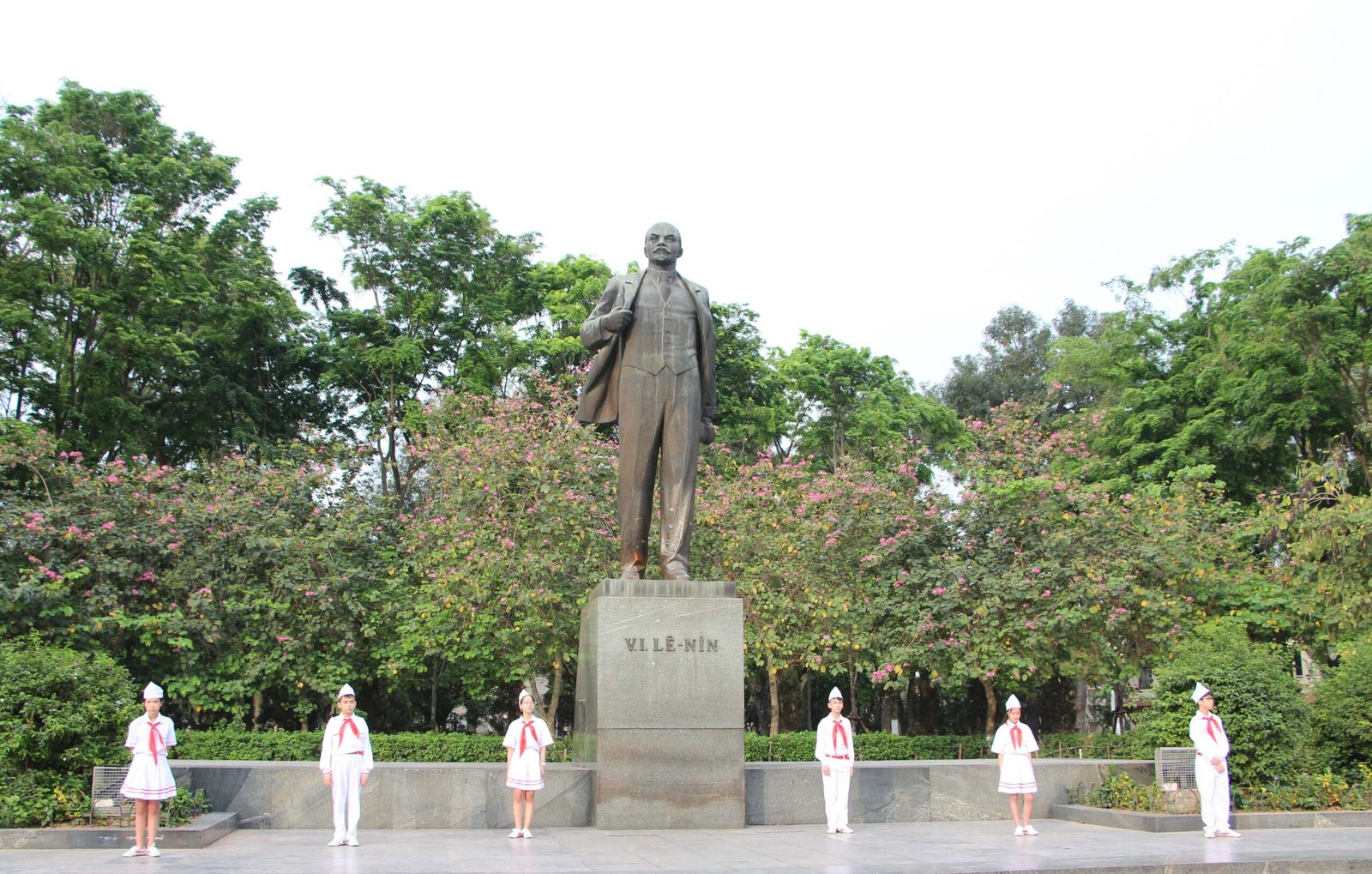
Hồ Bảy Mẫu (Bảy Mẫu Lake) is enclosed by Công Viên Lê Nin (Lenin Park), which is encircled by palm trees, seats, and trails. Young couples and joggers frequent here, and it serves as a serene, less crowded alternative to Hồ Hoàn Kiếm.