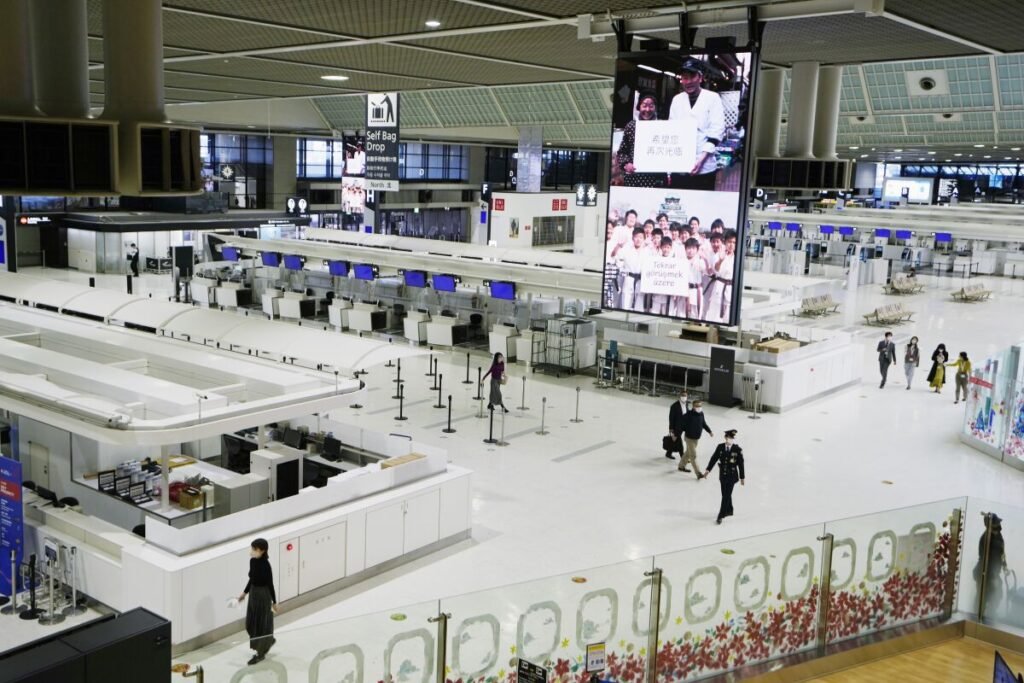
Japan intends to make a decision on whether to let individual international visitors and eliminate visa restrictions for short-term visits by October, as the country strives to stimulate inbound tourism in the face of a weak yen.
According to Chief Cabinet Secretary Hirokazu Matsuno, the government would examine reducing coronavirus-related travel restrictions, such as lifting Japan’s daily entrance quota of 50,000 individuals, dismissing short-term visas, and letting visitors who are not linked with tour companies.
“We will try to strike a balance between preventing infections and encouraging economic activity,” Matsuno said.
The decision will be based on the number of COVID-19 infections in September and October. One suggestion just demands for the admission cap to be raised.
Some government officials advocate reducing pandemic-related travel restrictions while infections are falling. The travel sector is keen to capitalize on autumn and winter demand from visitors looking to see fall colors and ski.
Prior to the pandemic, daily arrivals averaged over 140,000, including international visitors and Japanese returnees. The number was barely more than 14,000 in July 2022, well below the maximum 20,000 slots at the time.
According to Barclays Securities, a full return of inward travel may create 6 trillion yen ($42 billion) in tourist expenditure, which is more than 20% higher than the 4.8 trillion yen foreigners spent in Japan in 2019.
Foreign visitors buying yen with foreign currency “will have the effect of limiting the yen’s depreciation to a certain degree,” said Daisuke Karakama, a chief market economist at Mizuho Bank.
Even if Japan relaxes travel restrictions, a rebound in incoming consumption will be dependent in part on China’s COVID travel policy. Chinese visitors, who account for the majority of inbound tourism in Japan, are unlikely to return anytime soon since Beijing maintains tight quarantine standards for those returning from outside.