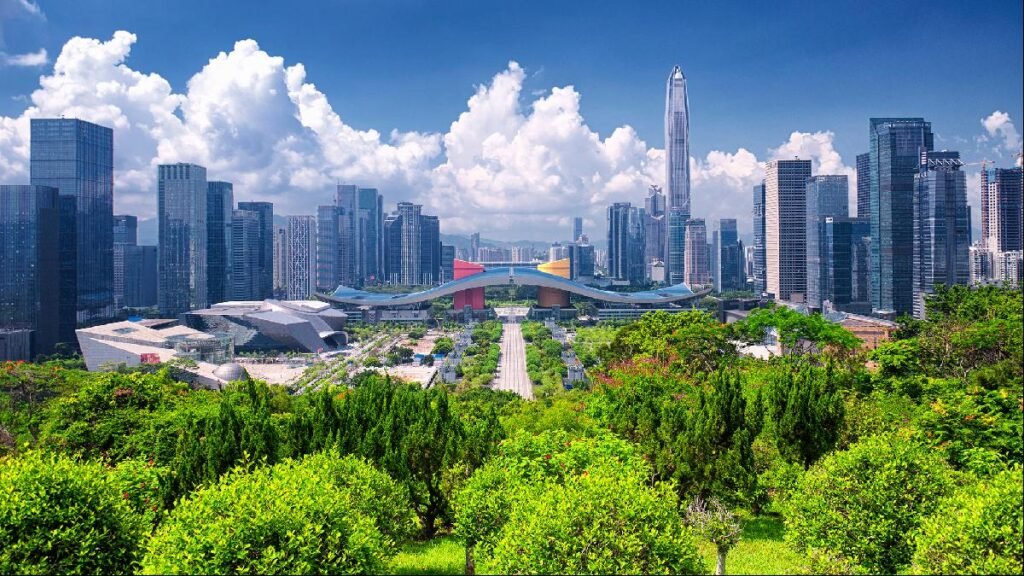
Shenzhen is a metropolis that is always changing. The population has never been accurately determined because of the constant influx of foreign businesses and migrant workers into and out of the city; estimates range from a little over 8 million to more than 14 million. Shenzhen, which has a considerable population of foreign professors and investors, is a high-tech metropolis with a developing skyline of China’s most cutting-edge buildings, a quick metro system, and a wide variety of international restaurants and upscale cocktail bars.
Shenzhen is neatly separated into seven administrative districts, three of which were just formally included in the cityscape in 2010. This is due to the fact that Shenzhen was created effectively over the last forty years. It is simple to understand which areas of Shenzhen are home to certain forms of living because each of these districts often has a focus and a theme.
Luóhú Qū (Luohu)
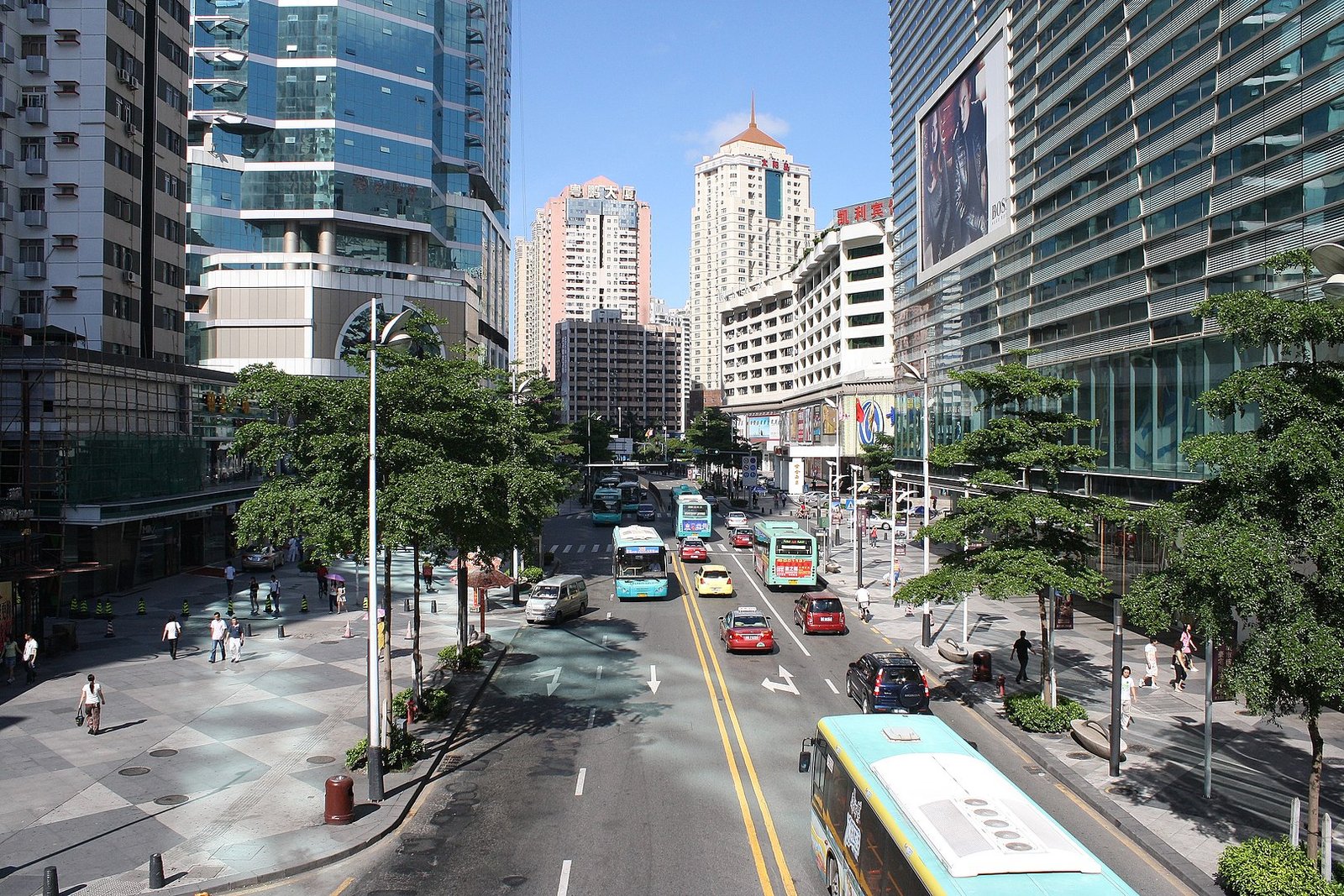
Although one of Shenzhen’s smallest districts, Luohu is also one of the oldest and most central parts of the city. It is situated along the Shenzhen River, which separates the Mainland from Hong Kong, and forms a portion of the city’s southern boundary. The Luohu area, which shares its name with a metro stop, serves as the primary point of entry into and exit from Hong Kong because it is the location of both the Man Kam To and Luohu immigration control stations. The busiest land border in both Hong Kong and Mainland China is thought to be the Luohu immigration post. It is also situated in Luohu, next to the immigration point, and is known as the Shenzhen Railway Station. Every day, multiple trains go throughout Guangdong Province and China from this enormous station.
Luohu is frequently the first or last stop for travelers through Shenzhen due to its strategic location and importance as a transportation and immigration hub; as a result, it is a bustling area for both retail and nightlife. It is home to a number of bustling avenues that have sizable shopping malls with well-known foreign and Chinese brand names. It is also a well-known location to buy fake goods such DVDs, sunglasses, and designer purses. This is due to the ease with which merchandise can be transported back and forth across the border due to its direct connection to Hong Kong.
On top of this, Luohu has a vibrant nightlife area. Luohu has the distinct appeal of a transient border-crossing area, and there are plenty of seedy massage parlors, karaoke bars, and nightclubs to go along with the more upscale bars and laid-back pubs in the area. Despite the fact that the majority of foreigners living in Shenzhen reside in the outer suburbs.
Fútián Qū (Futian)
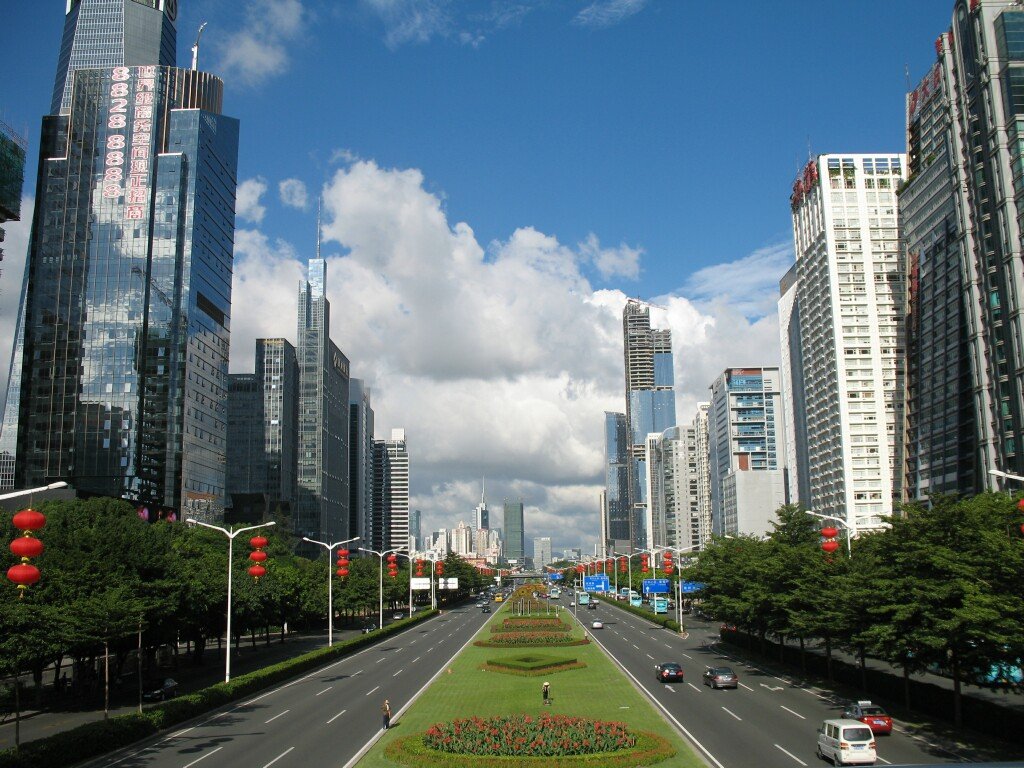
Futian, Shenzhen’s financial hub, is located just west of Luohu. Futian is completely new and shiny, with vast roads flanked on either side by freshly planted trees in the shadows of gleaming skyscrapers. If Luohu can occasionally be a little sleazy. Additionally, unlike the streets in the neighborhood to the east, those in Futian are wide and straight, producing a grid network that is broken up by a number of planned parks and a huge number of concrete squares.
The heart of Futian is a sizable square that is flanked to the west by Xinzhou Road, to the north by Hongli Road, to the east by Huangang Road, and to the south by Shenzhen Bay and the Hong Kong border. Additionally, it is surrounded by the huge green areas of Liánhua Mountain Park and the Shenzhen Golf Club.
The Futian district also houses Shenzhen’s municipal and district government facilities, such as Shenzhen City Hall and the Library and Concert Hall, which lends the neighborhood a somewhat official vibe.
Nánshān Qū (Nanshan)
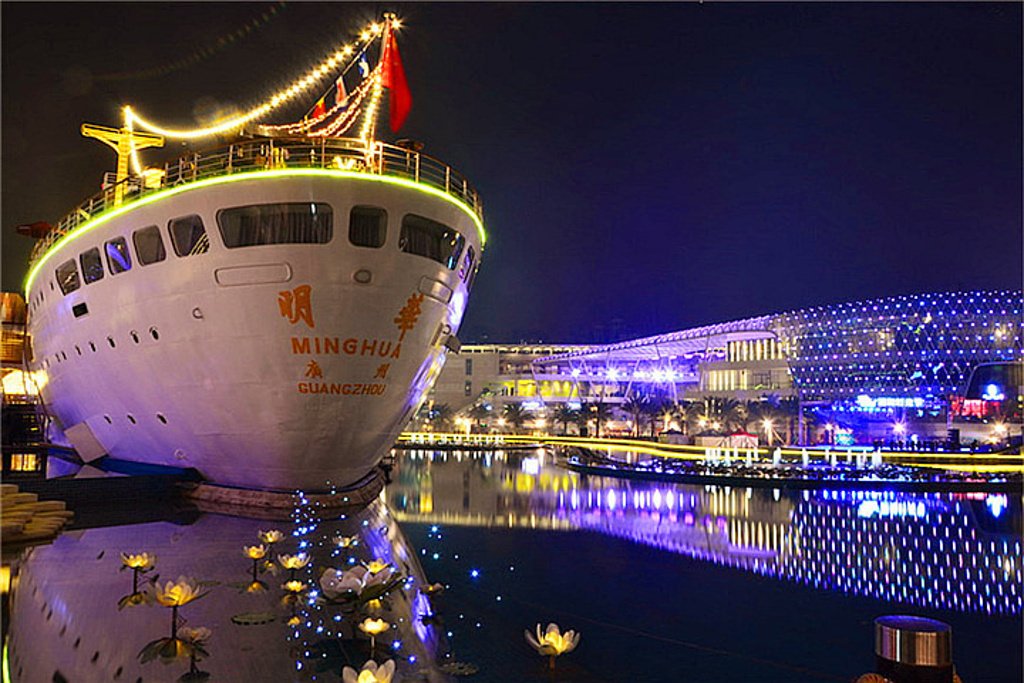
On the western extremity of Shenzhen’s urban area, the Nanshan district protrudes in the form of a broad peninsula. A small peak that looks over the region from the west side of the peninsula has the name Nanshan, also known as “South Mountain.”
The Nanshan district is notable for a number of factors, including its high concentration of educational institutions. With eight full-time universities, 16 elementary and intermediate schools, and a few private and international schools, Nanshan is one of China’s smartest districts.
With so many universities and international institutions, Nanshan has become a true playground for foreigners, with many Westerners moving here to teach English and other international courses. Of the various neighborhoods that make up the Nanshan District, Shékou (Shekou), which lies right at the tip of the peninsula, is undoubtedly the most popular for foreigners. With so many Westerners, the Nanshan district has gained a reputation as a center for upscale bars, international restaurants, and other “foreign delights.” It is a significant seaport for freight and passenger travel in addition to being the residence of many Westerners.
Shenzhen’s numerous theme parks have long drawn visitors, mostly from within China. Nanshan is home to a couple of Shenzhen’s major amusement parks, including Window to the World and Shenzhen Safari Park.
Yántián Qū (Yantian)
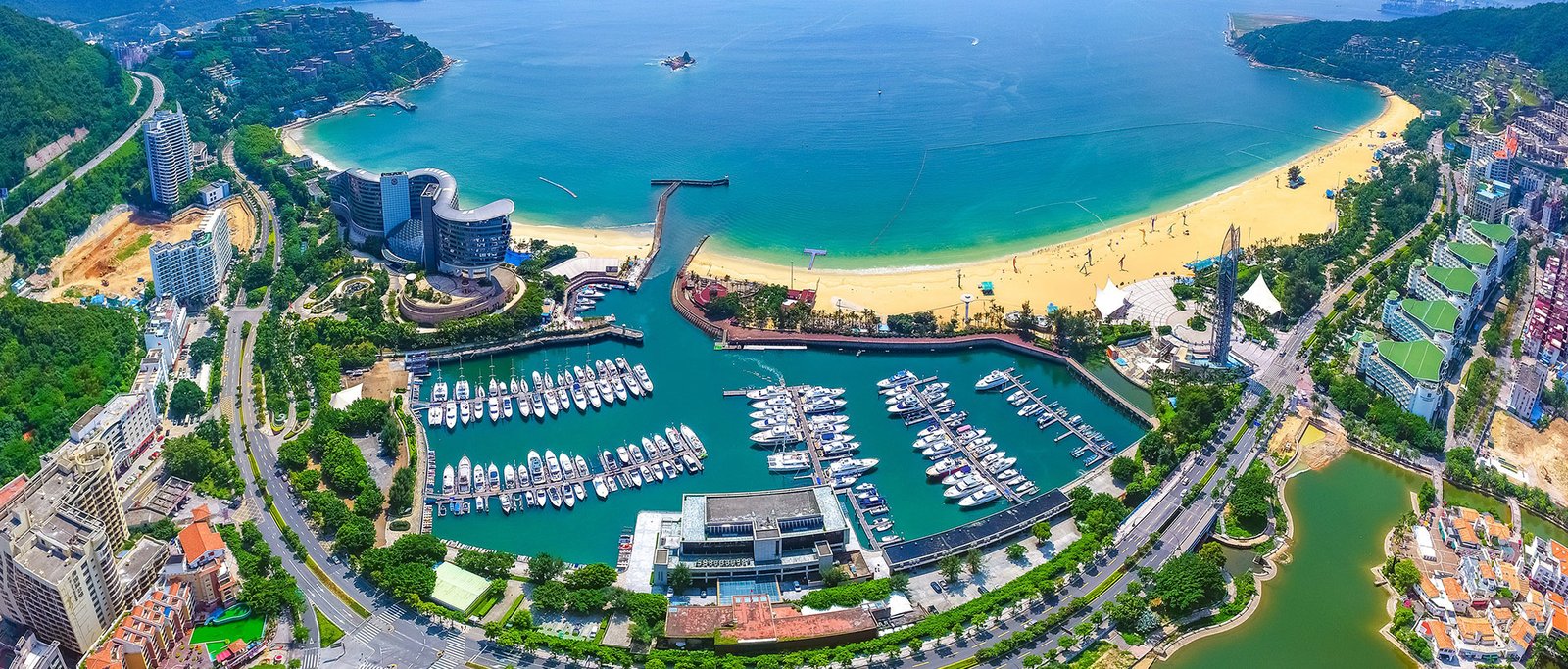
Yantian might be considered the heart and lungs of the city, stretching east along the southern boundary between Shenzhen and Mainland China. Yantian, which rises up from the serene waters of Mirs Bay into massive green mountains, is home to various green parks and beaches. Many of these mountains are still rather rural and unoccupied.
Along the sweeping coastline that borders the bay, Yantian is home to a several of Shenzhen’s most well-known tourist beaches. The Yantian coastline offers a more tranquil combination of sand beaches and tiny coastal settlements, in contrast to the western side of Shenzhen, which is characterized by industrial growth and seaports. Dàméish and Xioméish, two nearby beaches on the western side of the bay that provide a sizable selection of resorts and hotels for relaxing getaways.
Yantian also provides some intriguing insights into the region’s unique history as a former British colony and as a part of the Chinese Mainland due to its close proximity to the Hong Kong border. One such location is the little town of Shatoujiao. It has a well-known street that was formerly split in half by a canal that served as part of the border between Hong Kong and the Mainland. Zhngyng Ji (Chung Ying Street) still preserves the atmosphere of the Hong Kong and Chinese trade street where merchants formerly put up their buildings on opposing sides of the border, even if the canal has since dried up. The Zhong Ying Street Historical Museum offers a glimpse into this past.
Lónggǎng Qū (Longgang)
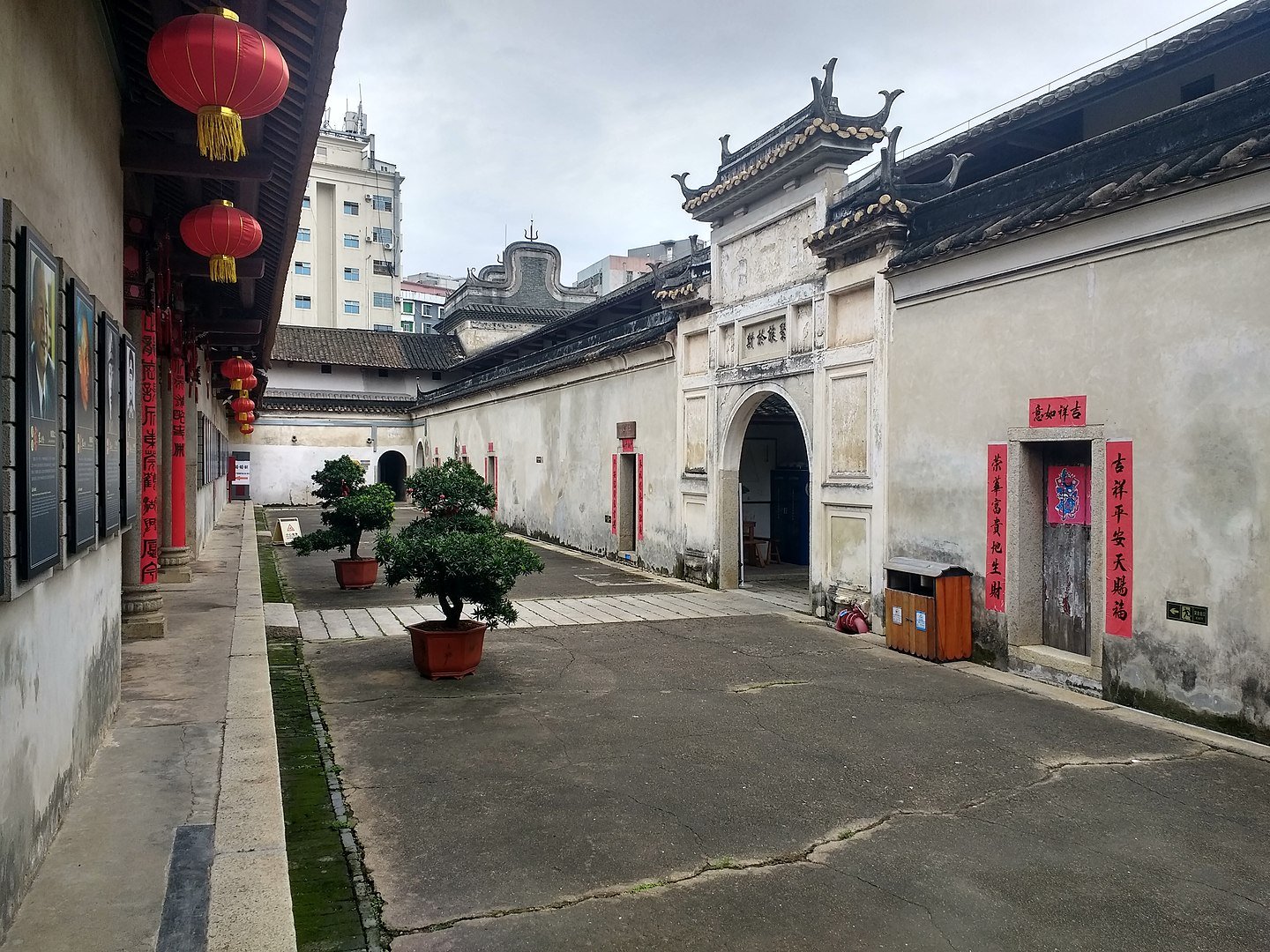
The recently added Longgang district, which extends northeast from Shenzhen’s city center, is still getting used to being a part of the larger Shenzhen municipality. This explains why the enormous area—now by far Shenzhen’s largest in terms of area—still exudes a cozy, rural vibe. Longgang is undoubtedly the place to go if you want to experience Shenzhen before it was Shenzhen. Additionally, Longgang, also known as Lónggǎng Kèjiā Mínsú Bówùguǎn (Longgang Hakka Cultural Museum), is the ideal place to experience the culture of the Hakka ethnic minority group, which makes up the largest ethnic minority group in the area.
That is not to say that Longgang is devoid of all forms of contemporary culture. The neighborhood has a growing center suburban area that is served by a dedicated Shenzhen Metro line, making it simple to explore this neighboring but off-the-beaten-path region of China.