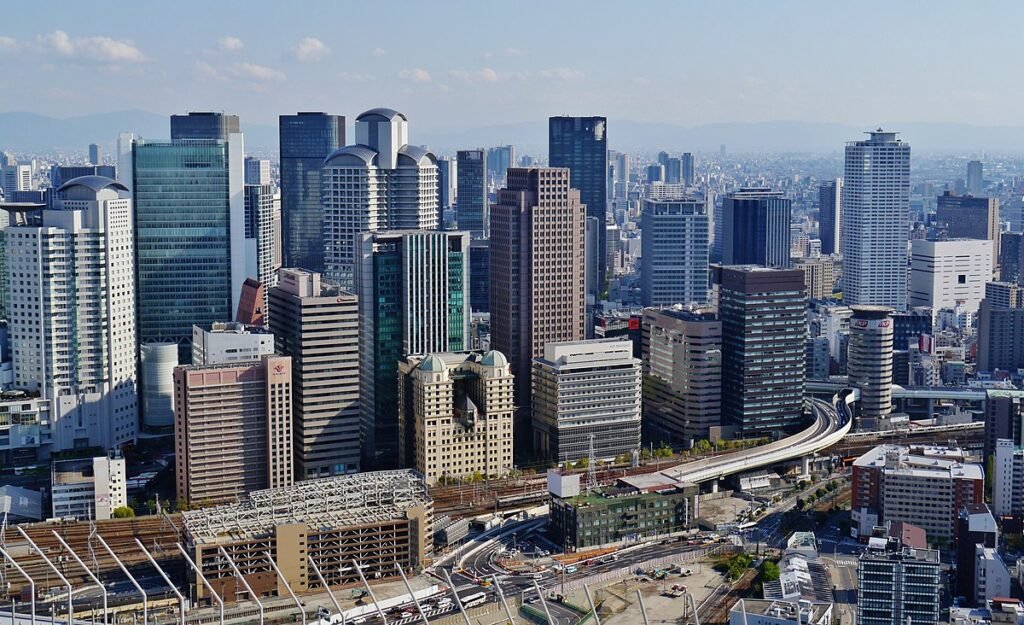
Osaka has played a significant role as a hub of trade in Japan since the late 16th century. Despite ongoing economic success, Osaka was built more for utility than beauty because to hasty repair attempts made after World War II completely destroyed the city. A huge panorama of contemporary skyscrapers may be seen here, interspersed with graceful examples of traditional Japanese architecture.
Osaka is divided into two very distinct districts. The commercial area of Osaka is located in Kita-ku in the north, while the majority of the city’s nightlife choices are found in Minami-ku in the south. This is not to imply that tourists won’t encounter a blend of work and play everywhere they go in Osaka; work and play permeate every area.
Umeda
The Umeda area is the heart of Osaka’s economic center. Umeda has developed into a commercial and banking hub as a result of Osaka’s revitalization of this textile wholesale sector. To serve local, national, and international business travelers, the neighborhood is dotted with several luxury, high-rise hotels. The Gto Taw Biru (Gate Tower Building) epitomizes the entrepreneurial energy of the Umeda district. The structure, known as “the Bee Hive” because of the busy activity within, is so enormous that the Hanshin Expressway physically runs through it on the fifth through seventh levels.
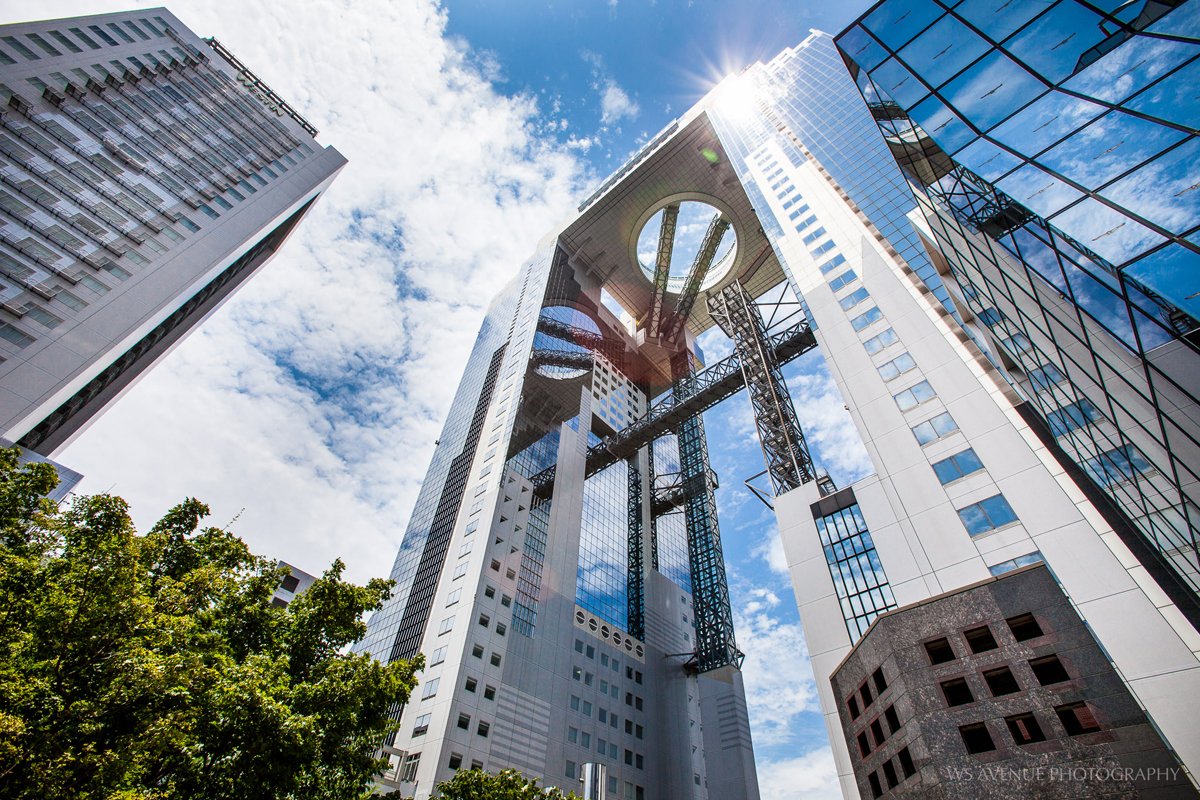
Overlooking Umeda are forty or so buildings that house workplaces and some of the greatest lodging and shopping Japan has to offer. Of course, there are numerous locations where you may find out why Osaka is renowned for its great eating. After hours, “salary men” fill the karaoke bars with their singing to drown out the worries of the day.
There are plenty of locations where you may enjoy the finest of Japanese retail. The Umeda neighborhood is home to Daimaru, Hankyu, and Hanshin, three of the biggest department stores in the nation. Numerous books, journals, and newspapers are available in English in a sizable Kinokuniya store in Hankyu Station. Japan has given rise to a number of fads, and the Pokémon Center store in Umeda is a prime example. Fans of all ages who want to catch a glimpse of the Pokémon craze at its height shouldn’t miss it. The store has thousands of Pokémon-related goods, and it’s around the size of two basketball courts. Take advantage of the subterranean retail arcades that snake like a labyrinth beneath the streets of Umeda if the weather gets bad.
HEP Five, Osaka’s stunning new shopping and entertainment complex, is also located in Umeda. HEP Five is home to several shops, eateries, and a movie theater in addition to a Ferris wheel perched atop a nine-story structure that provides breathtaking views of the metropolitan skyline. Next to HEP Five, the thriving Doyama-cho neighborhood is where people seeking more daring activities may find it. Doyama-many cho’s clubs and “love hotels,” which are brief-stay, romantic motels with themed rooms, truly heat up the evening. Doyama-cho is also home to the popular homosexual pubs and clubs in Osaka.
There is no shortage of upscale hotels for guests to select from after a day of business or shopping, or after a night of eating and clubbing, including the Ritz Carlton, Westin, and Hilton hotels.
Shinsaibashi
Visits to the hip Shinsaibashi neighborhood will satiate curiosity about where Osaka’s young people hang out and party. Ame Mura (American Village), a neighborhood with international influences and a favored hangout for the young and cool, is part of Shinsaibashi. Triangle Park, which is very unremarkable other from the fact that it serves as the hub of activity in the neighborhood, is located in the middle of Ame Mura. Osaka’s teenagers gather in Triangle Park after dark to practice their newest skateboard trick or to rap with fellow hip-hop enthusiasts. Some people utilize Triangle Park as a jumping-off point for a night out at one of the many nearby clubs. The newest in street fashion and music are available in many of the local stores. Ame Mura’s youthful vigor is reflected in the erratic street architecture. The restaurants in this neighborhood serve a wide range of regional and international cuisines.
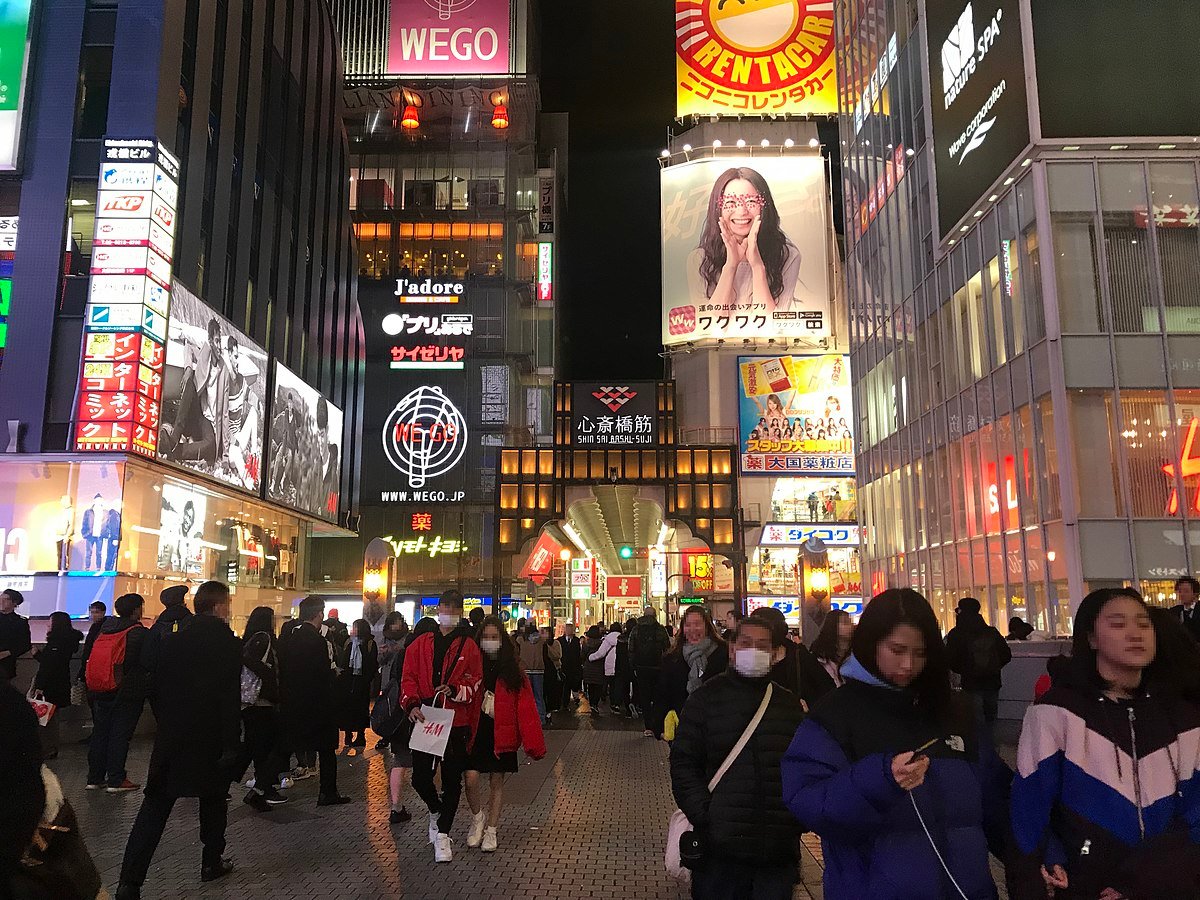
Suomachi-suji Street leads to the area known as “European Village,” where people may shop at their leisure while wandering the stone-paved walkways surrounded by brick buildings and British-style street lighting.
Of course, Shinsaibashi offers more than just ambiance; it is also Osaka’s top retail district, mostly because of the 600 meters (1,968.5 feet) long Shinsaibashi Shopping Arcade. There are both tiny businesses and large retail stores in the covered arcade. Visit this place to purchase contemporary and vintage mementos.
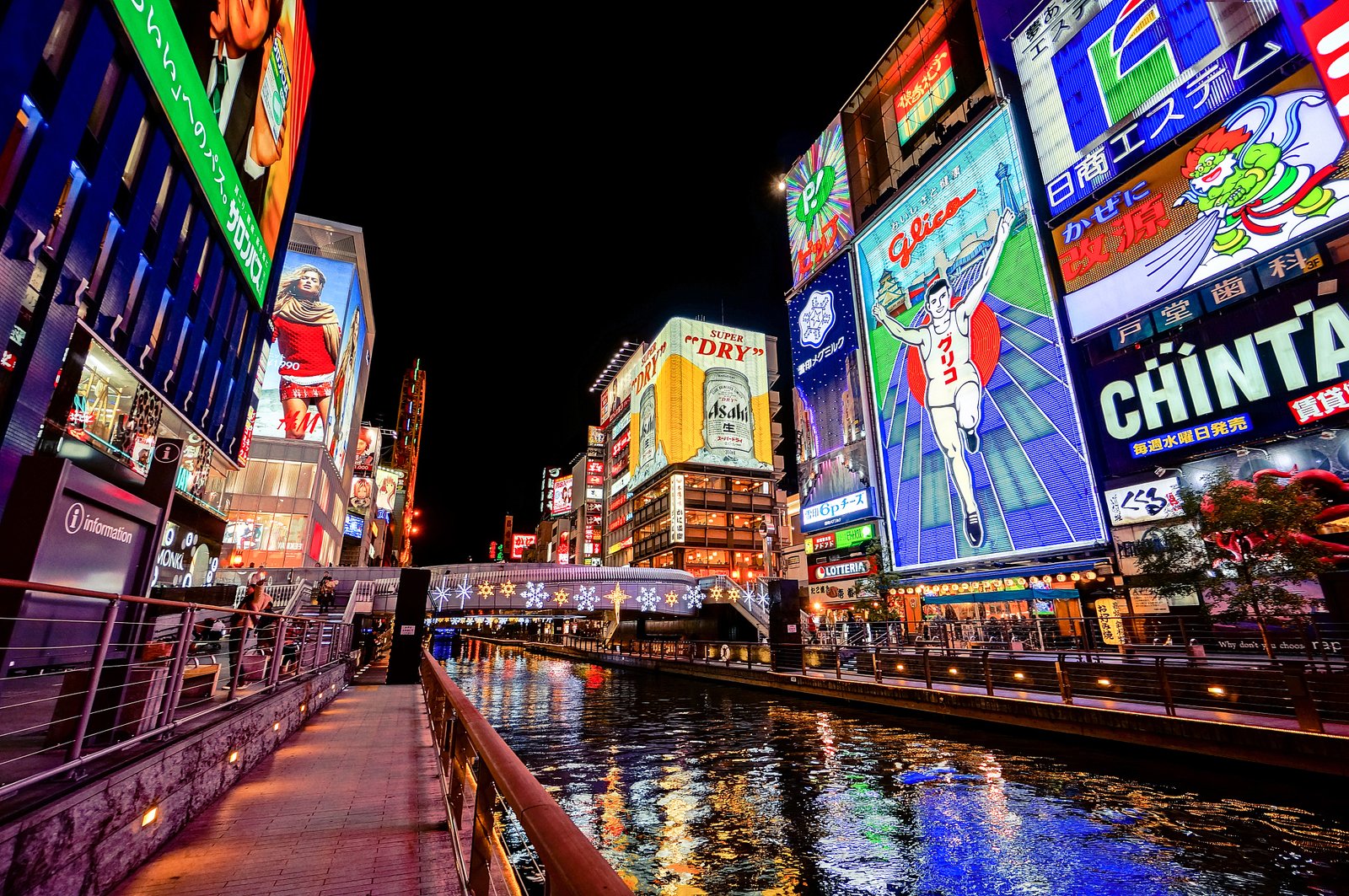
The Dontonbori canal, one of Osaka’s most well-known monuments, is located in the Shinsaibashi neighborhood. The famed Glico Running Man and Kani Doraku’s enormous Snow Crab with its long, grasping claws are two of the most distinctive neon signs, and they flash over the heads of those strolling on the roadway that runs beside the canal. The canal is crossed by the well-known pedestrian bridge Dontonbori Bashi. The “Pick-up Bridge” moniker refers to this bridge’s repute as a gathering place for lovers. The legendary Shin Kabuzika kabuki theater is situated not far from the bridge.
There are several hotels in the neighborhood for those who want to utilize Shinsaibashi as a base of operations, including the distinctive Asahi Capsule Hotel, where visitors stay in modules resembling the cryogenic suspension chambers seen in movies like Aliens. Marching bands from all around the world assemble for the energetic Mido-suji Parade in the fall.
Namba
In the Namba district, shopping continues, but this time it goes underground. Given the high cost of property in Japanese cities, the Japanese have developed incredibly innovative ways to maximize and even expand commercial space. The underground retail arcades have proven to be one somewhat successful strategy. There are kilometers of subterranean shopping in Namba, including the oldest underground arcade in the country, the Namba Underground Shopping Center, which was completed in 1957. In 1971, the more contemporary Minami Underground Shopping Center debuted.
There are plenty of possibilities to shop aboveground as well. There are more than 300 businesses in Namba City, a sizable retail complex at Nankai Namba station. The many inexpensive and delectable eateries in the vicinity of the station are a great place for weary shoppers to rest their feet.
The Namba Parks, a retail and entertainment complex created by American architect Jon Jerde, is likely to be the highlight of a trip to Namba. The complex’s architecture was influenced by nature, and as a result, the buildings bend like the walls of a canyon, while the water feature and greenery provide an oasis of quiet in the middle of a bustling city. The Parks Tower, a 30-story office skyscraper, and 120 stores make up Namba Parks. A walk through the park’s tree groves, meadows, streams, and ponds is a wonderful opportunity for locals and visitors alike to escape the bustle of busy, crowded Osaka. Namba Parks also has a sizable rooftop park that spans several blocks.
Tennō-ji
The Tenn-ji neighborhood blends the modern, the ancient, and occasionally the sleazy. Tenn-ji, like other areas of the city, has a lot to offer the adventurous shopper. The Kinetsu Department Store, the Mio Shopping Complex, and the Avetica Shopping and Dining Complex are a few places where you may spend a few yen. With the sole remaining tram line in Osaka, Abeno-suji Street evokes a bygone Japan with its smaller shops. Additionally, there are foreign shops here, including a Tiffany & Co. boutique.
Tenn-ji has a variety of additional activities for visitors looking to take a break from shopping. Nearby Tennoji Park offers a breath of fresh air and a spot to rest tired feet from walking on the street. After taking in the park’s natural beauty, tourists may stroll around its recently refurbished zoological gardens. The park’s Osaka Municipal Art Museum, which predominantly exhibits older Japanese and Asian pieces of art, is recommended for anybody with an interest in art or who needs to get out of bad weather.
Additionally, Tenn-ji is home to the majority of Osaka’s significant historical sites. Here, visitors may see Tsutenkaku Tower, Osaka’s equivalent of the Eiffel Tower, which stands in the heart of New World, a district well-known for its sex trade. Less sinisterly, Tenn-ji includes the most spectacular temples in the region, including Isshin-ji and Shitenno-ji. Japan’s oldest state temple is allegedly the Shitenn-ji Temple. You may reach the grounds of Saka-j, the former location of the nation’s government, by taking a short stroll from the latter.