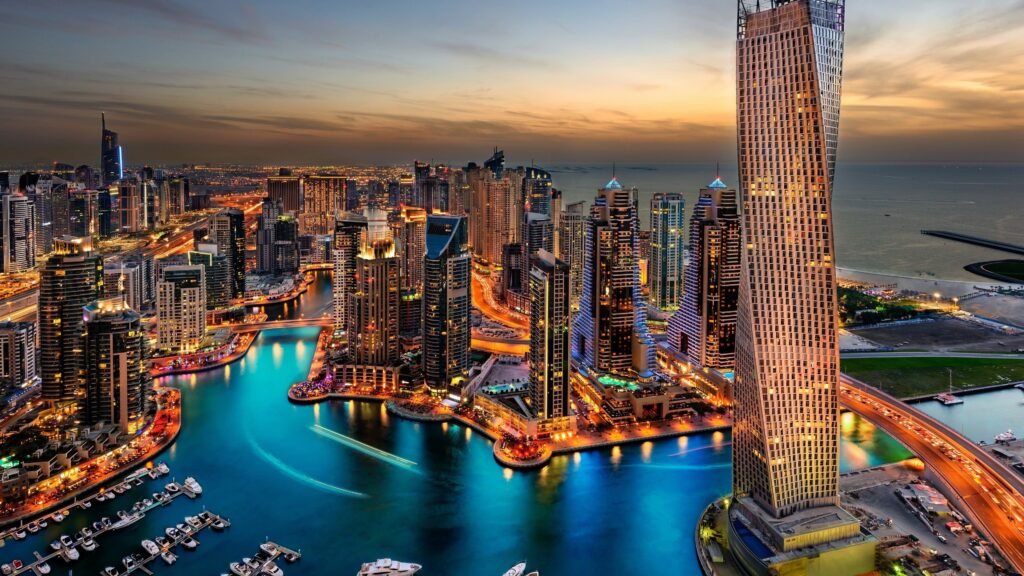
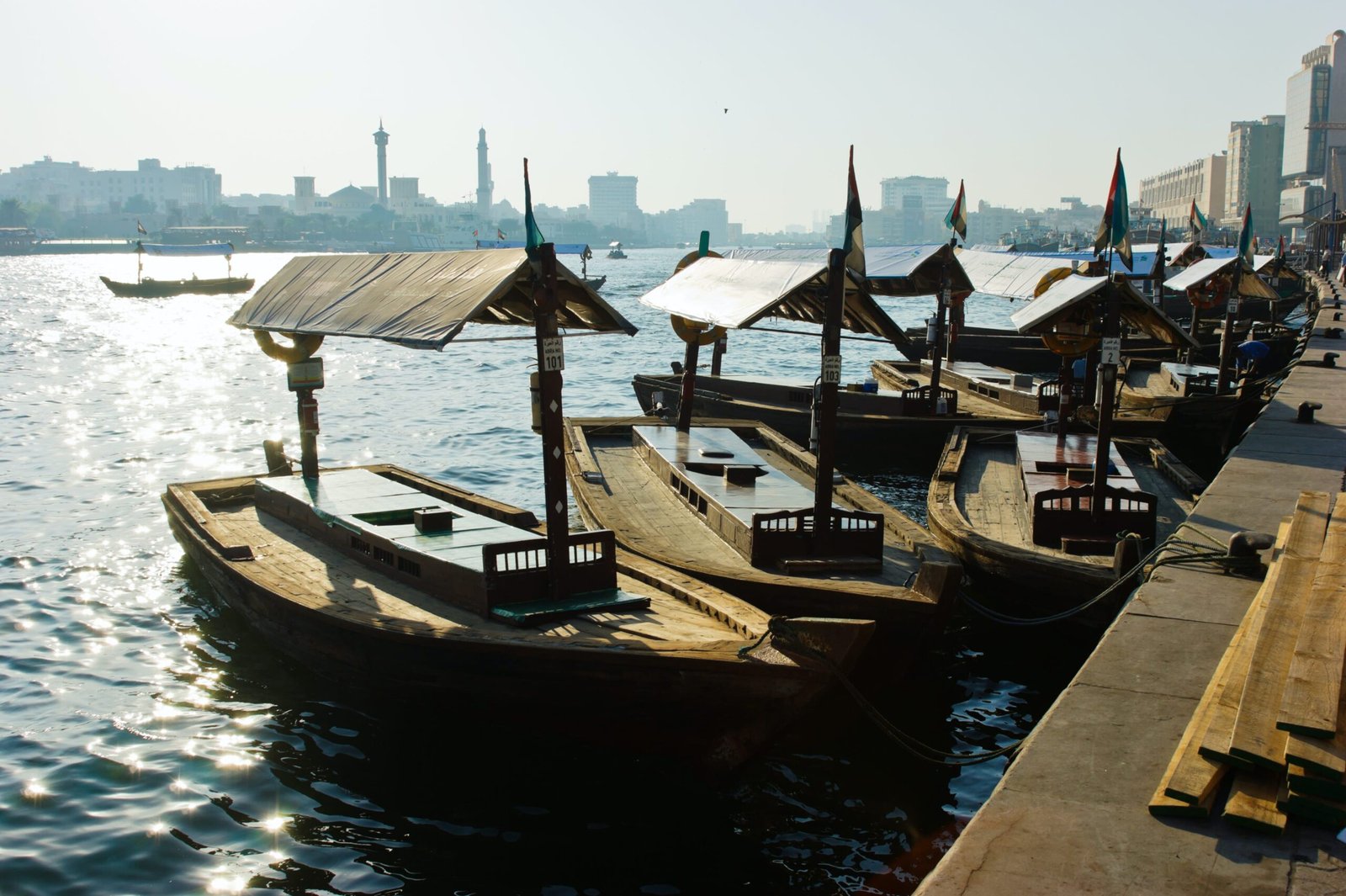
Dubai is divided by the broad and lovely Dubai Creek, which may be crossed by one of its elaborate bridges or by abra (marine taxi). The name “stream” may create the wrong idea because since it was dredged 50 years ago, this saltwater route has been a significant shipping entrance. The majority of the tourist-friendly neighborhoods are concentrated around the creek, which makes touring very simple. The Persian Gulf’s crystal-clear waters border the west coast of the city.
The city does have a bus system, but it isn’t as extensive or effective as you might think. If you want to see the old souqs (shaded marketplaces), you might consider walking rather than taking a cab, however the cost of doing so goes up after 10 p.m. Stay away from unmetered taxis, since the driver may decline to use the meter solely to fleece tourists.
Visitors frequently check out the Deira area’s waterfront beauty and souks, Sheikh Zayed Road’s skyscraping buildings and recreational options, Bur Dubai’s museums, Bastakiya’s historic quarter, and Jumeirah’s world-class beaches and modern monuments.
Deira
Deira, which is dispersed along the creek, was an important part of Dubai’s development since it served as the end of the old trade routes between Africa and Europe. Today, the stream is crowded with motorboats, commercial ships, and older, more traditional dhows. Teams of dockworkers loading these ships for lengthy excursions may be seen from the Dhow Wharfage, which is located on the eastern bank of the stream.
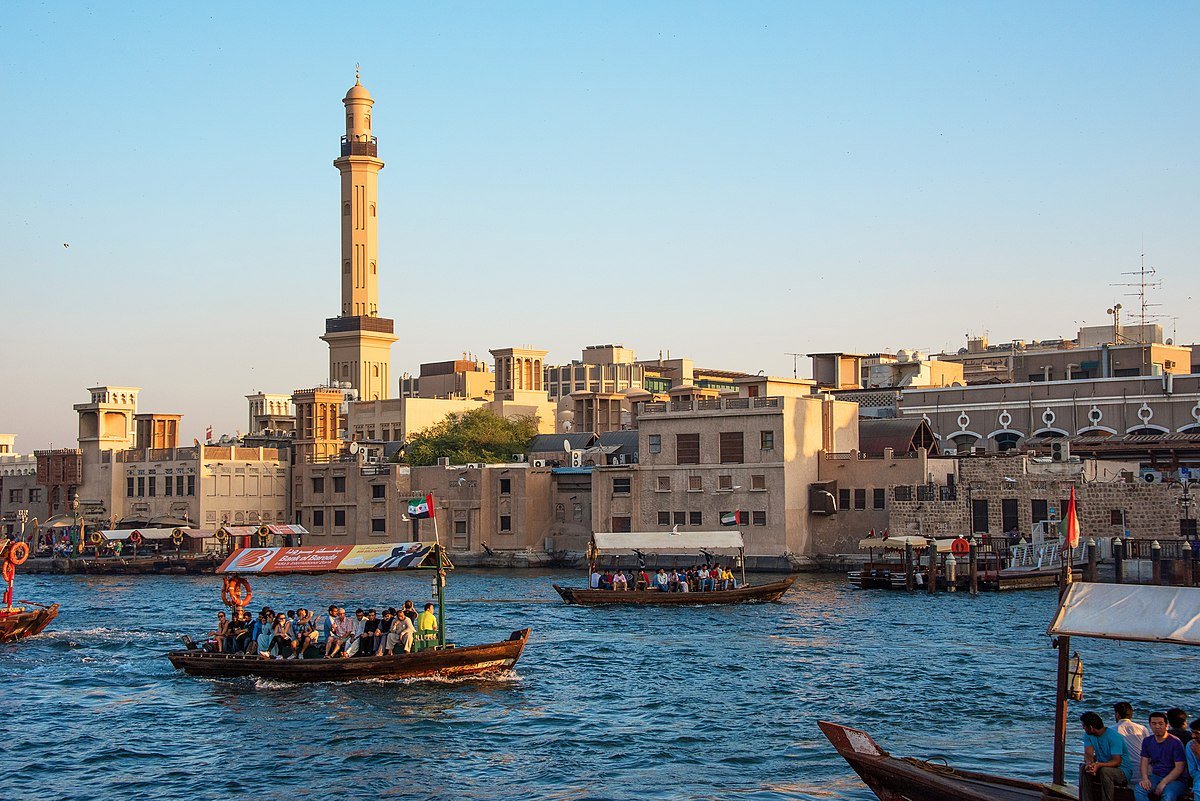
The bazaars along the Baniyas Road district of the Souq are remnants of Dubai’s heyday as a major commercial hub on the East-West trade route. Pearls, perfumes, spices, and gold are among the classic and traditionally Arabian goods sold beneath the fluttering canopy.
On al-Khaleei Road, less than 500 meters north of the chaotic Deira Bus Station, is where you’ll discover the Deira Fish Market. The market provides another another crucial window into Dubai’s modern gastronomy and mercantile heritage. The market is nearly a neighborhood in and of itself due to the numerous kiosks selling tuna, grouper, and catfish as well as its ubiquity, saline aroma.
On the extreme western end of the Deira peninsula is a collection of old commoners’ homes made of materials like coral. Al-Ahmadiya, Dubai’s oldest school, is close by. The 1912 building, which today serves as a museum, commands a commanding vantage point over the passing ships.
The creek’s western side contrasts sharply with its eastern side’s historical vista. From here, you can stroll through the Bastakiya neighborhood and the Grand Mosque all the way to the Persian Gulf on a brilliantly lit esplanade.
Sheikh Zayed Road
This region epitomizes the glamour, materialism, and commercialism that many tourists associate with Dubai. The multi-lane motorway on Sheikh Zayed Road snakes through opulent skyscrapers like the Dubai World Trade Centre, Emirates Towers, and Dusit Dubai. All of these structures convey a certain arrogance in addition to their grandeur. None of these, however, can compare to the Burj Khalifa, which is unquestionably the highest structure in the world at 828 meters (2,717 feet) tall.
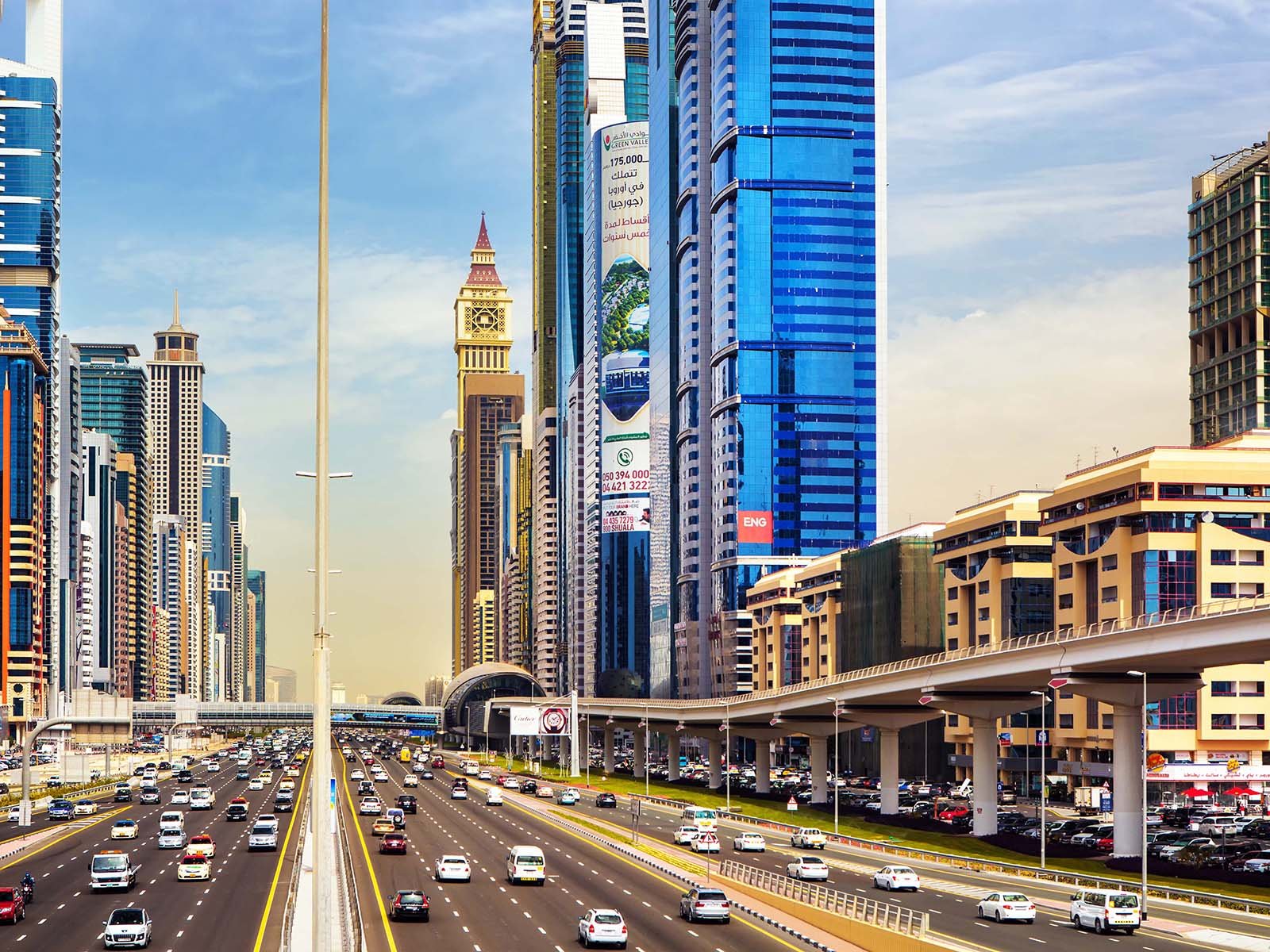
The road is also one of Dubai’s main shopping districts, where everyone from the averagely wealthy to the fabulously wealthy shops in huge malls with odd themes like Battuta and Lamcy Plaza, a discount alternative with Tower of London influences. The many departments of Battuta are modeled after the places that the medieval Arab adventurer Battuta visited, including the Egyptian Court and the Andalusian Court.
In the southern part of the area, close to where the road meets Interchange Number 4, you may find some strange and fantastic family leisure attractions. In the heart of the desert, an indoor skiing resort called Ski Dubai appears out of place. Like the other local attractions, it is housed in a sizable structure that resembles a city inside a city. 60 hectares (148 acres) of the land are taken up by the sculpted hedges, basketball courts, and BBQ areas of Safa Park, one of several lovely green spaces in the city.
Bur Dubai
In the 1930s, the first office building in the area was constructed on the site of this once-vibrant center of Dubai’s commerce. The elaborate wind towers and massive iron gates of the Diwan government buildings on Al-Fahidi Road serve as an example of what many people today consider to be antique and classical although it was ugly and practical when it was built. Bur Dubai may be the place where Dubai’s well-known diversity originated, as this is where Indian and Persian traders first settled in the late 1800s.
The old Bastakiya neighborhood is located on the south bank of the creek, to the west of Al Seef Road, and the government is gradually bringing it back to its former glory from the early 20th century. The narrow lanes that crowd around the lime and coral minarets of the Dubai Museum and the abundance of historic squares here contribute to recreate a Dubai that is radically different from its futuristic image.
Due to its abundance of galleries, Bastakiya also has a somewhat bohemian character. The Majlis and the XVA, two galleries filled with exquisite installations, sculptures, and artisan pieces, are housed in old mansions. The Grand Mosque’s minarets tower over Bastakiya, having recently been constructed in the 1990s, giving Dubai’s skyline a unique grace note.
The Heritage and Diving Village, which is located close to the creek’s mouth, simulates a Bedouin fishing and pearl-diving community in a way that feels more like a modernist theme park to visitors than an accurate recreation. Nevertheless, the camels that wander about among the traditional craftspeople in action provide an interesting ambiance. The Village, despite just recently constructed, has become a vital Bur Dubai area.
In contrast, Bur Dubai’s Trade Center Road has some fantastic shopping alternatives, including the Bur Jurman Center, which is brimming with name-brand stores, and Dubai Festival City.
Jumeirah and Satwa
An almost irresistible attraction for many expatriates, this coastal residential area just west of the city center has a California-like feel to it. Jumeirah Road, the primary seaside highway, is distinguished by luxurious condos, townhouses, and high-end lodging like the Burj al-Arab Hotel. You won’t be underestimating the Burj al-Arab Hotel’s iconic significance in the modern identity of the city if you compare it to Big Ben or the Empire State Building.
Some of Dubai’s finest pre-modern architecture can also be seen in this area. The Jumeirah Archeological Site, which has the remains of a souq, a fortification, and a town hall from pre-Islamic times, is located to the north and is silently crumbling amidst gleaming modernity. Two of the UAE’s most visually pleasing and colorful structures, the Iranian Mosque and Hospital, can be seen close by on al-Hudheiba Road. The palm-brushed minarets of the Jumeirah Mosque, yet another spectacular structure that combines traditional and contemporary Islamic architectural styles, rise at the center of Jumeirah Road.
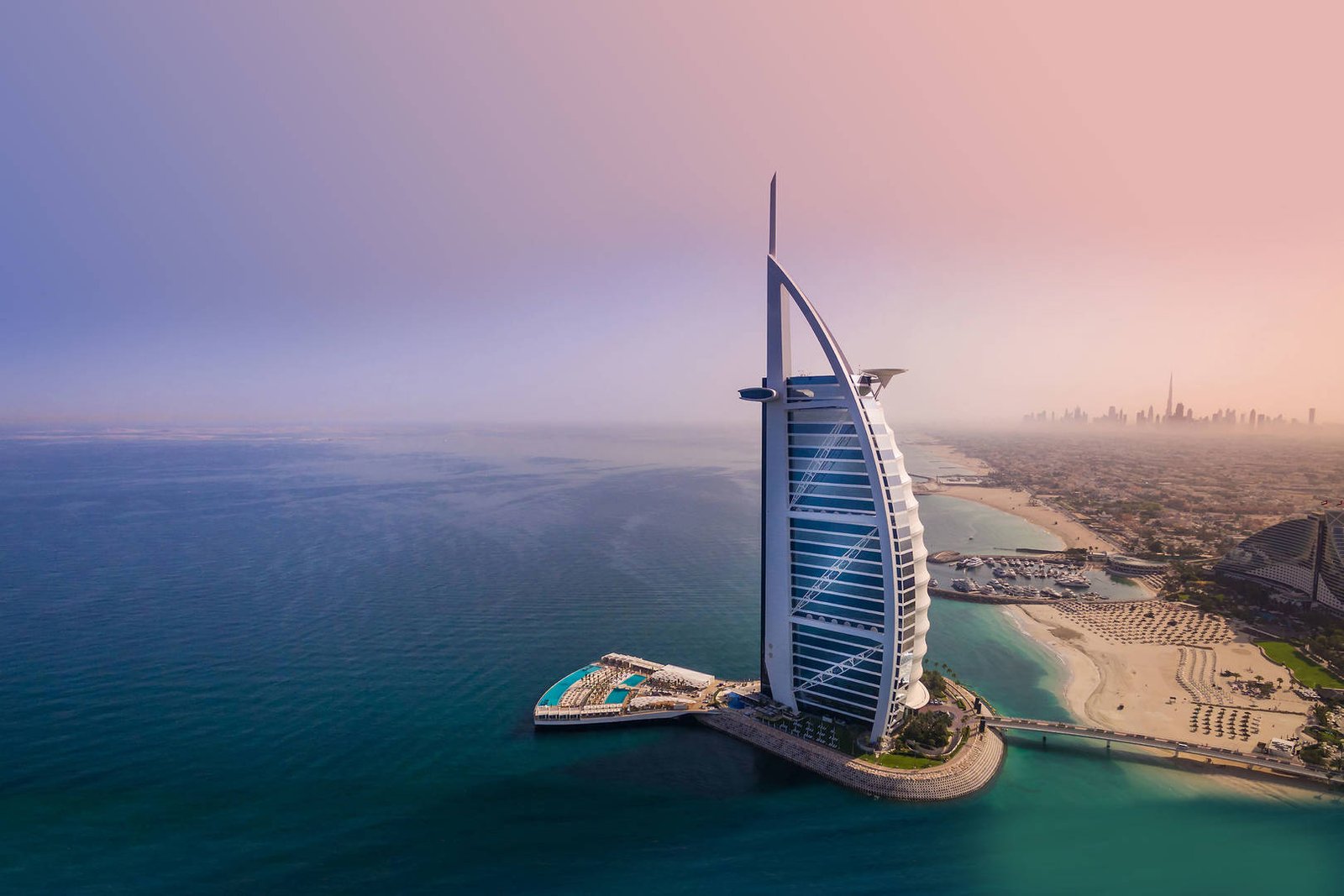
Jumeirah Beach is a white-sand, palm-lined haven for sunbathers, swimmers, and selfie-seekers. Beach enthusiasts will appreciate it. You might find it difficult to imagine that this famous package trip location was once a secluded shoreline where men would silently toss their fishing nets into the moonlight waves while you’re standing here in your bathing suit. The beach is surrounded by opulent hotels without being overrun by them. Off the shore, you can see the man-made Palm Islands, the product of a huge reclamation project that will soon be overrun with business and residential buildings.