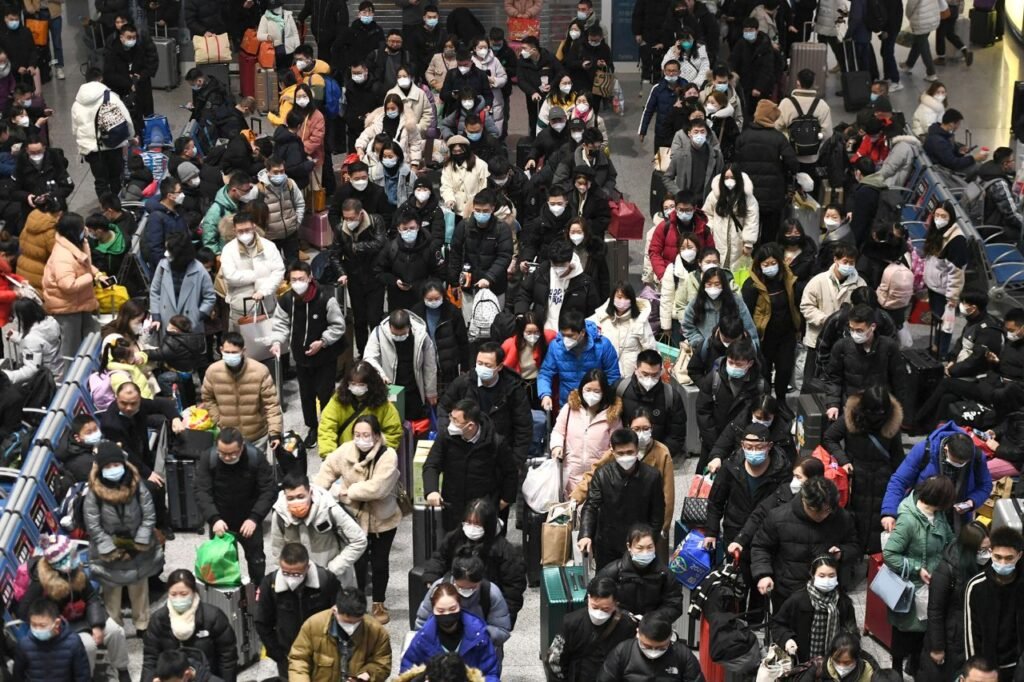
Tourism and tourism spending during the 2023 Lunar New Year holiday bounced back in China following removal of travel restrictions and zero-Covid policies.
According to information from the Chinese Ministry of Culture and Tourism, 308 million trips were made over the course of the seven days beginning on January 21, an increase of 23% from the holiday season in 2017. That was 88.6% of the total count from 2019, before the pandemic started.
In comparison to the previous year, national tourism revenue increased by 30%, reaching 375.8 billion yuan (US$55.4 billion), or 73% of what was recorded in 2019.
“Thanks to the rapid transition to herd immunity and the release of pent-up demand, there has been a notable recovery in in-person services consumption during the week-long Lunar New Year holiday,” said a Nomura report published on Saturday.
“The in-person services sector, including tourism, hospitality and entertainment, which was hardest hit by the pandemic over the past three years, is showing the most evident pent-up demand, as many people flocked to scenic spots, watched firework shows and crowded into restaurants and hotels.”
According to the city culture and tourism bureau, Beijing received more than 7 million visitors throughout the vacation week, an increase of 6.2% from the previous year. The entire amount of money generated by tourists in the capital city at that time exceeded 7.46 billion yuan, an increase of 57.6% from the year before.
Each visitor to Beijing spent an average of 1,047 yuan, gaining 48.4% from the previous year and 4% from what was recorded in 2019.
During the vacation week, more than 10 million people visited Shanghai, China’s financial hub, bringing in a total of 16.64 billion yuan in tourism revenue.
Ninety percent of the visitors registered during the 2019 holiday season visited Shanghai’s major tourist attractions, which received more than 4.1 million tourists.
During the Lunar New Year holiday, also known as Spring Festival in China, popular attractions welcomed swarms of visitors. Compared to a few weeks ago, the number of reservations for theme parks like Shanghai Disneyland and Universal Beijing Resort increased more than tenfold.
Other major tourist cities, including Xian, Harbin, Suzhou, Yangzhou and Chengdu, reported a strong recovery in tourism during the holiday, with visitors flocking to popular destinations and restaurants.