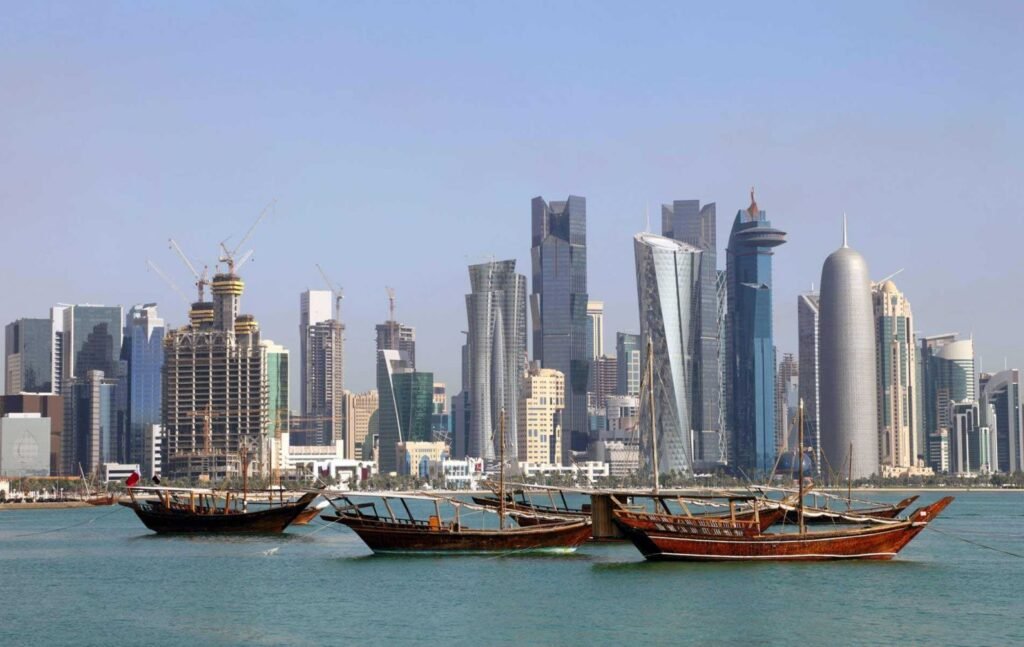
Doha’s rapid expansion has mostly been unplanned and uncontrolled, resulting in a patchwork of outlying communities without a central area. With the newest and fanciest districts dedicated to Qataris and international diplomats and businesspeople and the more dilapidated portions primarily allocated for migrant laborers, the city’s neighborhoods range from ultra-luxurious seafront homes to corrugated steel slums. The latter group, the majority of whom are from South Asia or less developed Arab countries, makes up around three-quarters of the city’s population.
Doha has expanded in all directions from its beginnings as al-Bida, which was located close to the current port region. The historic centre of Doha is located just south of the city’s expansive Corniche, which encircle the city in increasingly broader arcs to the southwest. The oldest parts of the city, such as Musheireb, Umm Ghuwailina, and Najma, are contained inside these, and beyond them are a number of opulent new constructions. The Doha International Airport is a short distance from the historic city center and is located southeast of the harbor. The city’s lively new skyline and burgeoning economic district are located in West Bay, which extends from the northern end of the Corniche. Further up the coast are the opulent new constructions of West Bay Lagoon. Both of them have used significant land reclamation initiatives to reach the sea on the east. Al-Waab and ar-Rayyan are only two of the newly constructed districts that are expanding the city’s western boundaries and extending further into the desert.
The Corniche
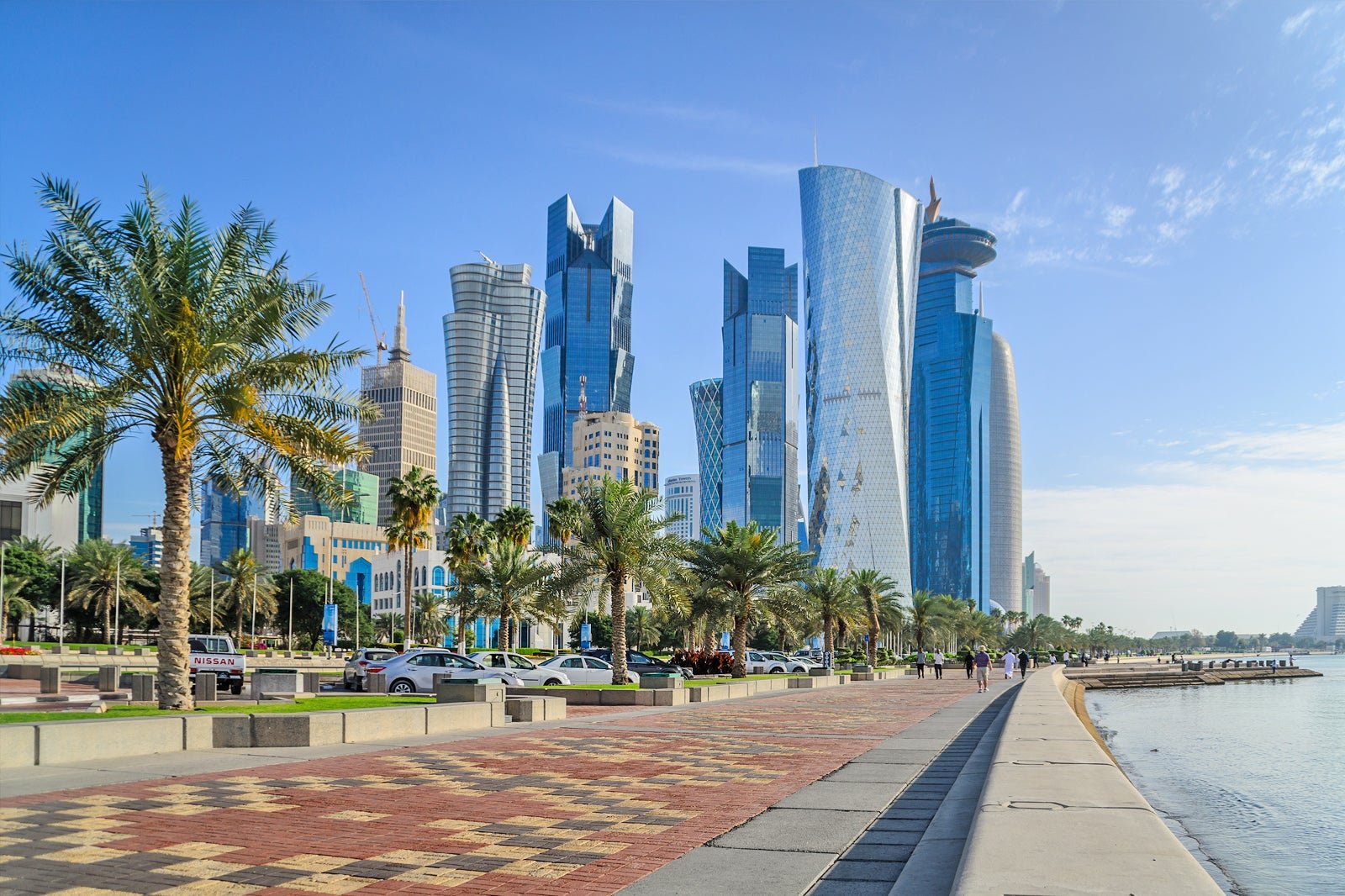
Doha’s extensive Corniche, which reaches toward the skyscrapers of West Bay, arcs west and then north from Doha Club, just north of the harbor. Nearly seven kilometers (four miles) of well-kept pathways adorned with flowers, fountains, sculptures, and parks, notably the sizable al-Rumalia Park, parallel the Corniche Road. It is the city’s preferred promenade for obvious reasons, as seen by the countless walkers, joggers, and picnickers taking advantage of the views of the skyline, Palm Island, and the variety of maritime boats in the busy port across the bay. Along the Corniche are several of Doha’s most recognizable structures, including the opulent Marriott Hotel and Ritz-Carlton Sharq Village & Spa, the modernist Museum of Islamic Art, and the pyramid-shaped Sheraton Doha Hotel and Resort.
West Bay ( al-Dafna)
Much of this region, which is now Doha’s most prominent feature, didn’t even exist until the 1980s, when Doha’s northern bounds were extended into the Gulf as part of a massive land reclamation effort. West Bay, also known as al-Dafna, has undergone intense development throughout the following decade, changing this once seaside area into Doha’s new major business district. Visitors may easily see this because West Bay is home to several of the city’s tallest and most ambitiously constructed buildings. Now, the district extends northward from the Corniche’s northernmost point.
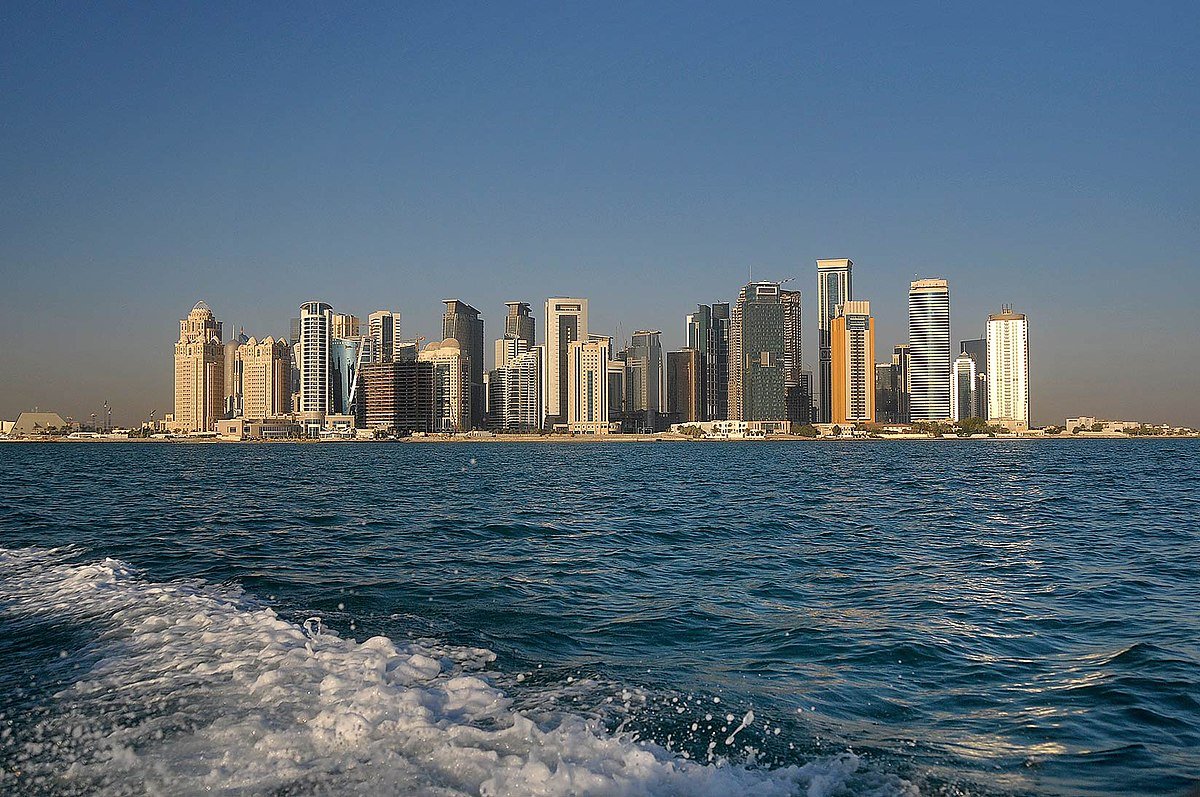
The ever-expanding West Bay neighborhood in Doha obviously serves the highest strata of the city’s socioeconomic ladder with its smattering of five-star hotels, apartment complexes, business buildings, and opulent villas surrounded by well-kept parks. The Four Seasons, Millennium Hotel Doha, Hyatt Regency, and Beverly Hills Apartments are just a few of the best hotels in the area. The enormous Qatar Exhibition Center and City Center Mall, which was formerly the biggest retail mall in the Middle East, are two other attractions. Many of Doha’s foreign embassies are located in the Diplomatic Area, which is the neighborhood’s northeastern corner. Along the shore, new construction is still being built as it moves northward toward the extravagantly expensive West Bay Lagoon. Although the new downtown area is undeniably impressive, both residents and visitors have noted that it now lacks soul, which its hungry developers are eager to acquire next.
Al-Waab and Salwa Road
The al-Waab and Salwa Road neighborhoods, located well inland on Doha’s western edge, are home to some of the city’s newest and most magnificent constructions. Since the mid-1990s, both have experienced explosive expansion, but al-Waab has sprung to life with upscale residential communities that appeal to families, as well as shopping malls and recreation centers. Aspire Tower, Doha’s tallest skyscraper, Villagio, a stunning mega-shopping complex with a Venetian theme, and Doha Sport City, which houses numerous enormous venues created for the 2006 Asian Games, all contribute to drawing audiences to these new areas. The Aspire Dome, Hamad Aquatic Center, and Khalifa International Stadium, Qatar’s biggest athletic venue, are among the Olympic enhancements.
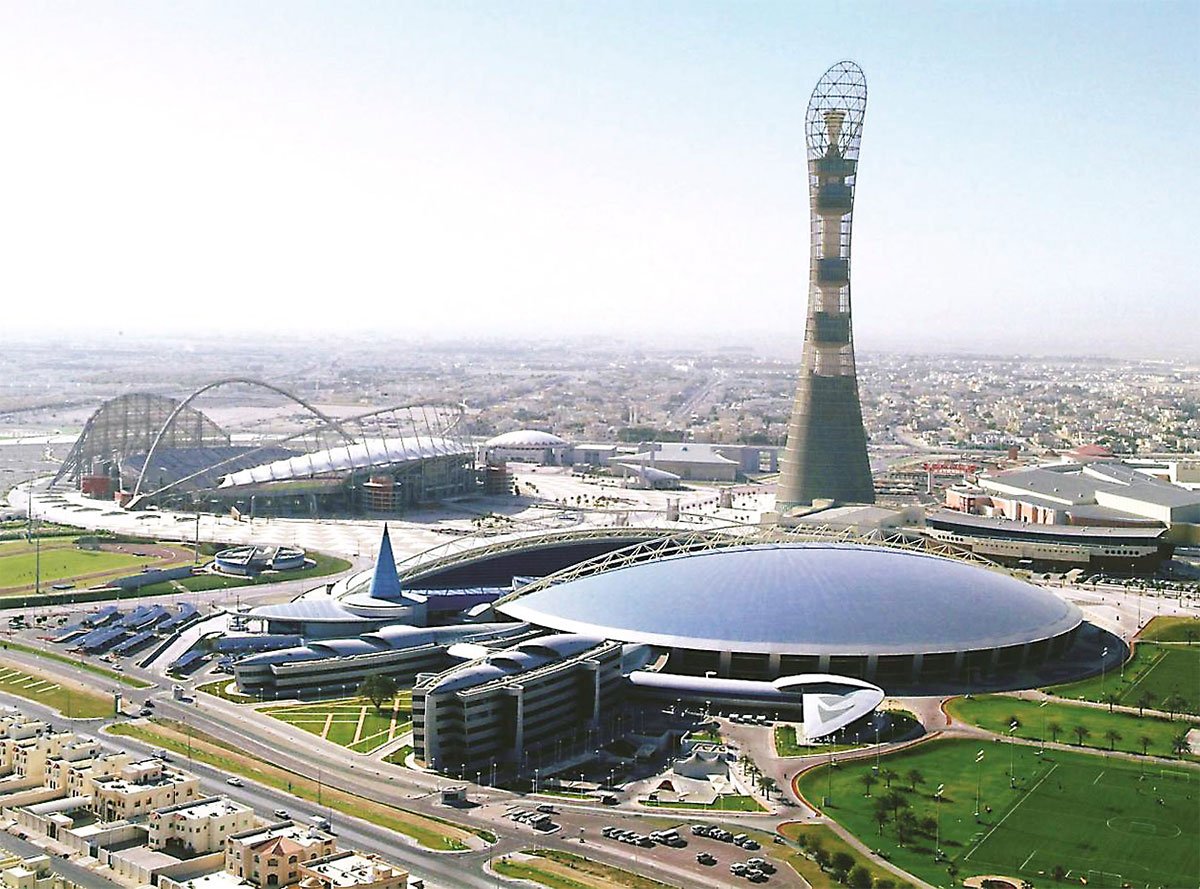
The Doha Zoo and Aspire Park, which is next to the Hyatt Plaza and has a lot of greenery, meandering pathways, and beautiful fountains, are recent additions that have added to the area’s attraction. Many people consider the park to be Doha’s most beautiful green area. Al-residential Waab’s growth continues apace with ambitious new building projects intended to attract even more affluent Qataris and foreigners to the area. The neighborhood is home to cutting-edge hospitals and reputable institutions, such as the American School of Doha, Park House, and Doha College. Some of the more noteworthy ones include Beverly Hills, the sizable Green Village, and al-Waab City, a 2,200-unit complex with lots of greenery and a hotel, a retail mall, and a public pedestrian plaza at its center called Baharat al-Waab.
Al-Waab Street’s developments are joined by those on Salwa Road, which runs parallel to the south. Salwa, which connects Doha with southern Qatar and the Saudi Arabian border, is a long, southwest-facing street lined with brand-new shopping malls and auto dealerships. Salwa Road is a popular area for families despite the lack of attractions in the near area. It has a large number of tranquil housing compounds close to al-Waab’s numerous attractions.
Old Doha
Doha isn’t particularly ancient compared to many of its Middle Eastern neighbors, but the city’s historic core, enclosed by its ring roads, does seem a touch worn down in comparison to the sprawl of upscale new constructions. The historic downtown is centered around the Souk Waqif, which is close to the Sofitel, and is primarily made up of unremarkable, partially dilapidated concrete blocks that are dotted with low-rise office buildings and a few isolated slums. Migrant laborers from the middle class and lower classes live in large portions of the area.
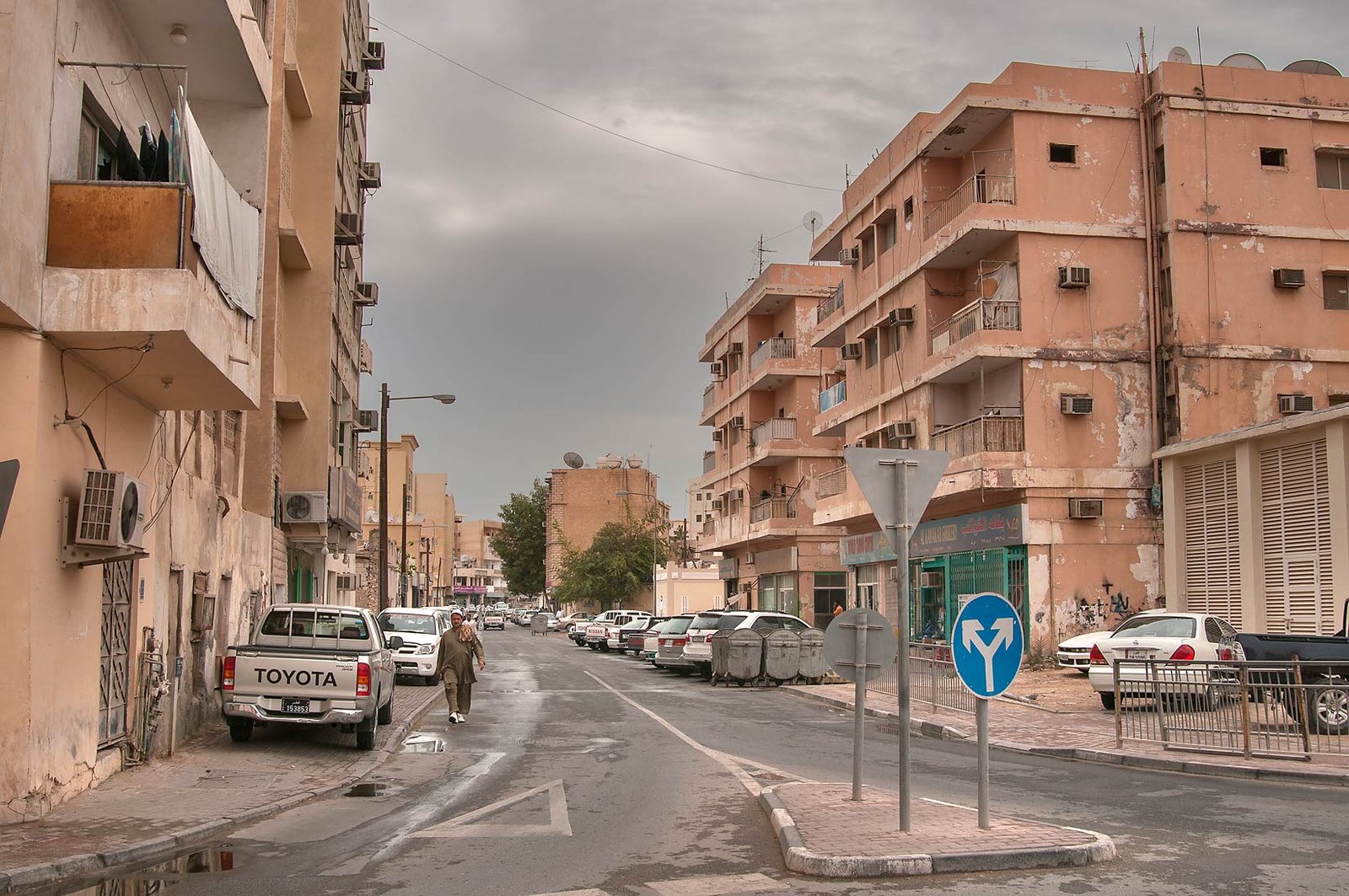
Musheireb, the central district of the ancient city, is located right next to the Emiri Diwan and extends south away from the Corniche. The region has numerous historic souqs, most notably the recently renovated Souk Waqif, one of Qatar’s most well-known locations, in addition to banks surrounding the main Grand Hamed Street and modest housing and commercial towers. A new construction project promises to give this area of the ancient city a facelift similar to what has been done with Souk Waqif. The Musheireb Project, also known as the Heart of Doha, aims to restore the city’s historic center by allegedly fusing elements of Qatari tradition with cutting-edge services and technology.
Older neighborhoods in the downtown area may be found at Musheireb, Old Ghanim, Umm Ghuwailina, Muntazah, Najma, and the Old Airport neighborhood. Particularly in Old Ghanim and Umm Ghuwailina, many of these neighborhoods’ dusty, cracked structures are from a more modest period of Doha’s history. These areas are also the principal residences of male migrant laborers. These districts lack much in common with the mega-complexes of Doha’s wealthier neighborhoods, with the exception of The Mall, Qatar’s first contemporary retail center, located in Najma. However, these areas are hard to surpass when it comes to the authenticity of the region (one of Doha’s most in-demand commodities) and its delectable selection of inexpensive foreign cuisine. There is rarely a better location to explore the heart of Doha than the Souk Waqif, which is close to the city’s key attractions including the Al-Wakra Museum, Al-Koot Fort, and the Corniche.
West Bay Lagoon

This thriving premium development is located north of West Bay, Doha’s newest major business area. The Intercontinental Hotel, Ritz-Carlton West Bay Lagoon, Doha Golf Club, and Aladdin’s Kingdom, a family theme park housing numerous rides, games, and events, are among the area’s lavish collection of posh new buildings. And continuing eastward from here is arguably Doha’s most ostentatious construction to date: a massive Riviera-style complex of 13 man-made islands crammed with retail establishments, dining options, and entertainment.