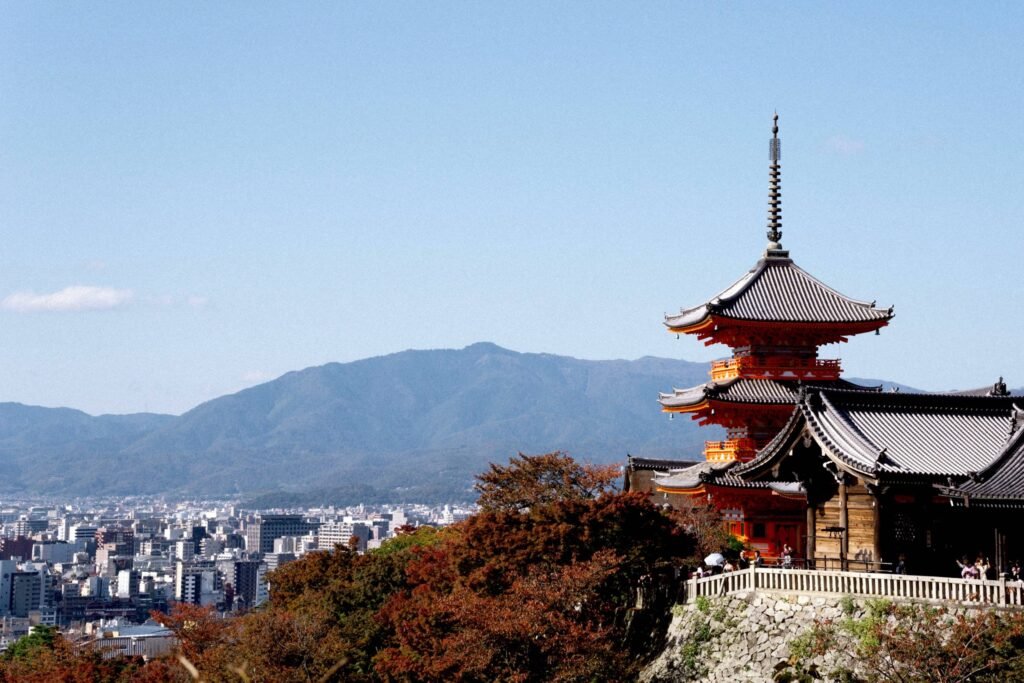
Kyoto, known as the “most Japanese city in Japan,” is a well-preserved and eco-friendly city, full of gardens and bamboo woods, and vast portions of it are set aside for pedestrians. It has a great number of temples, sacred springs, mysterious rock gardens, and the Imperial Palace. Particularly the elegant transformation of many of its ancient townhouses (machiya) into authentic taverns, restaurants, and stores exemplifies how intelligently Kyoto’s economic expansion has been managed.
The convenience of Kyoto’s urban layout for visitors is unmatched. Mountain ranges tower over the northern, eastern, and western boundaries. It is shaped like a rectangle. It’s virtually a given that Japanese public transportation is incredibly effective: Kyoto’s large network of bus routes, two subway lines, and four inner-city train lines make it easy to go anywhere you need to go, both inside and outside the city, extremely fast. In contrast, Kyoto is largely flat and is crisscrossed by bicycle lanes, which only enhances its reputation as an environmentally friendly city.
The nicest accommodations are found in the unassuming business zone of Kyoto Station. Downtown Kyoto is the ideal place to buy, eat, and drink, but there isn’t much historical significance here. Fine gardens, the Imperial Palace, and imposing temples may be found in Central Kyoto, which is made up of a number of different areas. Higashiyama’s mountain-ringed neighborhood is teeming with little lanes and offers wonderful possibilities for strolls in the lush scenery. However, the most impressive tourist attractions are found in the neighborhood of Northwest Kyoto, which is home to the magnificent Kinkaku-ji and Nijô-Jô. The semi-rural Arashiyama and Sagano districts are further out and separated from the main strip by an uninteresting residential area. Here, you may wander through bamboo forests and lush temple grounds.
Kyoto Station District
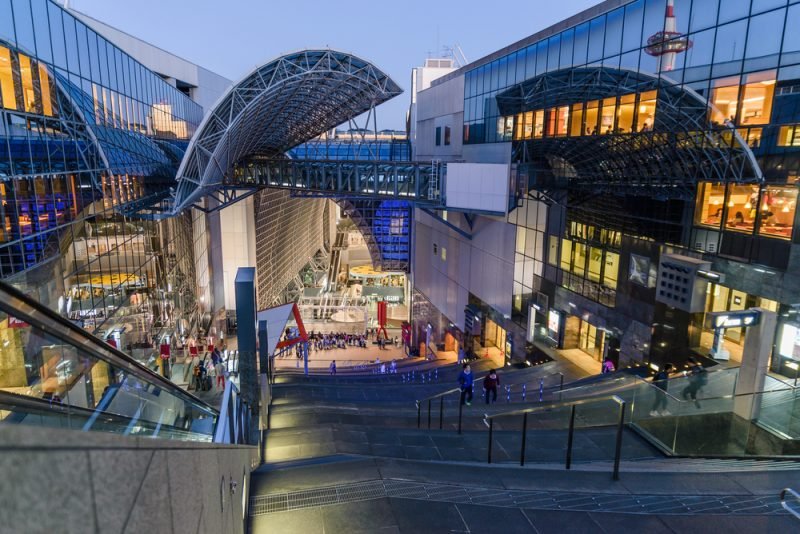
The majority of visitors begin their stay at crowded Kyoto Station, a glass and steel facility that serves as an incongruous opening to this old city of history. In fact, the entire area around the station is uncharacteristic of Kyoto as a whole, with drab concrete blocks, tacky neon signs, and excessively large billboards. The Station area tends to be populated by businesspeople, office employees, and commercial visitors since few people visit here for pleasure.
The rocket-shaped Kyoto Tower is a helpful landmark for orientation, as are the close-by Nishi Hongan-ji and Higashi Hongan-ji temples (constructed in the 13th and 17th centuries, respectively), which are situated just beyond the Karasuma Line gate. The advantage is that many of the best-value hotels, like Budget Inn, are located around Shichijô-dôri road, which bisects the whole neighborhood and has more traffic than anyplace else in town.
Downtown Kyoto
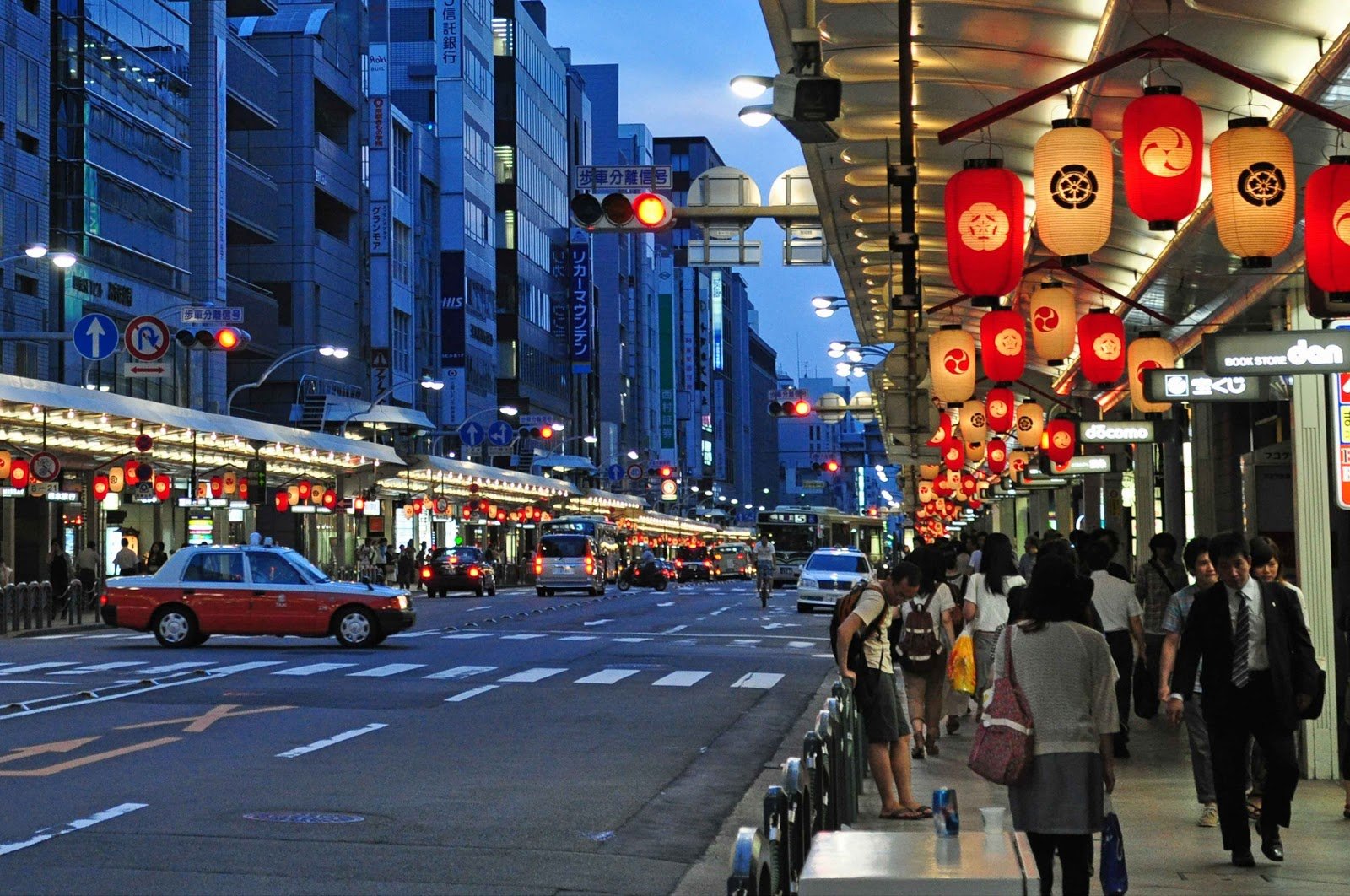
This region of ancient and new is situated inside the grid formed by the roads Kwaramachi-dôri, Karasuma-dôri, Oike-dôri, and Shijô-dôri. Modern taverns, restaurants, and stores have been remodeled from the local machiya (old-world townhouses). These are dotted with modern concrete buildings, really fostering a hybrid and cross-cultural environment. A renowned shopping district, Shijô-dôri is home to some of Japan’s largest department stores. The chaotic, outdoor Nishiki Market lies further to the south and is highly recommended for anybody with even a passing interest in Japanese cuisine.
The Kiyamachi district, which is naturally located around Kiyamachi-dôri, is teeming with dive bars where customers down drinks quickly and belt out loud karaoke. Budget tourists, hippies, and young folks from working classes all like it. One of the top bars in this area is A-Bar. The lovely Pontochô pedestrianized promenade, which runs parallel to Kiyamachi-dôri to the east, is where trainee geishas rush from appointment to appointment as locals hang lights over their traditional timber façades.
The Meiji-era Museum of Kyoto, the interesting International Manga Museum, and the kid-friendly Kaleidoscope Museum are within ten minutes’ walk west of here.
Central Kyoto
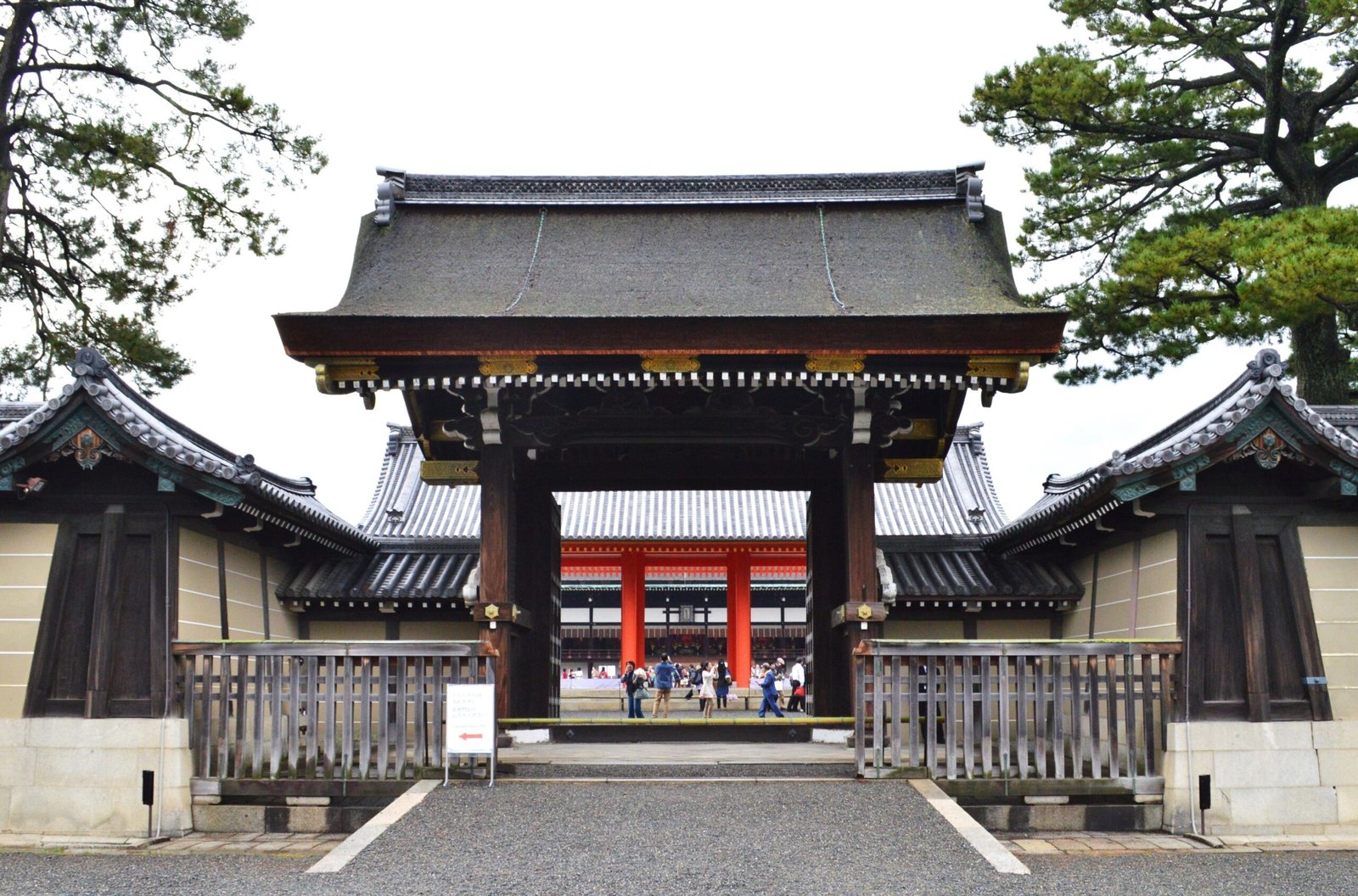
The Imperial Palace, with its extensive parks and 1,300-year history, Sentô Gosho Palace, and Tô-ji, Japan’s tallest pagoda, are just a few of the world-class heritage sites that can be found in and near the Karasuma metro line.
The sanctuary area of Daitoku-Ji, a traditional Japanese garden filled with 24 Zen temples and connected by beautiful alleyways, is located west of here on Imadegawa-dôri Road. It is practically a town-within-the-city due to its size. The 240,000 square miles of Kyoto Botanical Gardens are located to the east, past Otani University and Kitaoji metro station, where there is even more open area.
Higashiyama
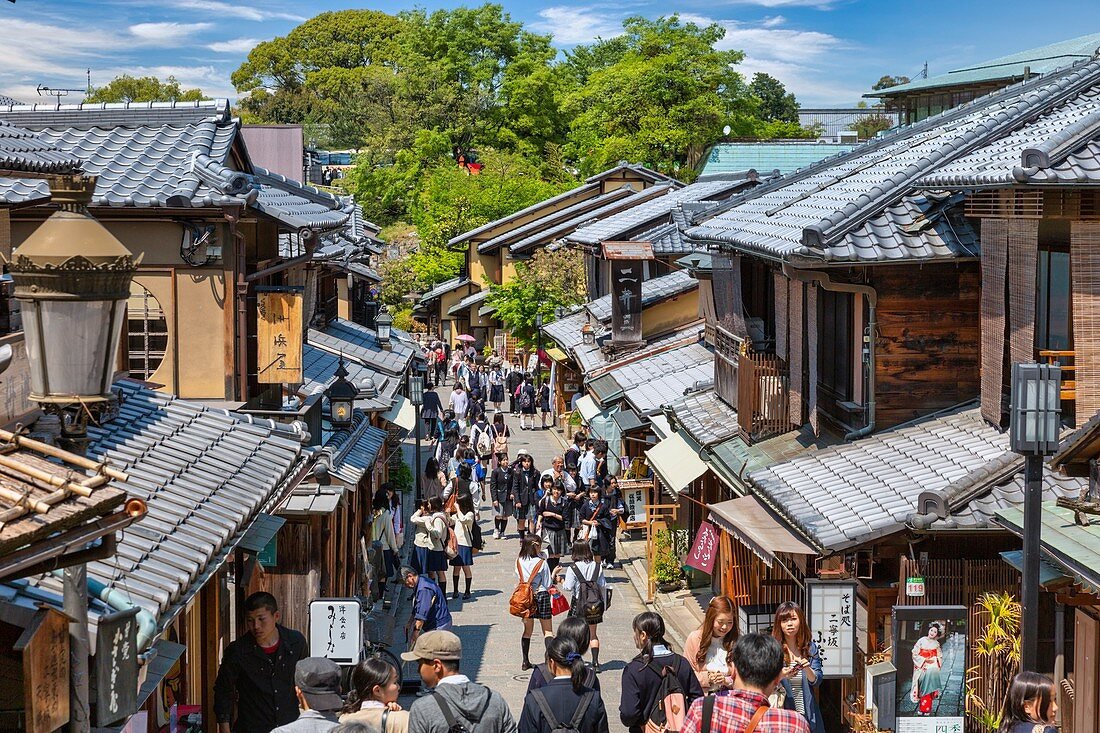
This tourist hotspot at the base of a mountain range is particularly notable for its pedestrian-only areas and historic back alleys. The greatest area of the city to tour on foot is definitely this one. Some excellent ryokan (traditional guesthouse) alternatives can be found east of the Ishibel-koji road, such Ryokan Motonago, where you may eat delectable Japanese food and sleep on futon sofabeds and tatami mats. On the other hand, there is virtually no nightlife or dining scene in southern Higashiyama, with the exception of small cafés that serve tourists as they trek to the numerous attractions located here, including the Kawai Kanjirô Memorial Hall arts and crafts center, the charmingly restored neighborhoods of Ninen-zaka and Sannen-zaka, and the deep south’s forested Sanjusangen-dô Temple.
A full 3 kilometers (1.8 miles) in length and spanning from Kinkaku-ji in the south to the serene magnificence of Nanzen-ji Temple in the north, the northern part of Higashiyama is enormous. You may stroll down the Tetsugaku-n-Michi (Path of Philosophy) or ride a bike down one of the many bike routes to discover the quiet streets and flat, green scenery.
Gion, formerly Kyoto’s “pleasure district” of brothels and geisha shows, lies to the east of here, on the eastern bank of the Kamo-gawa River. Today, Gion is a packed collection of modern bars including Pig & Whistle. In one of the 17th-century teahouses, some of which still provide geisha entertainments, found close to Gion Corner Theater in Higashiyama’s southern boundaries, you may still get a sense of the neighborhood’s past.
Northwest Kyoto
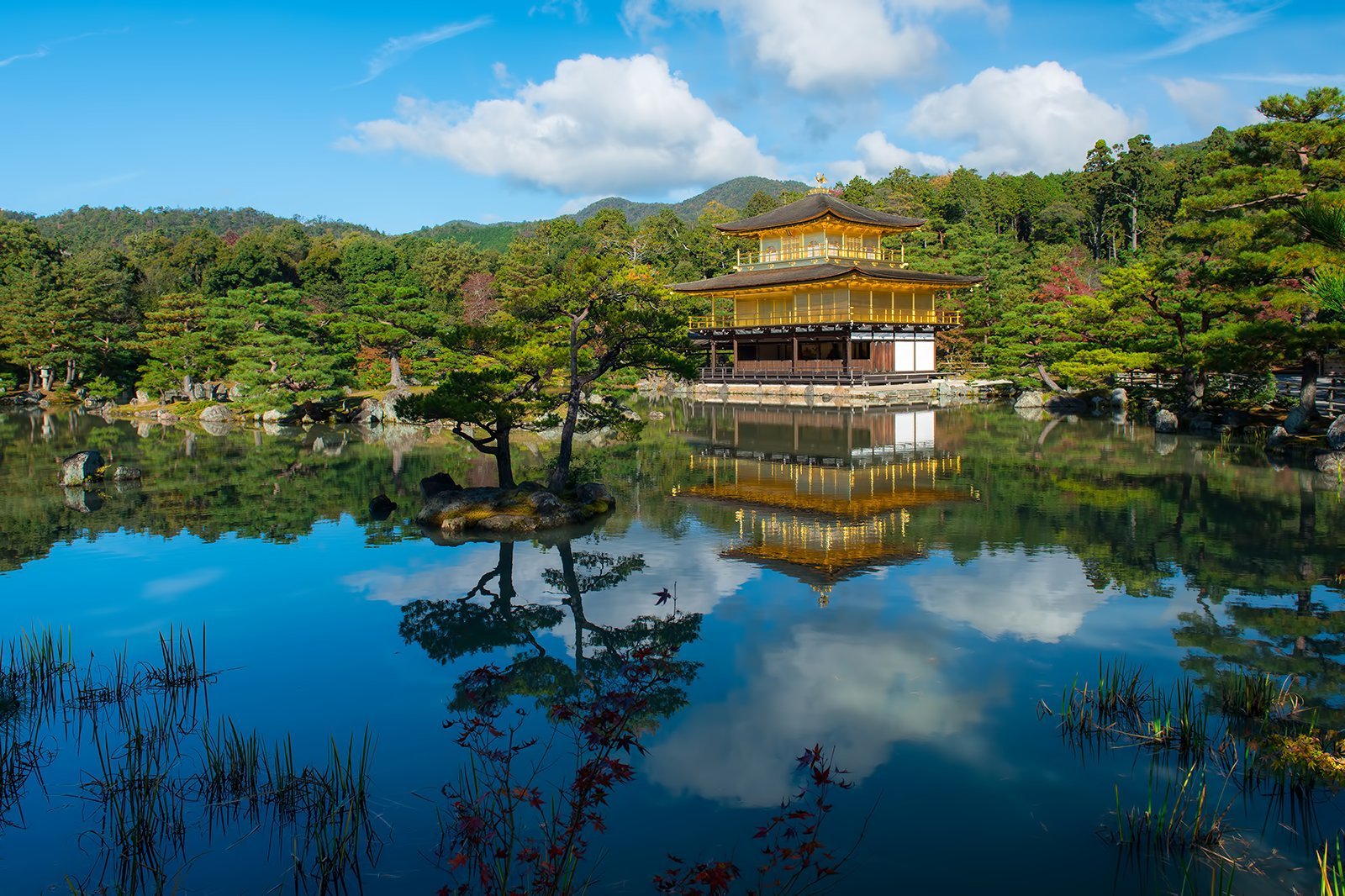
Northwest Kyoto, which is ostensibly a residential neighborhood overlooked by the Kitayama and Arashiyama mountains, offers a glimpse into the city’s feudal past, which is best exemplified by the ninja lairs and intricately carved gates of Nijô-Jô Castle to the southeast. One of Japan’s top tourist attractions is the sumptuous Kinkaku-Ji (Golden Pavilion). The distinctively Kyotoite Funaoka Onsen sentô (mineral spa) is located in the more isolated, rugged regions of the northwest. The drawback is that, depending on the time of year, these sights may be inundated with visitors.
The bustling center of Kyoto’s textile industry, Nishijin, is located north of here on Senbon-dôri Road. Kimono fabrics and sashes are on exhibit in stores all over the world in brilliant hues. There are also traditional studios where you may observe weavers at work, such Nishijin Textile Center on Horikawa-dôri Road. The Kamishicken Kaburen-jô Theater and a number of galleries distinguish Nishijin as a more comprehensive artistic sanctuary.
Arashiyama and Sagano
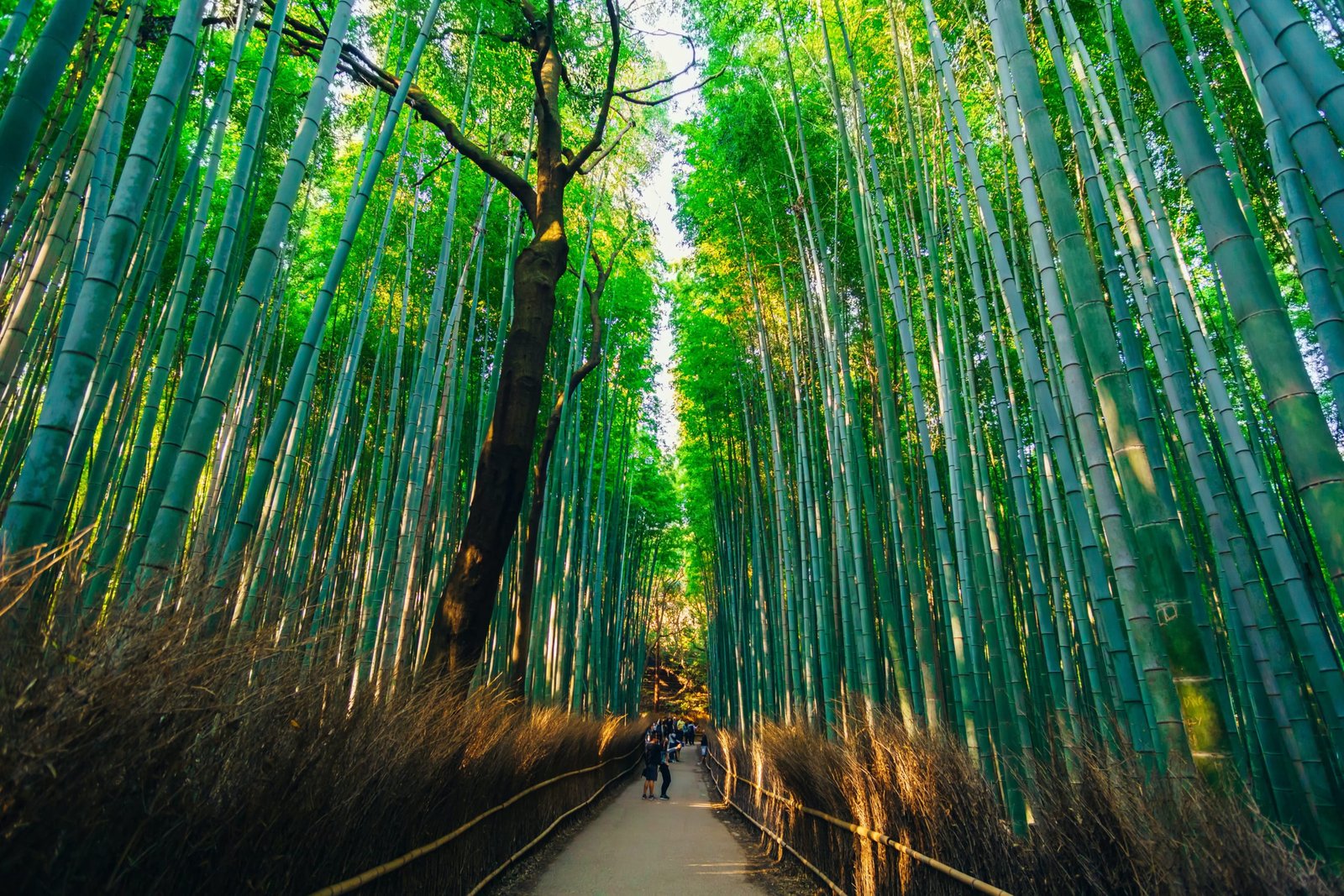
Similar to Higashiyama, Arashiyama and Sagano are separated by a gorgeous river that has been featured on several postcards from Kyoto and are also set against mountains, in this case those in the far western part of the city. But this location is much more countrified than Higashiyama, what with its woods to the north of Tenryu-ji Temple, which are distinguished by their seasonal maple leaves and cherry blossoms as well as by beautiful stands of bamboo. At certain seasons of the year, both these groves and the vicinity of the revered Togetsu-kyô Bridge are overrun with tourists. You’ll avoid this more when you travel toward arboreal Ukyo-ku in the north. There are several steep hills that are ideal for climbing and walking slightly over a kilometer west of Arashiyama subway station, south of the river. The Arashiyama Iwatayama (Monkey Park) is perched atop one of hills and offers breathtaking views of Kyoto.